
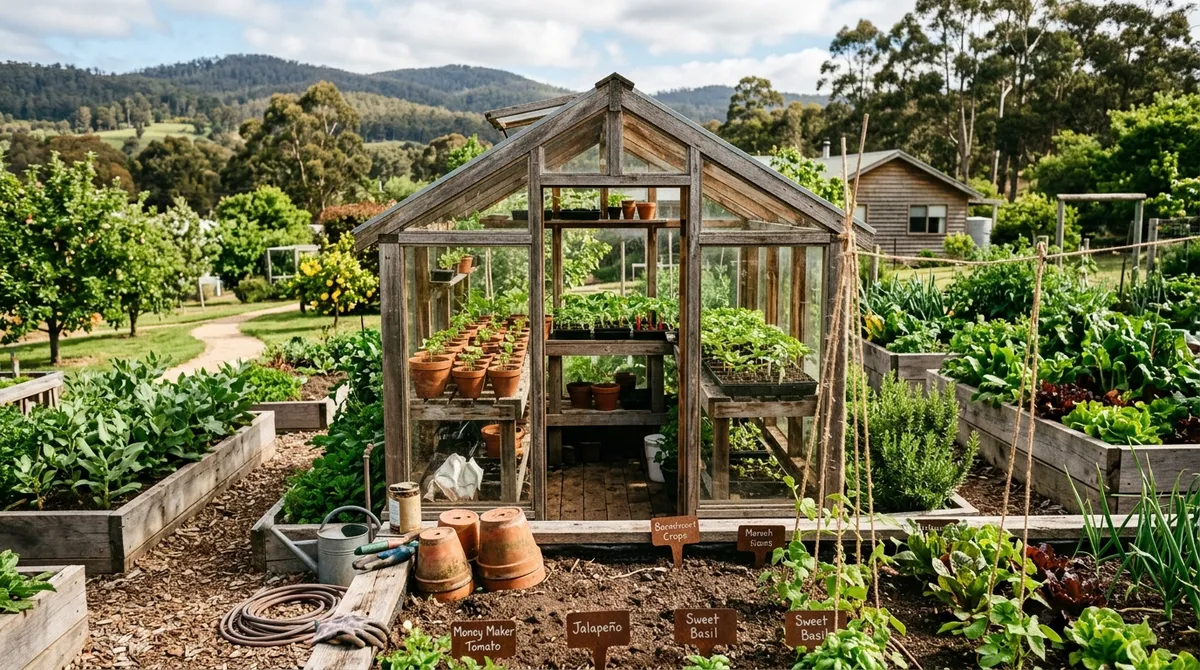
Greenhouse Gardening in Tasmania
Extending the season, choosing crops, and managing heat under cover
A greenhouse is the most valuable structure in a Tasmanian garden. It extends the warm growing season by 6-8 weeks at each end, lets you grow crops that struggle outdoors (capsicums, eggplant, basil), and provides a warm space for seed raising in late winter and early spring. Many of Tasmania's most successful home gardeners consider their greenhouse the centrepiece of the garden.
🌱 Plants in this guide: Tomato, Capsicum, Cucumber, Eggplant, Chilli, Basil and Lettuce. Each plant profile has sowing times for your region, companion plants and common pests.
Choosing a Greenhouse
Size
A greenhouse 3 metres by 2.4 metres (about 7 square metres of floor space) is the minimum useful size. It fits 6-8 tomato plants plus herbs and salad greens along the edges. Larger greenhouses (4 by 3 metres or 5 by 3 metres) provide more growing space and better airflow, which reduces disease pressure.
Height matters. Aim for at least 2 metres at the ridge. Tall greenhouses hold more warm air, give plants room to grow, and are more comfortable to work in. Low, hobby-style greenhouses overheat quickly and limit plant height.
Materials
- Polycarbonate panels: The most popular choice in Tasmania. Twin-wall polycarbonate insulates better than glass, is virtually unbreakable, and diffuses light evenly. It withstands Tasmania's strong winds and occasional hail. Most kit greenhouses from Bunnings and specialist suppliers use polycarbonate panels.
- Glass: Traditional and attractive but breaks in storms and insulates poorly. Single-pane glass lets heat escape quickly on cold nights. Best for sheltered locations or gardeners who prefer the traditional look.
- Polyethylene film: The cheapest option. Hooped tunnels covered with UV-stabilised poly film work well and are easy to build. The film needs replacing every 3-4 years as UV breaks it down. Commercial vegetable growers across Tasmania use poly tunnels extensively.
Siting
Position the greenhouse with the long axis running east-west. This maximises sun exposure on the north-facing side, critical during Tasmania's low-sun winter months. Place it in the sunniest part of the garden, away from shade trees. A north-facing position against a brick wall or fence is ideal; the wall stores heat during the day and radiates it at night.
Ensure the site has good drainage. Greenhouses concentrate rainfall off the roof, so the surrounding area can become waterlogged in winter. Grade the ground so water flows away from the entrance.
What to Grow Under Cover
Summer Crops (October to April)
These crops produce far better under cover in Tasmania than outdoors.
- Tomatoes: The primary greenhouse crop. Plant from mid-October (a month earlier than outdoor planting). All varieties work under cover, including large beefsteak types (Brandywine, Mortgage Lifter) that rarely ripen outdoors. Train plants up strings or tall stakes. Remove side shoots (laterals) weekly to keep plants manageable. Expect harvests from December through to April or May.
- Capsicums: Need warmth to set fruit and are unreliable outdoors in Tasmania. Plant from October in the greenhouse. California Wonder and Sweet Banana are productive varieties. Fruit takes 10-12 weeks to ripen from green to red.
- Cucumbers: Lebanese cucumbers grow well up strings in a greenhouse. Plant from November. Pick fruit regularly to keep plants producing. One or two plants provide plenty for a household.
- Eggplant: Almost impossible outdoors in Tasmania; the season is too short and cool. A greenhouse provides the sustained warmth eggplant needs. Plant from October. Black Beauty and Listada de Gandia are reliable varieties.
- Chillies: Thrive in greenhouse warmth. Plant from October. Jalapeno, Cayenne, and Thai varieties all produce well. Chilli plants can overwinter in a greenhouse, producing earlier fruit the following season.
- Basil: Bolts quickly outdoors in cool conditions. Greenhouse basil grows lush and productive from November to April. Pinch flower heads to extend the harvest.
Winter Crops (April to October)
An unheated greenhouse in Tasmania stays 3-5 degrees warmer than outside on cold nights. This is enough to grow crops that would struggle outdoors in the depths of winter.
- Lettuce and salad greens: Grow winter lettuce for fresh salads when outdoor lettuces freeze. Sow every 3-4 weeks for continuous supply. Cos, butter, and mesclun mixes all work well.
- Asian greens: Bok choy, pak choy, and mizuna grow quickly under cover in winter. They handle the low light levels better than most crops.
- Herbs: Parsley, coriander, and chervil produce through winter in a greenhouse. Grow them in pots or along the edges of beds.
- Seed raising: Use the greenhouse as a nursery from August onwards. Start tomato, capsicum, eggplant, and cucumber seeds in trays, giving them warmth and light before outdoor planting begins in November.
Heat Management
Overheating is the biggest management challenge. A greenhouse in Tasmania can reach 40 degrees inside on a sunny 25-degree day if ventilation is inadequate. Temperatures above 35 degrees cause tomato flowers to drop without setting fruit.
Ventilation
- Automatic vent openers: Wax-cylinder mechanisms that open roof vents automatically when the temperature reaches a set point (usually 20-25 degrees). They close again as the temperature drops. No power required. Brands like Bayliss and Univent are available from greenhouse suppliers and Bunnings. These are the single best investment for a Tasmanian greenhouse.
- Doors: Open both ends of the greenhouse on warm days to create cross-ventilation. Fit insect mesh over open doors if whitefly or aphids are a concern.
- Louvre vents: Low side vents allow cool air to enter at ground level while hot air exits through roof vents. This creates natural convection airflow.
Shade
Drape 30-50 percent shade cloth over the roof from December to February on days above 28 degrees. Remove it when the temperature drops to maximise light in autumn and winter. Shade paint (whitewash applied to the outside of the glass or polycarbonate) is another option, but it reduces light levels until it is washed off.
Watering and Feeding
Greenhouse plants rely entirely on you for water. Rain does not reach them. Install a drip irrigation system on a timer for consistent moisture. Water in the morning to allow foliage to dry before nightfall, reducing fungal disease risk.
Greenhouse tomatoes and capsicums are heavy feeders. Apply liquid fertiliser (seaweed and fish emulsion, or a complete tomato feed) every 2 weeks during the growing season. Top-dress beds with compost and aged manure between seasons.
Good air circulation reduces fungal problems. Remove lower leaves from tomato plants as they yellow. Space plants adequately; overcrowding invites disease. Grey mould (Botrytis) is the most common greenhouse disease in Tasmania's humid conditions. Ventilate well and avoid overhead watering.
Year-Round Greenhouse Calendar
August to September: Seed raising. Start tomato, capsicum, eggplant, and cucumber seeds in trays. Clean and prepare beds for summer planting.
October: Transplant tomatoes and capsicums into greenhouse beds. Plant basil and cucumbers. Continue salad green production.
November to March: Peak production. Harvest tomatoes, capsicums, cucumbers, eggplant, and herbs. Manage ventilation daily. Feed and water consistently.
April: Clear spent summer crops. Plant winter salad greens, Asian greens, and herbs. Sow overwintering broad beans and peas in outdoor beds.
May to July: Harvest winter salads and greens. Maintain ventilation on mild days. Plan next season's layout and order seeds.
Frequently Asked Questions
Do I need a greenhouse to garden in Tasmania?
You do not need a greenhouse for cool-season crops like kale, broad beans, garlic, and root vegetables. A greenhouse is valuable for warm-season crops like tomatoes, capsicums, cucumbers, and eggplant, which benefit from the extra warmth and extended season.
What size greenhouse do I need in Tasmania?
A 3 by 2.4 metre greenhouse (about 7 square metres) is the minimum useful size. It fits 6-8 tomato plants plus herbs and salad greens. Larger greenhouses allow more variety and better airflow.
What should I grow in a Tasmanian greenhouse?
Tomatoes are the main greenhouse crop. Capsicums, chillies, cucumbers, eggplant, and basil all benefit from greenhouse warmth. In winter, use the greenhouse for salad greens, herbs, and seed raising.
How do I stop a greenhouse overheating in summer?
Open all doors and vents when temperatures exceed 25 degrees. Install automatic vent openers. Use 30-50 percent shade cloth on the roof during the hottest months. A poorly ventilated greenhouse in Tasmania can reach 40 degrees on a sunny 25-degree day.
Plant profiles
Each profile has sowing times for your region, companion plants and common pests.
Free Monthly Planting Calendar
Get a personalised email each month with what to plant, seasonal tips, and harvest reminders for your region.
We send one email per month. Unsubscribe any time.