
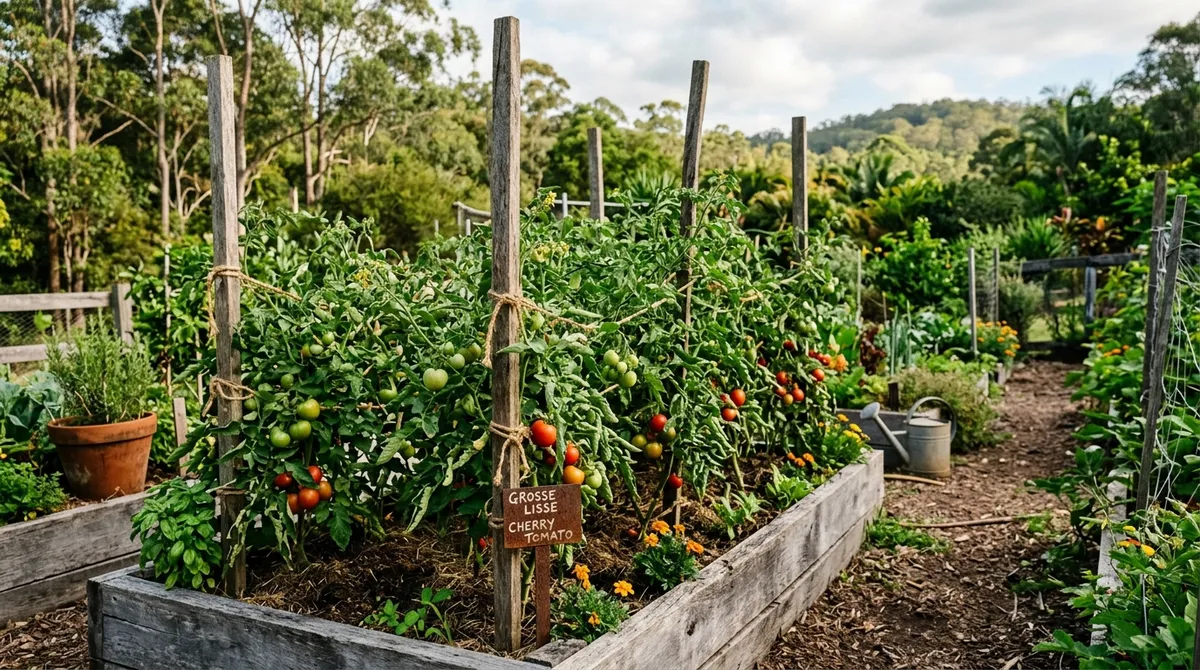
When to Plant Tomatoes in the Northern Rivers
Two planting windows, hinterland frost considerations, and varieties that handle the humidity
The Northern Rivers grows tomatoes differently from Sydney or Melbourne. The subtropical climate gives you warmth and a long growing season, but humidity is the constant challenge. Fungal diseases thrive in the warm, wet conditions from November to March, and fruit fly is active for most of the year. The best results come from timing your plantings to avoid the wettest months and choosing varieties bred for disease resistance.
The region splits into two distinct zones: the frost-free coast (Byron Bay, Ballina, Lennox Head, Brunswick Heads) and the cooler hinterland (Nimbin, The Channon, Dorroughby, Rosebank, Bangalow ranges). Your planting dates depend on which zone you garden in.
🌱 Plant profile: Tomato, with sowing times for your region, companion plants and common pests.
Two Planting Windows
Window One: Late Winter to Early Spring (August to September)
This is the primary planting window for the Northern Rivers. Sow seeds indoors in July, or buy seedlings from local nurseries in August. Transplant outdoors from mid-August (coastal areas) to mid-September (hinterland areas above 200 metres).
Plants established in this window grow through the warming spring, set fruit heavily in October and November, and produce their main harvest before the peak humidity and rain of January and February. This window gives you the cleanest fruit with the fewest fungal problems.
Coastal gardeners around Byron, Ballina, and Lennox Head can push transplanting to early August because frost is extremely rare at sea level. Hinterland gardeners at Nimbin, The Channon, or up on the Nightcap Range should wait until mid-September after the last frost risk has passed.
Window Two: Late Summer to Early Autumn (February to March)
A second planting in February or early March takes advantage of the still-warm soil and declining humidity. These plants grow through autumn and produce into May and June, when the drier, cooler weather keeps fungal diseases in check. This late crop often produces the tastiest fruit of the year because the warm days and cool nights concentrate flavour.
Sow directly into the garden or transplant purchased seedlings. Soil temperatures are well above the 16-degree minimum, so establishment is quick. Choose fast-maturing varieties (55-65 days) to ensure a full harvest before winter slows growth.
Best Tomato Varieties for the Northern Rivers
Variety choice matters more here than in drier climates. Dense-foliaged heirlooms trap moisture around the plant and invite fungal disease. Open, airy growth habits and disease resistance are priorities.
- Grosse Lisse: The standard Australian slicer. Handles humidity better than most large tomatoes. Reliable, productive, and widely available at nurseries in Lismore, Ballina, and Byron.
- Tropic: Bred specifically for tropical and subtropical conditions. Strong disease resistance, good yields, and medium-sized fruit. Available from seed suppliers like Eden Seeds (based locally in the Northern Rivers at Bonalbo).
- Tommy Toe: Prolific cherry tomato that produces through heat and humidity. Very sweet and productive. Tolerates imperfect conditions.
- Sweet Bite: Disease-resistant cherry tomato that produces on long trusses. Excellent for the Northern Rivers because it resists early blight.
- Roma: The sauce tomato. Determinate growth habit, which means less foliage and better airflow. Produces heavily and handles warm conditions well.
- Black Cherry: Rich, complex flavour with good disease tolerance. One of the few heirloom types that performs reliably in subtropical humidity.
Avoid Brandywine, Mortgage Lifter, and other large-leaf heirlooms in the Northern Rivers unless you have excellent airflow and are prepared for regular fungal management.
Managing Humidity and Disease
Fungal disease is the biggest tomato challenge in the Northern Rivers. The combination of warmth and moisture from November to March creates conditions where early blight, septoria leaf spot, and anthracnose can devastate a crop within weeks.
- Spacing: Give plants 60-80 centimetres between them, wider than you would in drier climates. Airflow between plants is critical for keeping foliage dry.
- Pruning lower leaves: Remove all leaves below the first fruit truss. This prevents soil splash (carrying fungal spores) from reaching the foliage. Continue removing lower leaves as the plant grows.
- Staking and trellising: Keep all foliage off the ground. A single-stem trellis system (Florida weave) promotes airflow and makes it easy to inspect for disease.
- Water at the base: Never use overhead sprinklers on tomatoes. Drip irrigation or hand watering at the base keeps foliage dry. Water in the morning so any splashed leaves dry before evening.
- Mulch thickly: A 10-centimetre layer of sugarcane mulch or straw prevents soil from splashing onto lower leaves during rain. This simple step reduces fungal infection dramatically.
Fruit Fly Management
Queensland fruit fly (QFF) is present in the Northern Rivers year-round, with peak activity from October to April. This pest lays eggs under the skin of ripening fruit, and the larvae destroy the crop from inside.
- Exclusion netting: Fine mesh bags or net covers over entire plants are the most reliable protection. Install from when fruit first appears.
- Protein bait sprays: Apply weekly to a small section of foliage (not the fruit). Products like Eco-Naturalure attract and kill adult flies before they lay eggs.
- Pick early: Harvest fruit as soon as it shows the first blush of colour. Ripen indoors on a bench or windowsill. Fully ripe fruit left on the plant is a magnet for fruit fly.
- Hygiene: Collect and destroy all fallen fruit. Do not compost fruit fly-affected produce; seal it in a black plastic bag and leave in the sun for a week to kill larvae before disposal.
Microclimate Differences Across the Northern Rivers
- Coastal (Byron Bay, Ballina, Lennox Head, Brunswick Heads): Frost-free, mild winters, humid summers. Plant from August. Sea breezes moderate afternoon heat. Main challenge is humidity and fruit fly.
- Floodplain (Lismore, Casino, Coraki, Woodburn): Warm, frost-free at low elevation but prone to flooding. Rich alluvial soils grow excellent tomatoes. Summer humidity is intense in these low-lying areas.
- Hinterland (Nimbin, The Channon, Dorroughby, Rosebank): Light frosts from June to August above 200 metres elevation. Wait until September for transplanting. Cooler conditions reduce disease pressure but shorten the season. These areas often produce the best-flavoured tomatoes in the region.
- Nightcap and Border Ranges: Higher elevations (400+ metres) with regular winter frost and significant rainfall. The climate is closer to temperate than subtropical. Grow tomatoes as you would in a temperate zone, with a single summer season from October to March.
Summary: Your Northern Rivers Tomato Calendar
July: Start seeds indoors for the first planting window.
August (coastal) to September (hinterland): Transplant seedlings outdoors. Stake and mulch immediately.
October to December: Main harvest from the first planting. Install fruit fly netting. Monitor for fungal disease.
February to March: Second planting window. Transplant seedlings for an autumn harvest.
April to June: Harvest the autumn crop. Drier conditions produce clean, flavourful fruit.
Frequently Asked Questions
When should I plant tomatoes in the Northern Rivers?
The Northern Rivers has two planting windows. The first is from August to September for a spring and early summer harvest. The second is from February to March for an autumn harvest that avoids the worst of summer humidity and fruit fly pressure. Coastal areas can plant earlier than hinterland areas where frost risk extends into September.
What tomato varieties handle Northern Rivers humidity?
Choose disease-resistant varieties bred for humid conditions. Grosse Lisse handles humidity well. Tommy Toe and Tropic are reliable producers. For cherry tomatoes, Sweet Bite and Red Cherry offer good disease resistance. Avoid densely foliaged heirlooms like Brandywine, which are prone to fungal issues in the wet season.
Why do my tomatoes get fungal diseases in the Northern Rivers?
High humidity and warm temperatures from November to March create ideal conditions for fungal diseases. Improve airflow by spacing plants widely (60-80cm apart), removing lower leaves, and staking or trellising. Water at the base and mulch with straw to prevent soil splash. The autumn planting window avoids the worst humidity.
Do I need to worry about frost for tomatoes in the Northern Rivers?
Coastal areas from Byron Bay to Ballina are essentially frost-free. Hinterland areas above 200 metres elevation experience light frosts from June to August. If you garden in the hinterland, wait until September for the first planting window and use frost cloth for early transplants.
Plant profile
The tomato profile has sowing times for your region, companion plants and common pests.
Free Monthly Planting Calendar
Get a personalised email each month with what to plant, seasonal tips, and harvest reminders for your region.
We send one email per month. Unsubscribe any time.