
How to Start a Vegetable Garden in South East Queensland
Raised beds, starter crops, pest management, and seasonal timing for SEQ beginners
Starting a vegetable garden in SEQ is different from gardening in southern Australia. The subtropical climate means your growing calendar, soil management, and pest strategies all need adjusting. The upside is enormous: you can grow food year-round, with winter being your most productive season.
This guide covers the essentials for getting your first SEQ vegetable garden producing food within weeks.
🌱 Plants in this guide: Silverbeet, Spring Onion, Radish, Lettuce, Peas, Beetroot, Sweet Potato, Cucumber and 2 more, all listed under Plant profiles at the end of this guide. Each plant profile has sowing times for your region, companion plants and common pests.
Choose Your Spot and Style
Most vegetables need 6 or more hours of direct sunlight daily. In SEQ, a north-facing or east-facing position works best. East-facing gets gentle morning sun without the brutal afternoon heat of summer, which is a real advantage from November to March.
Avoid spots under large trees (especially eucalypts, which produce chemicals that suppress plant growth). If you only have afternoon sun, focus on leafy greens, herbs, and root vegetables, which handle partial shade.
Raised Beds: The Best Option for Most SEQ Gardens
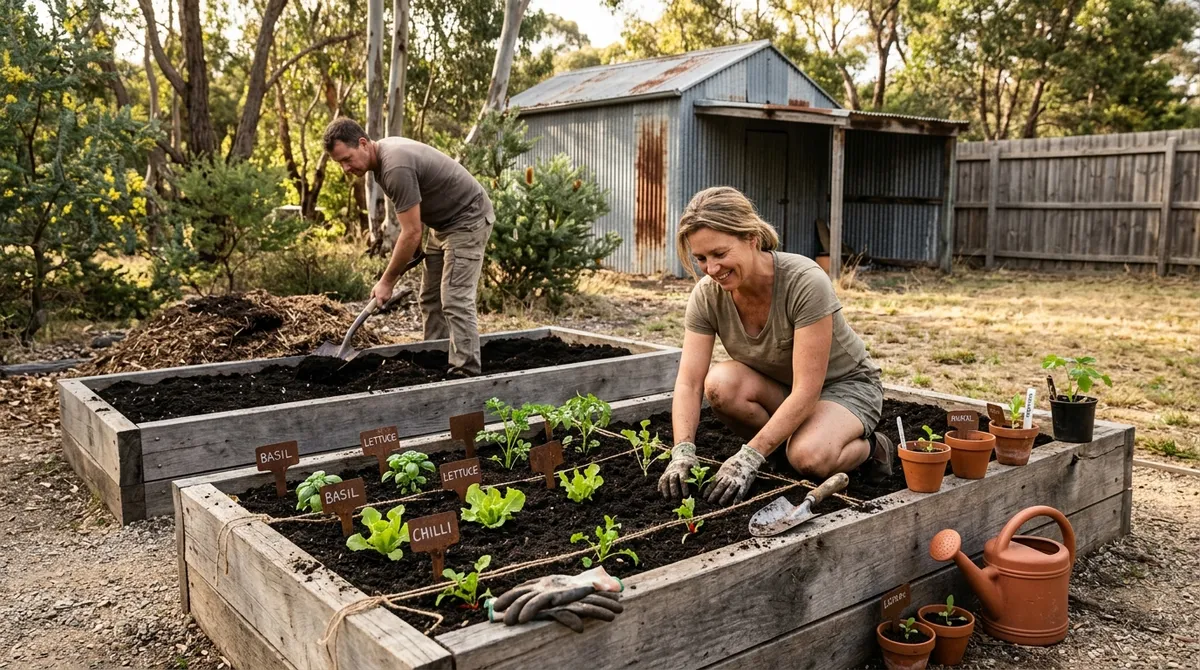
Raised beds solve SEQ's two biggest soil problems: heavy clay and wet-season waterlogging. Much of Brisbane's south side (Sunnybank, Carindale, Mount Gravatt), Ipswich, and Logan sits on heavy black or grey clay that turns to sticky mud in the wet season and sets like concrete in winter.
Build beds 20-30 centimetres high using treated pine sleepers, hardwood, corrugated steel, or Colorbond. Fill with a mix of:
- 50% quality garden soil or loam
- 30% compost (mushroom compost, well-rotted manure, or homemade)
- 20% coarse organic matter (sugar cane mulch, aged wood chip)
A bed 2.4 metres by 1.2 metres is a good starting size. You can reach the centre from both sides without stepping on the soil, which prevents compaction. Two beds this size will feed a household with salad greens, herbs, and seasonal vegetables.
In-Ground Growing
If you have sandy or loamy soil (common in coastal suburbs like Redcliffe, Sandgate, Wynnum, and parts of the Gold Coast), you can grow directly in the ground. Add 10 centimetres of compost worked into the top 20 centimetres of soil before planting. Repeat this every season.
Best Starter Crops for SEQ
Start with crops that produce quickly and tolerate SEQ's conditions. Early success builds confidence and keeps you motivated.
Year-Round Starters
- Silverbeet: Plant any month. Harvest outer leaves from 6 weeks. Produces for 6 months or longer. Nearly indestructible.
- Spring onions: Sow direct. Ready in 8-10 weeks. Sow every 3 weeks for continuous supply.
- Radish: The fastest vegetable in the garden. Sow to harvest in 4-5 weeks. Great for impatient beginners.
- Herbs: Basil (summer), coriander (winter), parsley (year-round), rosemary, thyme, and mint all grow easily in SEQ.
Autumn and Winter Starters (March to August)
- Lettuce: Sow direct or transplant seedlings. Harvest baby leaves from 4 weeks. Cos, butterhead, and loose-leaf varieties all work.
- Cherry tomatoes: Plant seedlings in March or April. Harvest from May through September. Tommy Toe and Sweet Bite are reliable.
- Peas: Snow peas and sugar snap peas. Sow direct from April. Provide a trellis. Pick regularly for continuous production.
- Beetroot: Sow direct from March. Harvest baby beets from 8 weeks.
Spring and Summer Starters (September to February)
- Sweet potato: Plant slips from October. Low maintenance, heat-loving, and produces heavily. Harvest tubers after 4-5 months.
- Cucumber: Sow from September. Lebanese and apple cucumbers handle SEQ's humidity. Trellis for airflow.
- Beans: Climbing beans from September. Blue Lake is reliable. Direct sow and provide support.
- Zucchini: Sow from September. Produces heavily for 8-10 weeks. One plant is enough for most households.
Managing SEQ's Pest Pressure
SEQ's warm, humid climate supports a larger pest population than southern states. Expect to manage pests actively, especially from October to March.
- Fruit fly: The biggest challenge for fruiting crops. Use exclusion netting over tomatoes, capsicum, eggplant, and cucurbits. Apply protein bait sprays weekly. Pick fruit as it starts to colour.
- Caterpillars: Cabbage white butterfly and cluster caterpillar attack brassicas and leafy greens. Use fine insect netting over beds. Hand-pick caterpillars every few days. Dipel (Bacillus thuringiensis) spray is effective and organic-approved.
- Aphids: Common on new growth, especially in winter. Squash by hand or spray with a strong jet of water. Encourage ladybirds and lacewings by planting dill, fennel, and coriander.
- Fungal disease: Water at the base of plants, never overhead. Space plants for airflow. Remove any diseased leaves immediately. Mulch to prevent soil splashing onto foliage.
- Slugs and snails: Active in the wet season. Iron-based snail pellets (Multiguard) are safe around pets and wildlife. Water in the morning rather than evening to reduce activity.
Watering and Feeding
SEQ's rainfall is seasonal. The wet season (November to March) can deliver 800mm or more, while the dry season (June to August) may bring less than 100mm total. Your watering approach needs to match this pattern.
Drip irrigation on a timer is the most efficient system for SEQ vegetable gardens. Run drip lines along each row or bed, set to water 3 mornings per week in the dry season and adjust down during the wet season. Avoid overhead sprinklers, which promote fungal disease in humid conditions.
Feed with compost at the start of each season. Side-dress with an organic vegetable fertiliser every 4-6 weeks during active growth. Liquid seaweed fortnightly supports root development and stress tolerance during heat events.
Mulch every bed with 8-10 centimetres of sugar cane mulch or lucerne hay. This retains moisture, suppresses weeds, feeds the soil as it breaks down, and keeps root zones cool during summer heat.
Understanding SEQ's Growing Calendar
The biggest adjustment for new SEQ gardeners is accepting that summer is the difficult season. The traditional vegetable garden calendar from southern states does not apply here.
Best growing period (April to September): Cool, dry, low pest pressure. Grow everything from leafy greens to brassicas to root crops. Tomatoes, capsicum, and beans still produce in frost-free areas.
Challenging period (October to March): Hot, humid, high pest pressure. Focus on heat-loving crops: sweet potato, okra, rosella, snake beans, luffa, and tropical herbs like Vietnamese mint and lemongrass. Protect fruiting crops with netting.
Start your garden in autumn if possible. You will have an easier introduction to SEQ growing, with months of pleasant weather and manageable pest pressure ahead of you.
Frequently Asked Questions
What is the best time to start a vegetable garden in SEQ?
Autumn (March to May) is the ideal time to start. The wet season is ending, temperatures are cooling to comfortable levels, and you have 6 months of excellent growing conditions ahead. You can also start in August or September for a spring and summer garden, but pest and humidity pressure is higher.
Do I need raised beds in SEQ?
Raised beds are strongly recommended for most SEQ gardens. The heavy clay soils common in Brisbane's south side, Ipswich, and Logan become waterlogged in the wet season. Raised beds provide drainage, warm up faster, and let you fill them with quality soil mix.
What are the easiest vegetables to grow in SEQ?
Start with cherry tomatoes (autumn planting), lettuce, silverbeet, spring onions, radish, herbs (basil in summer, coriander in winter), and sweet potato. These crops tolerate SEQ's conditions and produce quickly.
How do I deal with pests in an SEQ vegetable garden?
Fruit fly, caterpillars, aphids, and fungal diseases are the main challenges. Use exclusion netting over fruiting crops. Inspect plants every few days and pick off caterpillars by hand. Encourage predatory insects by planting flowering herbs. Water at the base of plants to reduce fungal disease.
Plant profiles
Each profile has sowing times for your region, companion plants and common pests.
Free Monthly Planting Calendar
Get a personalised email each month with what to plant, seasonal tips, and harvest reminders for your region.
We send one email per month. Unsubscribe any time.