
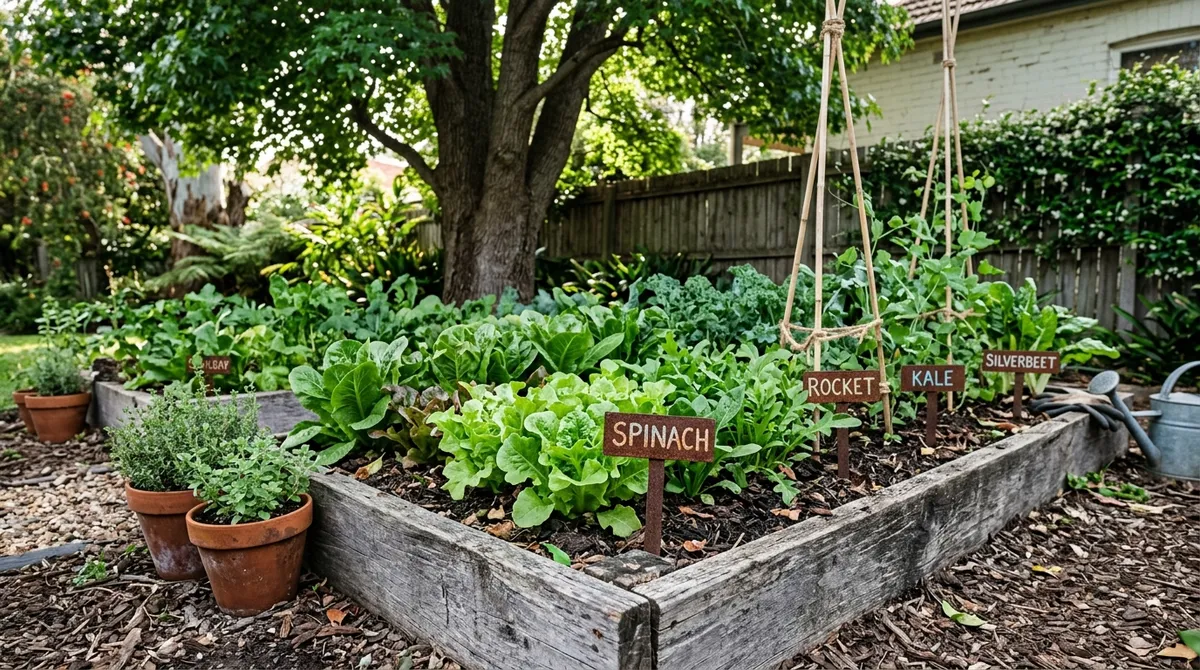
Vegetables That Grow in Shade in Sydney
Shady Sydney backyards can still produce food, if you choose the right crops
Many Sydney gardens are shaded by buildings, fences, and mature trees. Inner West terraces often have south-facing courtyards. North Shore gardens sit under large canopy trees. Apartment courtyards on the ground floor get limited direct sun, especially in winter.
The good news is that several productive vegetables and herbs prefer shade, particularly in summer. The key is matching the crop to the amount of light you actually have.
🌱 Plants in this guide: Lettuce, Silverbeet, Spinach, Rocket, Kale, Parsley, Mint, Chives and 5 more, all listed under Plant profiles at the end of this guide. Each plant profile has sowing times for your region, companion plants and common pests.
Understanding Your Shade
Shade comes in different forms, and each supports different crops.
- Part shade (3 to 4 hours of direct sun): Most leafy greens and many root vegetables grow well here. This is the light level in a garden that gets morning sun but is shaded by a fence or building in the afternoon, or vice versa.
- Dappled shade (filtered light through tree canopy): Good for leafy greens and herbs. The shifting light through leaves provides enough energy for most non-fruiting crops. Deciduous trees are ideal because they provide shade in summer (when greens need it) and allow full sun in winter (when it's welcome).
- Full shade (less than 2 hours of direct sun): Very few edibles grow here. Mint and Vietnamese mint can manage. Mushrooms are an option. Most vegetables need at least 2 to 3 hours of direct sun.
Best Vegetables for Shaded Sydney Gardens
Leafy Greens (3 to 4 hours of sun)
- Lettuce: The best shade vegetable. Lettuce actually produces better in part shade during Sydney's summer, as it bolts quickly in full sun when temperatures exceed 28 degrees. Grow year-round in shaded spots. Loose-leaf varieties (oakleaf, coral, mignonette) produce longer harvests than hearting types.
- Silverbeet: Extremely shade-tolerant. Grows with as little as 3 hours of sun. The leaves will be slightly smaller and the stems thinner than in full sun, but the plant stays productive for months. Plant year-round.
- Spinach: True spinach prefers shade in Sydney, especially from October to March. Grow in the shadiest part of your garden during summer and move to a sunnier spot in winter.
- Rocket: Bolts within days in full summer sun. Part shade extends the harvest by weeks. Sow from March to September in shaded beds for a continuous supply.
- Kale: Tolerates part shade and produces steadily through autumn and winter. Tuscan kale and Red Russian are the most shade-tolerant varieties.
- Asian greens: Bok choy, tatsoi, and mizuna all handle part shade. Tatsoi is particularly shade-tolerant and forms attractive rosettes of dark green leaves.
Herbs (3 to 4 hours of sun)
- Parsley: Grows well in part shade year-round. Italian flat-leaf and curly parsley both tolerate low light.
- Mint: Thrives in shade. This is actually the best spot for mint because it controls its tendency to spread aggressively.
- Chives: Reliable in part shade. Produces thinner leaves but stays productive.
- Coriander: Prefers shade in summer. Part shade prevents the rapid bolting that makes coriander frustrating to grow in full sun.
- Vietnamese mint: One of the most shade-tolerant edibles. Grows well with as little as 2 hours of direct sun.
Root Vegetables (4 to 5 hours of sun)
- Radish: Fast-growing and tolerant of part shade. Ready in 4 to 6 weeks. French Breakfast and Cherry Belle varieties are reliable.
- Beetroot: Grows in part shade but takes longer to mature (10 to 14 weeks instead of 8 to 10). The roots will be smaller. The leaves are also edible, making this a dual-purpose shade crop.
- Carrots: Need slightly more light than other shade vegetables but will produce in 4 to 5 hours of sun. Expect smaller roots. Short varieties (Chantenay, Paris Market) are better in shade than long types.
Summer Shade: Your Secret Advantage
Shade is a problem in winter when light levels are already low. But in summer, shade is genuinely useful. Sydney's summer sun is intense, and many crops struggle in full exposure. Temperatures above 30 degrees cause lettuce to bolt, spinach to turn bitter, and coriander to flower within days.
Growing leafy greens under the canopy of a deciduous fruit tree (fig, mulberry, grape vine) gives them the shade they need in summer while allowing full winter sun when the tree is bare. This layered approach, fruit trees above and leafy greens below, is one of the most productive strategies for small Sydney gardens.
Maximising Light in Shady Spaces
- Paint fences and walls white or light colours: Reflective surfaces bounce light into shaded areas, increasing the total light available to your plants.
- Use raised beds: Lifting the growing surface by 30 to 50 centimetres can catch light above a low fence line.
- Prune selectively: Thin the lower branches of overhanging trees to let more light reach the ground without removing the tree.
- Use containers: Move pots to follow the sun through the day, or shift them seasonally as the sun angle changes between summer and winter.
- Grow vertically: A vertical planter on a fence that catches more sun than the ground below it can grow herbs and lettuce effectively.
What to Avoid in Shade
Fruiting vegetables need full sun (6 to 8 hours minimum). These will fail or produce very little in shade: tomatoes, capsicum, chilli, eggplant, zucchini, cucumber, pumpkin, beans, corn, and melons. If your garden has some sunny spots and some shaded spots, reserve the sun for fruiting crops and use the shade for leafy greens and herbs.
Frequently Asked Questions
What vegetables grow in shade in Sydney?
Lettuce, silverbeet, spinach, rocket, Asian greens (bok choy, tatsoi, mizuna), kale, parsley, mint, chives, coriander, radish, and beetroot all grow with 3 to 4 hours of direct sun or dappled light throughout the day. Leafy greens are the best performers in shade. Fruiting vegetables like tomatoes and capsicum need full sun.
How many hours of sun do vegetables need in Sydney?
Fruiting vegetables (tomatoes, capsicum, zucchini, beans) need 6 to 8 hours of direct sun. Root vegetables (carrots, beetroot, radish) need 4 to 5 hours. Leafy greens and herbs need 3 to 4 hours. Some shade-tolerant plants like mint and Vietnamese mint can manage with just 2 to 3 hours of filtered light.
Can I grow vegetables in a south-facing Sydney courtyard?
South-facing courtyards in Sydney get limited direct sun, especially in winter. Focus on shade-tolerant leafy greens: lettuce, silverbeet, rocket, Asian greens, and herbs like mint and parsley. Use light-coloured walls and reflective surfaces to bounce available light into the growing area. Raised beds improve drainage in shaded spots.
Is shade actually better for some vegetables in Sydney?
In Sydney's hot summers, shade is an advantage for leafy greens. Lettuce, spinach, rocket, and coriander bolt (run to seed) quickly in full summer sun but produce for weeks longer in dappled shade. Growing these crops under the canopy of deciduous fruit trees or on the south side of taller plants extends the harvest season significantly.
Plant profiles
Each profile has sowing times for your region, companion plants and common pests.
Free Monthly Planting Calendar
Get a personalised email each month with what to plant, seasonal tips, and harvest reminders for your region.
We send one email per month. Unsubscribe any time.