
How to Start a Vegetable Garden in Adelaide
Water-wise strategies, soil solutions, and starter crops for Adelaide's Mediterranean climate
Adelaide is a great city for growing food. The Mediterranean climate gives you two solid growing seasons, mild winters for cool-season crops and warm summers for tomatoes, cucumbers, and beans. The main challenge is water: Adelaide has hot, dry summers, and you need a water-efficient approach from the start.
This guide covers choosing your spot, understanding Adelaide's soils, setting up efficient watering, and picking the right crops to grow first.
🌱 Plants in this guide: Silverbeet, Lettuce, Broad Beans, Garlic, Broccoli, Peas, Zucchini, Cucumber and 1 more, all listed under Plant profiles at the end of this guide. Each plant profile has sowing times for your region, companion plants and common pests.
Choose Your Spot
Most vegetables need 6 or more hours of direct sunlight. In Adelaide, a north-facing position is ideal for winter crops (maximises sun exposure in the cooler months). For summer crops, an east-facing position works well because it provides morning sun without the brutal afternoon heat that can exceed 40 degrees on the Plains.
Avoid positions under large gum trees (they compete for water and produce growth-suppressing chemicals). Near a north-facing fence or wall is excellent, as the reflected heat extends the growing season and protects from frost.
Understanding Adelaide's Soils
Adelaide has three main soil types, and your approach depends on which one you have.
Adelaide Hills: Heavy Clay
Gardens in Stirling, Crafers, Mount Lofty, Uraidla, Lobethal, and Mount Barker typically sit on heavy clay soil. Clay holds nutrients and moisture well but drains poorly and sets hard in dry weather. Improve clay by working in gypsum (1 kilogram per square metre), compost, and organic matter every season. Raised beds (20-30 centimetres high) are the most effective solution, filled with a mix of quality loam, compost, and aged manure.
Adelaide Plains: Red-Brown Earth
The northern suburbs (Salisbury, Elizabeth, Gawler, Golden Grove), eastern suburbs (Campbelltown, Norwood, Burnside), and southern suburbs (Morphett Vale, Hallett Cove, Reynella) have red-brown earth soils. These are moderately fertile with decent drainage. Add compost and aged manure before each planting season. These soils respond well to improvement and are productive with regular organic matter additions.
Coastal: Sandy, Alkaline Soil
Coastal suburbs (Glenelg, Henley Beach, Semaphore, West Beach, Brighton) have sandy, alkaline soil that drains fast and holds few nutrients. Water and fertiliser pass through quickly. Add large amounts of compost (10-15 centimetres) worked into the top 20 centimetres. Repeat every season. Clay-based soil amendments (bentonite) help sandy soil retain moisture. Liquid seaweed fortnightly helps with nutrient retention. Wicking beds are particularly effective on sandy soil because they provide constant sub-surface moisture.
Setting Up: Beds and Watering
Raised Beds
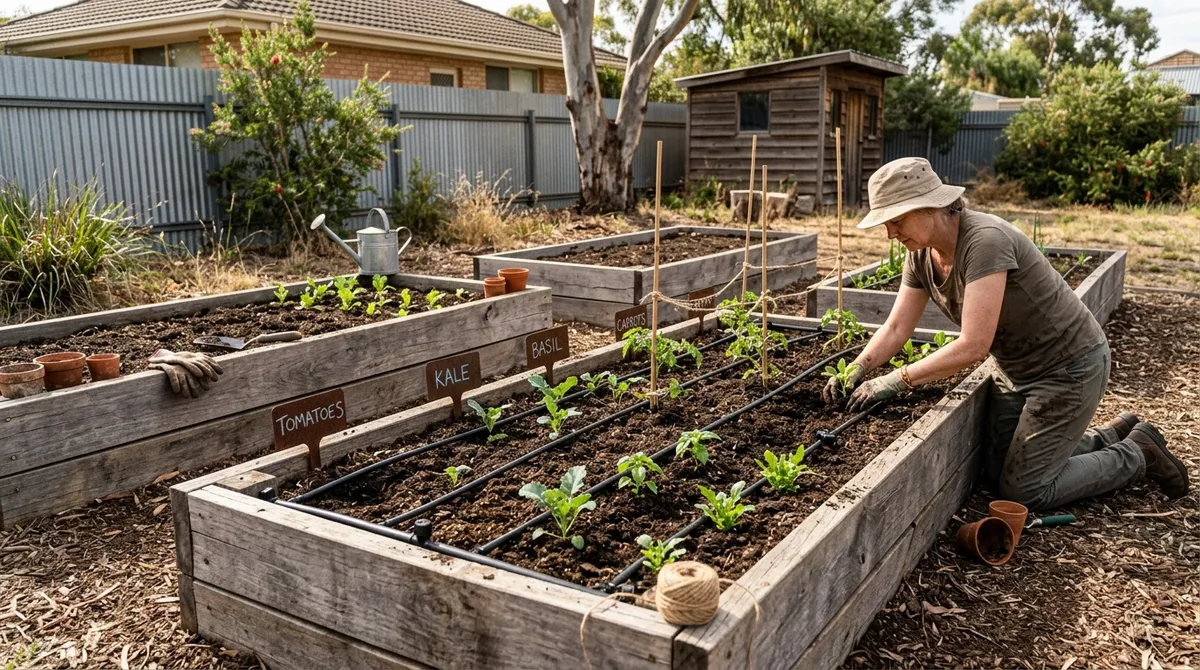
Raised beds suit most Adelaide gardens. They improve drainage in clay, allow you to fill with quality soil, and warm up faster in spring. Build beds 20-30 centimetres high from treated pine sleepers, hardwood, corrugated steel, or Colorbond. A bed 2.4 metres by 1.2 metres is ideal. Fill with 50% quality loam, 30% compost, and 20% aged manure or organic matter.
Drip Irrigation
Drip irrigation is essential for Adelaide's dry summers. Run drip lines along each row or bed, connected to a timer. Water 3 mornings per week in summer, reducing to once a week (or relying on rain) in winter. A simple timer and inline drip system from Bunnings or a local irrigation supplier costs under $100 for a small garden and pays for itself in water savings.
Mulch every bed with 8-10 centimetres of pea straw, lucerne hay, or sugar cane mulch. Mulch reduces evaporation by up to 70%, keeps roots cool in summer, and feeds the soil as it breaks down. Top up through summer.
Best Starter Crops for Adelaide
Autumn and Winter Starters (March to August)
- Silverbeet: Plant any time. Nearly indestructible. Harvest outer leaves for 6 months or more.
- Lettuce: Sow direct or transplant. Harvest baby leaves from 4 weeks. Grows well through Adelaide's entire winter.
- Broad beans: Sow direct from April. Easy, productive, and improve your soil with nitrogen fixation.
- Garlic: Plant cloves from late April. Low maintenance. Harvest in November.
- Broccoli: Transplant seedlings in April and May. Adelaide's cold winters produce excellent heads.
- Peas: Sow from May. Snow peas and sugar snap peas are rewarding and kid-friendly.
Spring and Summer Starters (September to February)
- Cherry tomatoes: Plant seedlings from mid-October. Tommy Toe and Sweet Bite are reliable. Harvest from December.
- Zucchini: Sow from October. One plant produces enough for a household. Fast and rewarding.
- Cucumber: Sow from October. Lebanese cucumber is reliable. Grow on a trellis for airflow.
- Beans: Sow from October. Climbing beans (Blue Lake) or bush beans (Strike) both work well.
- Herbs: Basil from October, parsley year-round, rosemary and thyme as permanent plantings.
Adelaide's Growing Calendar at a Glance
March to May (Autumn): Transition from summer to winter crops. Plant garlic, broad beans, brassica seedlings, peas, and leafy greens. Remove spent summer plants. Add compost to beds.
June to August (Winter): Harvest brassicas, leafy greens, and root vegetables. Sow succession plantings of lettuce and spinach. Winter rain handles most watering. Start tomato seeds indoors in August.
September to November (Spring): Plant tomatoes, capsicum, cucumber, zucchini, and beans. The garden transitions to summer mode. Start regular watering as rain decreases.
December to February (Summer): Harvest summer crops. Manage heat with shade cloth and deep watering. Keep mulch topped up. Minimal new planting except succession lettuce in shade.
Frequently Asked Questions
What is the best time to start a vegetable garden in Adelaide?
Autumn (March to May) is the best time to start. Summer heat is fading, winter rain is approaching, and you have months of mild growing conditions ahead.
What soil type do I have in Adelaide?
Adelaide Hills gardens typically have heavy clay. The Plains have red-brown earth soils. Coastal suburbs have sandy, alkaline soil. Adding compost improves all types.
What are the easiest vegetables to grow in Adelaide?
Start with silverbeet, lettuce, radish, spring onions, cherry tomatoes (spring planting), broad beans (autumn planting), and herbs like rosemary, parsley, and thyme.
How do I manage water in an Adelaide vegetable garden?
Install drip irrigation on a timer. Mulch beds 8-10 centimetres deep. Water in the early morning. Group plants by water needs. Winter rain covers most watering from May to August.
Plant profiles
Each profile has sowing times for your region, companion plants and common pests.
Free Monthly Planting Calendar
Get a personalised email each month with what to plant, seasonal tips, and harvest reminders for your region.
We send one email per month. Unsubscribe any time.