
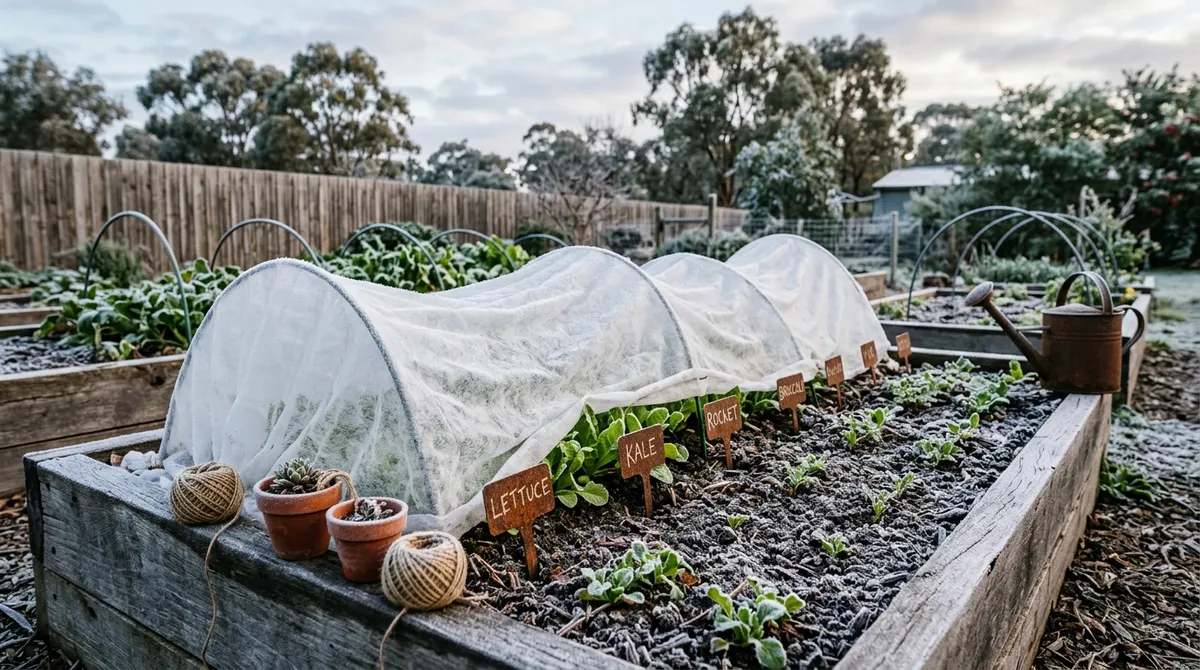
Managing Frost in Canberra
Frost dates, protection methods, microclimate mapping, and strategies for ACT gardens
Frost is the defining challenge of gardening in the ACT. Canberra averages 60 to 80 frost days per year, more than any other Australian capital. The city sits at 580 metres elevation on an inland plateau, surrounded by hills that trap cold air in the valleys below. Understanding frost, where it forms, when it arrives, and how to manage it, is the single most important skill for a Canberra gardener.
Canberra's Frost Dates
Average frost dates vary significantly across the ACT. These dates are based on Bureau of Meteorology records and local gardening observations:
- Inner Canberra (Braddon, Turner, Kingston, Barton): Last spring frost around mid-October. First autumn frost around early May. Frost-free period of approximately 170 to 180 days.
- Weston Creek and Woden: Last spring frost around late October. First autumn frost around late April. Frost-free period of approximately 160 to 170 days.
- Belconnen: Last spring frost around late October to early November. First autumn frost around mid to late April. The suburbs near Lake Ginninderra and along Ginninderra Creek are particularly frost-prone.
- Gungahlin: Last spring frost around late October. First autumn frost around late April. The newer suburbs east of the town centre sit on open plains and experience wind chill on top of frost.
- Tuggeranong: Last spring frost around early November. First autumn frost around mid-April. The valley floor between the Brindabella Range and Mount Taylor regularly records the coldest temperatures in the ACT. Frost-free period of approximately 150 to 160 days.
These are averages. In any given year, a late frost can arrive two weeks after the "last frost date." The safest approach is to watch the Bureau of Meteorology forecast nightly and have frost protection ready to deploy at short notice.
How Frost Forms in Canberra
Canberra's frost is primarily radiation frost, which forms on clear, still nights when the ground loses heat to the sky. Cold air is denser than warm air, so it flows downhill and pools in valleys, low-lying areas, and hollows. This is why Tuggeranong Valley, the lowest residential area in the ACT, records the worst frosts.
Several factors make a spot more frost-prone:
- Valley floors and creek lines: Cold air flows downhill like water. If your garden sits at the bottom of a slope or near a creek, expect harder frosts than the suburb average.
- Open, exposed areas: No overhead canopy or nearby buildings to trap warmth. Large lawns and open paddocks radiate heat quickly.
- South-facing slopes: These receive less winter sun, so they warm slowly during the day and cool rapidly in the afternoon.
- Distance from water: Gardens near Lake Burley Griffin or Lake Ginninderra experience slightly milder frosts because the water moderates temperature swings.
Frost Protection Methods
Frost Cloth and Horticultural Fleece
Frost cloth is the most practical and widely used protection method in Canberra gardens. The lightweight white fabric traps a layer of warm air around plants and provides 2 to 4 degrees of frost protection. Drape it over wire hoops or a simple frame so the cloth does not touch the foliage (contact points still freeze). Secure the edges with rocks, bricks, or soil to prevent wind from lifting the cloth.
Apply frost cloth in the late afternoon before temperatures drop. Remove it mid-morning once the frost has melted and the sun hits the garden. Leaving frost cloth on during the day causes overheating and reduces airflow.
Cold Frames and Cloches
A cold frame is a low, enclosed structure with a transparent lid (glass, polycarbonate, or clear corrugated sheeting). It works like a mini-greenhouse, trapping solar heat during the day and insulating at night. Build cold frames against a north-facing wall for maximum warmth. They are ideal for overwintering lettuce, coriander, and seedlings.
Individual plant cloches (upturned plastic bottles with the bottom cut off, or commercial bell cloches) protect single plants or small groups. Effective for newly transplanted seedlings in spring.
Thermal Mass
Dark-coloured objects absorb heat during the day and radiate it slowly at night. Place water-filled black containers (even painted 20-litre buckets) among your garden beds. A row of water containers along the south side of a bed can raise the overnight temperature by 1 to 2 degrees. Brick walls, concrete paths, and stone edging also act as thermal mass.
Garden Placement and Design
The most effective frost management starts with where you place your garden:
- Choose north-facing slopes: These receive more winter sun and drain cold air downhill, away from the garden.
- Avoid the bottom of slopes: Cold air pools here. If your only option is a low-lying area, create a "dam" of dense hedging on the downhill side to redirect cold air flow around the garden.
- Plant near buildings: Houses, garages, and sheds radiate warmth overnight. A garden bed against a north-facing brick wall can be 3 to 5 degrees warmer than an open bed 10 metres away.
- Use windbreaks: Cold wind increases frost damage. A hedge, fence, or screen on the south and west sides of the garden blocks cold wind while allowing sunlight from the north.
Frost Pockets Across the ACT
Certain areas of the ACT are notoriously cold. Knowing your suburb's frost characteristics helps you plan accurately.
- Tuggeranong Valley: The coldest residential area in the ACT. The valley floor around Kambah, Wanniassa, and Gordon regularly records temperatures 3 to 5 degrees below inner Canberra. Frost has been measured at minus 7 degrees here. Gardens in these suburbs need serious frost protection or a strong focus on cold-hardy crops.
- Belconnen lowlands: Areas around Emu Bank, Florey, and the Ginninderra Creek corridor collect cold air. Suburbs on the ridgeline (Hawker, Cook) fare better.
- Gungahlin plains: Open, flat terrain with little natural shelter. Casey, Ngunnawal, and Amaroo are exposed to both frost and cold wind.
- Inner North (Dickson, Downer, Watson): Benefiting from the urban heat island, these suburbs experience milder frosts. The area around Haig Park and the ANU campus is relatively sheltered.
- Red Hill and Griffith: Elevated positions with good aspect. Among the mildest spots in Canberra for gardening.
Building Microclimates in Your Garden
You can create warmer microclimates within a frosty Canberra garden by combining several strategies:
- Raised beds with dark sides: Elevate soil above ground level (where the coldest air sits) and use dark-coloured materials that absorb heat. A 40-centimetre raised bed sits above the densest layer of cold air on still nights.
- Enclosed courtyard gardens: Walls on three sides trap warmth and block cold wind. If you have an L-shaped house, put the garden in the sheltered corner facing north.
- Evergreen hedging: Dense hedges like Photinia, Viburnum, or Lilly Pilly on the south and west sides create a permanent windbreak. They also redirect cold air flow around the garden rather than through it.
- Gravel or paved paths: Hard surfaces near garden beds absorb and radiate heat. A gravel path on the south side of a bed provides thermal mass without shading the plants.
Frequently Asked Questions
When is the last frost in Canberra?
The average last frost date for inner Canberra is mid-October. For valley suburbs like Tuggeranong and parts of Belconnen, the last frost can occur as late as early November. Many Canberra gardeners use Melbourne Cup Day (first Tuesday in November) as a conservative safe date for planting frost-tender crops outdoors.
When is the first autumn frost in Canberra?
The first autumn frost typically arrives in mid to late April for valley suburbs and early May for inner Canberra. Tuggeranong and Gungahlin may see frost as early as the second week of April. Keep an eye on the Bureau of Meteorology forecast from late March onwards.
How cold does Canberra get in winter?
Canberra's coldest months are June and July, with average overnight minimums of minus 1 to minus 2 degrees. Extreme lows reach minus 7 degrees in Tuggeranong Valley and minus 5 degrees in inner suburbs. Frost occurs on around 60 to 80 mornings per year, depending on your suburb's elevation and aspect.
What is the best way to protect plants from frost in Canberra?
Use frost cloth draped over hoops or frames (avoid letting fabric touch leaves). For individual plants, cover with upturned pots or buckets overnight and remove in the morning. Thermal mass (water-filled containers, brick walls) near plants radiates warmth overnight. Water the garden in the morning, not the evening, so foliage is dry before nightfall.
Free Monthly Planting Calendar
Get a personalised email each month with what to plant, seasonal tips, and harvest reminders for your region.
We send one email per month. Unsubscribe any time.