
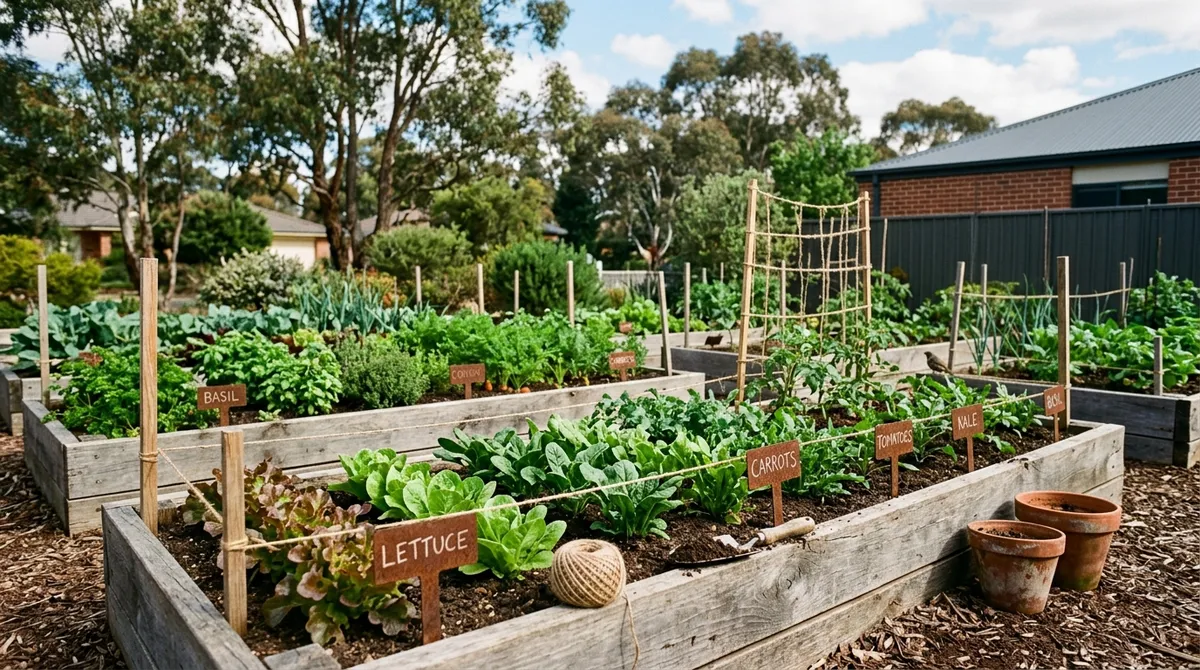
Raised Bed Gardening in Canberra
Soil warming, wicking beds for water efficiency, and season extension for ACT gardens
Raised beds solve three of Canberra's biggest gardening challenges at once. They bypass the heavy alkaline clay that makes in-ground gardening difficult. They warm up faster in spring, giving you extra weeks in a short growing season. And when built as wicking beds, they use water so efficiently that ACT water restrictions become irrelevant.
Most productive vegetable gardens in Canberra use raised beds. The initial investment in materials and soil pays off within a single growing season.
Why Raised Beds Work So Well in Canberra
Faster Soil Warming
Ground-level soil in Canberra stays cold well into spring. At 10 centimetres deep, garden soil in Tuggeranong or Belconnen may not reach 16 degrees (the minimum for warm-season crops) until mid-November. Raised beds warm 2-3 weeks earlier because sunlight hits the sides as well as the top surface, and the soil mass is smaller and more exposed to air.
Dark-coloured beds warm even faster. A Colorbond steel bed in Monument (dark charcoal) can reach planting temperature a full three weeks before the surrounding ground soil. This matters enormously in a city where every frost-free week counts.
Better Drainage
Canberra's clay soil holds water in winter and cracks in summer. Root vegetables rot in waterlogged clay, and seedlings damp off in poorly drained conditions. Raised beds filled with a well-structured mix drain freely, keeping roots healthy through wet winters and allowing you to start planting earlier in spring.
You Control the Soil
Canberra's native soil is alkaline (pH 7.0-7.5), low in organic matter, and heavy with clay. Raised beds let you fill with a purpose-built vegetable growing mix. No years of gradual soil improvement required. You can start growing immediately.
Building Raised Beds for Canberra
Materials
- Hardwood sleepers (ironbark, spotted gum): The premium option. Extremely durable in Canberra's dry climate, lasting 15-20 years. Source from landscape suppliers like Canberra Sand and Gravel or Mitchell timber yards. Cost: around $15-25 per lineal metre for 200x50mm sleepers.
- Colorbond steel: Pre-made beds from Birdies, Vegepod, or similar brands. Very durable, no rot. Dark colours (Monument, Basalt) warm soil fastest. Available at Bunnings in Belconnen, Tuggeranong, and Fyshwick. Cost: $150-400 per bed depending on size.
- Corrugated iron (DIY): Affordable and easy to shape. Line with builders' plastic to prevent rust contact with soil. Lasts 8-12 years.
- Untreated pine: Cheapest option but rots within 3-5 years in Canberra. Acceptable as a starter bed. Do not use CCA-treated pine for food gardens.
Size and Placement
Keep beds no wider than 1.2 metres so you can reach the centre from either side. Length is flexible, but 2.4 metres is a practical size that matches standard timber lengths. A depth of 30-40 centimetres suits most vegetables. For wicking beds, aim for 40-50 centimetres to allow room for the water reservoir.
Place beds on a north-facing position for maximum sun exposure. Leave 60-80 centimetres between beds for wheelbarrow access. Orienting beds east to west maximises the north-facing surface area exposed to winter sun.
Filling Your Raised Beds
A good vegetable growing mix for Canberra raised beds:
- 60% quality garden soil or loam
- 30% compost (a mix of mushroom compost and green waste compost works well)
- 10% well-rotted manure (cow, sheep, or horse)
Local suppliers offering bulk delivery include SoilWorx (Mitchell), Canberra Sand and Gravel (Pialligo), and Capital Landscape Supplies (Hume). Ask for a "vegetable garden mix" or "raised bed mix." Most suppliers deliver in half or full cubic metre loads. A standard 2.4m x 1.2m x 0.4m bed needs approximately 1.15 cubic metres of fill.
Add a handful of blood and bone and a dusting of rock minerals per square metre when filling. This provides slow-release nutrients for the first season. Top up with 5 centimetres of compost annually as the soil settles and organic matter breaks down.
Wicking Beds for Water Efficiency
Wicking beds are the best water-saving option for Canberra's dry climate. The design is straightforward: a sealed reservoir at the base of the bed holds water, which wicks upward to plant roots through capillary action. Plants draw moisture from below as needed, so the soil surface stays dry (reducing evaporation) while roots stay consistently moist.
How to Build a Wicking Bed
- Line the bed: Use pond liner or heavy-duty builders' plastic (200 micron minimum) to create a watertight base. Fold it neatly at corners and staple to the inside walls.
- Install an overflow: Drill a hole at 15-20 centimetres from the base and fit a 20mm pipe fitting. This sets the maximum reservoir depth and prevents waterlogging.
- Add the reservoir layer: Fill the bottom 15-20 centimetres with scoria (volcanic rock) or coarse gravel. This holds water in the gaps between stones.
- Add a fill pipe: Insert a 50mm PVC pipe vertically through the gravel, reaching from above soil level to the base. This is where you add water.
- Lay geotextile fabric: Drape geotextile (weed mat) over the gravel to prevent soil washing into the reservoir.
- Add soil: Fill the remaining 20-25 centimetres with vegetable growing mix.
Fill the reservoir through the pipe until water comes out the overflow. In summer, you may need to refill every 3-5 days depending on the crop. In winter, rainfall often keeps the reservoir topped up. This system uses roughly 50 percent less water than top-watering the same bed.
Season Extension With Raised Beds
Raised beds pair perfectly with season extension methods in Canberra:
- Frost cloth on hoops: Bend 13mm poly pipe into hoops over the bed and drape frost cloth over them. This protects tender transplants in November and extends the harvest into April. The hoops stay in place all season; just roll the cloth on and off as needed.
- Hinged cold frame lids: Build a simple timber frame with a polycarbonate lid that hinges open. Place it over a raised bed for a permanent cold frame. Grow lettuce, coriander, and Asian greens through winter. Prop the lid open on sunny days for ventilation.
- Temporary polytunnel: Stretch clear plastic over hoops to create a mini polytunnel. Effective in September and October for warming soil before transplanting, and again in March and April for extending the autumn harvest.
A Canberra gardener using a dark-coloured raised bed with frost cloth hoops and a wicking reservoir can realistically garden from early October to late April, adding 6-8 weeks to the standard frost-free window.
Frequently Asked Questions
What is the best height for raised beds in Canberra?
Aim for 30-40 centimetres. This height lifts soil above the coldest ground-level air layer (where frost damage is worst), provides enough depth for most vegetable roots, and is practical to fill with quality soil mix. For wicking beds, 40-50 centimetres allows room for the water reservoir beneath the soil layer.
What material should I use for raised beds in Canberra?
Hardwood sleepers (ironbark, spotted gum) last 15-20 years in Canberra's dry climate. Colorbond steel beds are durable and warm soil quickly in spring. Avoid CCA-treated pine for food gardens. Untreated pine is cheap but rots within 3-5 years in Canberra. Corrugated iron is a popular DIY option.
What is a wicking bed and why is it good for Canberra?
A wicking bed has a sealed water reservoir at the base, topped with soil. Water wicks upward from the reservoir to plant roots through capillary action. This uses 50 percent less water than top-watering, which is a major advantage under ACT water restrictions. Plants have constant access to moisture, reducing stress during Canberra's hot, dry summers.
Do raised beds extend the growing season in Canberra?
Yes. Raised beds warm 2-3 weeks earlier in spring than ground-level soil because they are exposed to sun on the sides as well as the top. Dark-coloured beds (Colorbond, painted timber) absorb more heat. Combined with frost cloth or a cold frame on top, raised beds can extend your Canberra growing season by 4-6 weeks total.
Free Monthly Planting Calendar
Get a personalised email each month with what to plant, seasonal tips, and harvest reminders for your region.
We send one email per month. Unsubscribe any time.