
Growing Native Edibles in Tasmania
Mountain pepper, native raspberry, native violet, and bush food plants for Tasmanian gardens
Tasmania's cool temperate rainforests and alpine regions are home to distinctive native edible plants found nowhere else. Mountain pepper, with its fiery berries and aromatic leaves, grows wild on kunanyi/Mount Wellington and through the state's wet forests. Native raspberry scrambles along forest margins. Native violet carpets shaded ground with edible leaves and flowers.
These plants are adapted to Tasmania's cold winters, wet conditions, and acidic soils. They need minimal care once established and bring unique flavours to the kitchen that you simply cannot buy in a supermarket.
🌱 Plants in this guide: Mountain Pepper, Native Raspberry, Native Violet and Sea Celery. Each plant profile has sowing times for your region, companion plants and common pests.
Mountain Pepper (Tasmannia lanceolata)
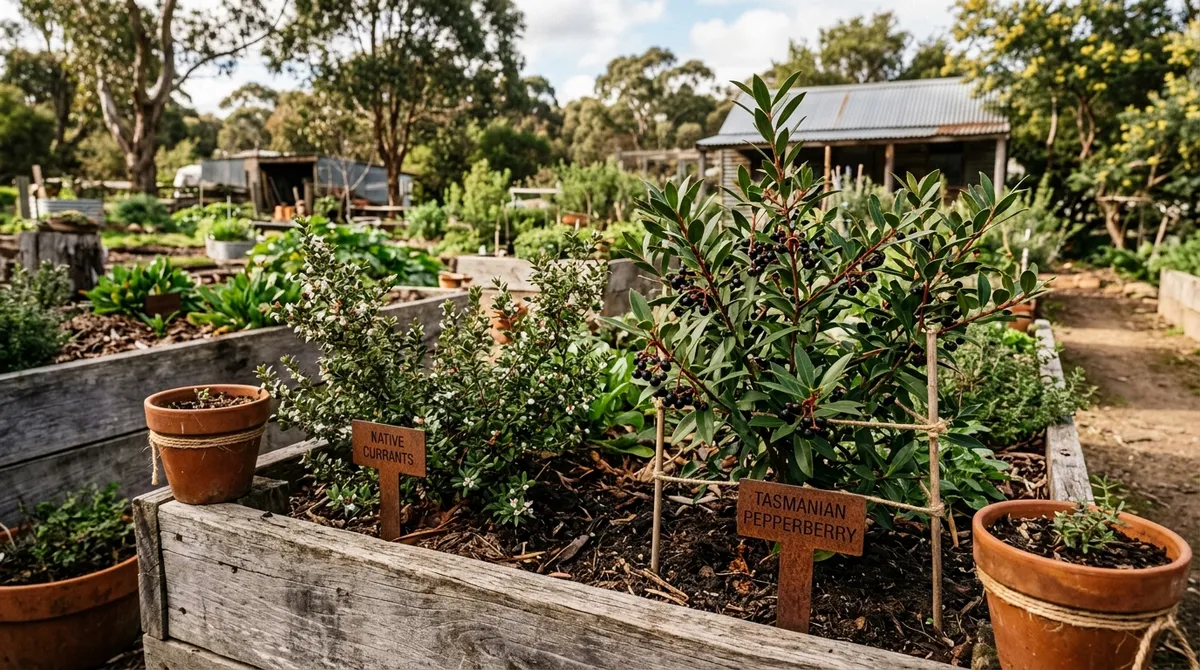
Mountain pepper is Tasmania's most prized native edible. The dark green leaves have a warm, peppery bite. The glossy black berries (produced on female plants) deliver intense heat followed by a numbing sensation on the tongue. Both leaves and berries are used as a native pepper substitute in cooking, and they feature on restaurant menus across Tasmania.
Mountain pepper grows as an understorey shrub in wet eucalypt forests and rainforest across Tasmania. It reaches 2-4 metres tall in gardens, growing slowly into an attractive, dense shrub with reddish stems and aromatic foliage.
Growing Conditions
Plant in part shade to full shade with moist, well-drained soil. Mountain pepper thrives in the same conditions as rhododendrons and camellias. Add compost and leaf mould to the planting area to mimic the humus-rich forest floor. It tolerates heavy frost (to minus 7 degrees and below) and actually grows better in cold climates than warm ones.
Mountain pepper is dioecious: individual plants are either male or female. Only female plants produce berries, but they need a male plant nearby for pollination. Buy at least two plants, or ask the nursery to confirm the sex. Some nurseries sell sexed plants; others sell unsexed seedlings.
Harvesting
Harvest leaves year-round by picking individual leaves or pruning branch tips. Berries ripen from March to May, turning from red to glossy black. Pick when fully black for the strongest flavour. Dry leaves and berries in a dehydrator or in a warm, dry room for 1-2 weeks. Grind dried berries in a pepper mill. Store dried leaves whole in airtight jars.
Native Raspberry (Rubus gunnianus)
Tasmanian native raspberry is a low-growing alpine species found on mountain plateaus and in subalpine grasslands. The small, orange-red fruit has a mild, sweet flavour with aromatic overtones quite different from introduced raspberries. Plants grow 10-20 centimetres tall and spread by runners to form dense mats.
Plant in a sunny to partly shaded position with well-drained, slightly acidic soil. Native raspberry handles frost and snow. It grows well in rockeries, between stepping stones, or as ground cover under deciduous fruit trees. Water through dry spells in summer. Fruit appears from December to February. The berries are small, so you need several plants to gather a worthwhile harvest.
Native Violet (Viola hederacea)
Native violet is a ground-covering perennial found throughout southeastern Australia, including Tasmania. The small white and purple flowers and kidney-shaped leaves are both edible. Flowers make an attractive garnish for salads and desserts. Leaves have a mild, green flavour and can be added to salads or used as a wrap.
Plant in part shade with moist soil. Native violet spreads by runners and makes an excellent ground cover under trees and along garden borders. It tolerates frost, poor soil, and competition from other plants. Water occasionally during dry summer periods. Native violet is widely available at Tasmanian nurseries and garden centres.
Native Currant (Coprosma quadrifida)
Native currant is a small, open shrub (1-2 metres) found in Tasmania's wet forests. The translucent orange-red berries ripen in autumn (March to May) and have a mild, slightly bitter flavour. They work well in jams and sauces when combined with sweeter fruit. Plant in part shade with moist, humus-rich soil. Native currant tolerates heavy frost and wet conditions. It is dioecious, so both male and female plants are needed for fruit.
Sea Celery (Apium prostratum)
Sea celery grows wild along Tasmania's coastline and estuaries. The bright green leaves have a strong celery flavour and are used fresh in salads, soups, and as a garnish. Sea celery is a creeping perennial that spreads to form a dense mat. It handles salt spray, sandy soil, and exposed coastal conditions.
In gardens, plant sea celery in full sun to part shade with moist soil. It grows well in pots and hanging baskets. Harvest outer leaves regularly to encourage fresh growth. Sea celery is frost tolerant to about minus 5 degrees. It sometimes appears at specialist nurseries and native plant sales, or you can grow it from seed collected from coastal populations (check local regulations before wild harvesting).
Where to Buy Native Edibles in Tasmania
Plants of Tasmania nursery in Ridgeway (just south of Hobart) specialises in Tasmanian native species and stocks mountain pepper, native violet, and other edible natives. Habitat Plants in Liffey (northern Tasmania) carries a good range of bush food species. The Royal Tasmanian Botanical Gardens holds regular plant sales that include native edibles.
For online ordering, Daleys Fruit Tree Nursery ships nationally and stocks several native edible species. Tucker Bush offers compact bush food cultivars suited to home gardens. Woodbridge Nursery (south of Hobart) sometimes carries native edibles alongside their fruit tree range.
Planting and Care Tips
Most Tasmanian native edibles prefer acidic, humus-rich soil. Tasmania's dolerite-derived soils are naturally slightly acidic, which suits these plants well. Add compost and leaf mould to the planting area. Avoid lime and dolomite, which raise pH above the preferred range.
Use a low-phosphorus native plant fertiliser if feeding is needed. Most native edibles grow slowly and need little fertiliser. Seasol (liquid seaweed) is safe for all native species and supports establishment without phosphorus risk.
Mulch with leaf litter, fine bark, or wood chips to mimic natural bush floor conditions. Keep mulch away from the base of plants to prevent collar rot. Water new plantings through their first summer, especially during dry spells. Established plants generally cope well on natural rainfall in most Tasmanian locations.
Frequently Asked Questions
What native edible plants grow in Tasmania?
Mountain pepper is the standout Tasmanian native edible, producing peppery leaves and berries. Native raspberry, native violet, native currant, and sea celery all grow well in Tasmanian gardens.
How do I grow mountain pepper in Tasmania?
Plant in a shaded or partly shaded position with moist, well-drained soil rich in organic matter. Mountain pepper tolerates heavy frost and grows slowly to 2-4 metres. Both male and female plants are needed for berry production.
Where can I buy native edible plants in Tasmania?
Plants of Tasmania nursery in Ridgeway specialises in Tasmanian natives. Habitat Plants in Liffey stocks edible natives. The Royal Tasmanian Botanical Gardens plant sales include native edibles. Online, Daleys Fruit Tree Nursery and Tucker Bush ship to Tasmania.
Are native edible plants easy to grow in Tasmania?
Most Tasmanian native edibles are very easy to grow because they are already adapted to local climate and soils. They handle frost, poor soil, and shade better than introduced edible plants.
Plant profiles
Each profile has sowing times for your region, companion plants and common pests.
Free Monthly Planting Calendar
Get a personalised email each month with what to plant, seasonal tips, and harvest reminders for your region.
We send one email per month. Unsubscribe any time.