
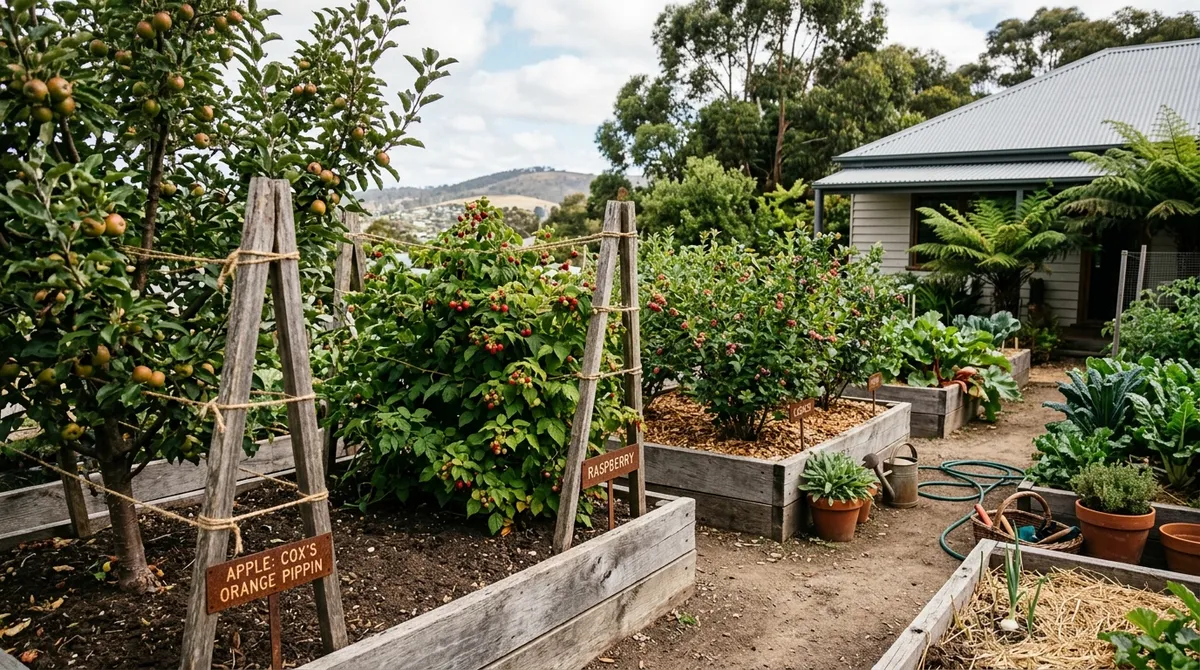
Best Fruit Trees for Tasmania
Apples, pears, cherries, and stone fruit thrive in Tasmania's cool climate and high chill hours
Tasmania is one of Australia's finest fruit-growing regions. The cool climate delivers something most of mainland Australia cannot: reliable chill hours. Many traditional European fruit trees need 600-1000 hours below 7 degrees during winter to break dormancy and fruit properly. Hobart averages 800-1200 chill hours per year, and inland areas like the Huon Valley and Derwent Valley accumulate even more.
This means Tasmania can grow heritage apple and pear varieties, sweet cherries, and stone fruit that struggle or fail in warmer states. The Huon Valley has been growing apples commercially since the 1840s, and backyard fruit trees remain a defining feature of Tasmanian gardens.
🌱 Plants in this guide: Apple, Pear, Cherry, Plum, Apricot, Peach and Nectarine. Each plant profile has sowing times for your region, companion plants and common pests.
Apples
Tasmania's apple heritage runs deep. The cool climate, high chill hours, and long autumn ripening period produce apples with outstanding flavour, crunch, and colour. Most apple varieties perform well here.
- Cox's Orange Pippin: The benchmark dessert apple. Complex, aromatic flavour that develops best in cool climates. Needs a pollination partner. Harvest April.
- Gravenstein: A heritage variety widely grown in Tasmania for over 150 years. Excellent for cooking and eating fresh. Early season (February to March). Triploid, so needs two other varieties nearby for pollination.
- Pink Lady (Cripps Pink): Sweet, crisp, and stores well. Late harvest (May) suits Tasmania's long autumn. Self-fertile but crops better with a partner.
- Fuji: Sweet and juicy with a long storage life. Late harvest. Reliable in all Tasmanian growing areas.
- Sturmer Pippin: A late-keeping heritage apple. Tart when picked in May, sweetens in storage over winter. Stores for months in a cool shed or garage.
- Bramley's Seedling: The best cooking apple. Large, tart fruit that collapses into fluffy puree. Very productive in Tasmania. Triploid; needs pollinators.
Most apple trees need a pollination partner (a different variety that flowers at the same time). Plant at least two different varieties. Crabapples also work as pollinators if space is limited.
Pears
Pears grow beautifully in Tasmania and tolerate heavy, clay soils better than most fruit trees. The classic varieties all do well here.
- Williams (Bartlett): The standard dessert pear. Sweet, buttery flesh when ripe. Harvest February. Pick slightly under-ripe and ripen indoors for best texture.
- Beurre Bosc: Brown-skinned pear with firm, sweet flesh. Outstanding for eating and baking. Late season (March to April). Performs well in all Tasmanian areas.
- Packham's Triumph: An Australian variety. Large, green fruit with smooth, juicy flesh. Good keeper. Harvest March.
- Conference: Partly self-fertile, which is useful if you only have room for one pear tree. Elongated fruit with sweet, slightly gritty flesh. Harvest March.
Pears are grafted onto rootstocks that control tree size. For backyard gardens, choose trees on Quince A or Quince C rootstock, which produce semi-dwarf trees 3-4 metres tall. Full-size pear trees on seedling rootstock grow 6-8 metres and are better suited to larger properties.
Cherries
Tasmania produces some of Australia's best cherries. The commercial cherry industry in the Coal River Valley (Richmond, Cambridge) and Huon Valley proves how well this fruit suits the climate. Backyard cherry trees are equally rewarding.
- Lapin: Self-fertile, large, dark red fruit. The most popular backyard cherry in Tasmania. Ripens mid-December to January.
- Stella: Self-fertile with sweet, dark fruit. Earlier than Lapin (early to mid-December). Widely available at Tasmanian nurseries.
- Sweetheart: Self-fertile, late season (late January). Extends the cherry harvest when planted alongside earlier varieties.
- Kordia: Firm, large, dark fruit with excellent flavour. Needs a pollination partner (Lapin or Stella). Late season.
Bird netting is essential. Currawongs, blackbirds, and starlings will strip a cherry tree in hours. Install netting from late November, before fruit starts colouring. Rain during harvest causes fruit splitting; pick promptly after rain and avoid overhead watering once fruit colours.
Stone Fruit
Plums, apricots, and peaches grow well in sheltered Tasmanian gardens. They need the warmest, most frost-protected spot you have. A north-facing wall or slope is ideal.
- Plums: Santa Rosa (red, self-fertile), Angelina Burdett (large, sweet), and Greengage (old-fashioned, intensely sweet) all produce reliably. Japanese plums (Santa Rosa type) ripen in January. European plums (Greengage, damson) ripen in February to March.
- Apricots: Moorpark and Trevatt are the most reliable varieties for Tasmania. Apricots flower very early (August), so late frosts can destroy the crop. Plant against a north-facing wall for warmth and frost protection. The Derwent Valley and Coal River Valley are better for apricots than exposed Hobart hillside suburbs.
- Peaches and nectarines: Choose mid to late-season varieties. Golden Queen (cling peach for bottling), Elberta (freestone), and Snow Queen (white nectarine) all produce in sheltered Tasmanian gardens. Peach leaf curl is common in Tasmania's wet springs; spray with copper-based fungicide at leaf fall and again at bud swell.
Planting and Care
Plant bare-root fruit trees from June to August during winter dormancy. Bare-root trees are cheaper, lighter to handle, and establish faster than container-grown trees. Specialist fruit tree nurseries like Woodbridge Fruit Trees (Woodbridge, south of Hobart), Heritage Fruit Trees (Molesworth, Victoria, ships nationally), and Daleys Fruit Tree Nursery stock a wide range of varieties suited to Tasmania.
Dig a hole twice the width of the root spread but no deeper. Position the graft union 10 centimetres above soil level. Backfill with the original soil mixed with compost. Do not add fertiliser to the planting hole. Water deeply and mulch with woodchip or straw, keeping mulch away from the trunk.
Tasmania's dolerite clay soils hold water well but can become waterlogged in winter. Improve drainage by planting on a slight mound or in a raised area. Avoid planting in the lowest part of the garden where cold air and water collect.
Pruning and Maintenance
Prune apples and pears in winter (June to August) while fully dormant. Remove dead wood, crossing branches, and inward-growing shoots. Aim for an open vase shape that allows light and air into the canopy. Summer pruning in January reduces vigour and improves fruit colour on established trees.
Prune stone fruit in late summer (February to March) after harvest. Winter pruning of stone fruit increases the risk of silverleaf disease and bacterial canker, both of which are common in Tasmania's wet climate. Cherries need minimal pruning; remove dead wood and keep the canopy open.
Feed all fruit trees with a balanced organic fertiliser in late winter (August) and again after fruit set (November). Liquid seaweed fortnightly from September to February supports overall tree health.
Frequently Asked Questions
What fruit trees grow best in Tasmania?
Apples, pears, cherries, plums, and apricots all thrive in Tasmania's cool climate. The high chill hours satisfy the dormancy requirements of traditional European fruit varieties that struggle in warmer parts of Australia.
When should I plant fruit trees in Tasmania?
Plant bare-root trees from June to August during winter dormancy. Container-grown trees can go in from autumn through to early spring. Avoid planting in summer.
What apple varieties grow best in Tasmania?
Cox's Orange Pippin, Gravenstein, Pink Lady, Fuji, and Sturmer Pippin all perform well. For cooking, Bramley's Seedling is outstanding. Most varieties need a pollination partner.
Can I grow cherries in Tasmania?
Tasmania is one of Australia's best cherry-growing regions. Lapin, Stella, Sweetheart, and Kordia are reliable varieties. Net trees against birds from November. Rain during harvest can cause fruit splitting.
Plant profiles
Each profile has sowing times for your region, companion plants and common pests.
Free Monthly Planting Calendar
Get a personalised email each month with what to plant, seasonal tips, and harvest reminders for your region.
We send one email per month. Unsubscribe any time.