
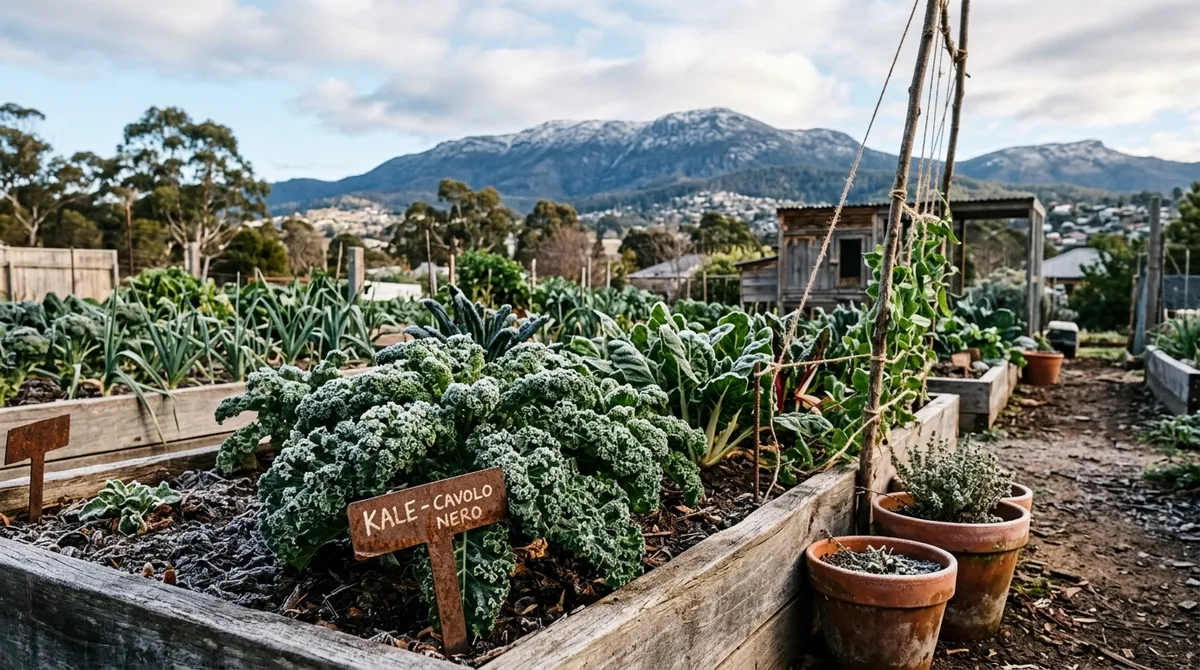
What to Plant in Winter in Tasmania
Hardy crops that thrive through heavy frosts and short days
Tasmania's winters are cold. Hobart averages 3-5 degrees overnight in June and July, with regular frosts down to minus 2 or minus 3 degrees. Inland areas like New Norfolk and the Huon Valley often drop to minus 5 degrees or below. That sounds challenging, but plenty of crops thrive in these conditions. Some even taste better after frost, which converts starches to sugars in the leaves and roots.
The key is planting the right crops at the right time. Most winter vegetables need to be established before the shortest days in June and July, when growth slows to a crawl. Plant in March, April, and May to give crops a head start.
🌱 Plants in this guide: Garlic, Broad Beans, Peas, Snow Peas, Kale, Broccoli, Cauliflower, Cabbage and 8 more, all listed under Plant profiles at the end of this guide. Each plant profile has sowing times for your region, companion plants and common pests.
Garlic
Tasmania produces some of Australia's finest garlic. The cold winters provide the chill period that garlic needs to split into well-formed cloves and develop full bulbs. Plant cloves in April or May, pointy end up, 5 centimetres deep and 15 centimetres apart.
- Australian White: Reliable, stores well, and suits Tasmania's climate. The standard variety for home gardens.
- Italian Late: Large bulbs with strong flavour. Matures slightly later (December) and stores for months.
- Purple Stripe: Colourful heirloom with rich, complex flavour. Performs well in Tasmania's cold conditions.
Buy seed garlic from garden centres or Tasmanian garlic growers (the Tasmanian Garlic Farm in Latrobe is a good source). Supermarket garlic is often treated to prevent sprouting and may carry disease. Harvest in November or December when the bottom 3-4 leaves have turned brown. Cure in a dry, airy spot for 2-3 weeks before storing.
Broad Beans
Broad beans are the toughest legume for cold conditions. They handle frosts to minus 5 degrees without damage and continue growing slowly through winter. Sow from April to June, directly into the garden. Space seeds 15-20 centimetres apart in double rows with 20 centimetres between rows.
- Aquadulce: The best variety for autumn sowing. Extremely cold-hardy and produces long pods with large beans. The standard choice for Tasmanian gardens.
- Coles Dwarf: Compact plants (60 centimetres tall) that suit small gardens and exposed sites. Productive despite their small size.
Pinch out the growing tips once the first pods begin to form. This redirects energy from stem growth to pod filling and removes the tender shoot tips that attract black aphids. Harvest pods when the beans inside are plump but the scar on the bean is still green (not black).
Peas
Sow peas from August to November for the main crop, once the worst of the cold has passed, and again in February for autumn picking. Pea seed is slow to come up in cold, wet winter soil, so in Hobart the reliable crop comes from late winter and spring sowings that climb and crop through the mild summer.
- Greenfeast: Tall climbing pea (1.5 metres) that produces heavy crops of shelling peas. Needs a trellis or stakes. Sow August to November.
- Sugar Snap: Edible pods with sweet, crunchy peas inside. Pick pods while still fat and firm. Climbing habit needs support.
- Snow Peas (Oregon Sugar Pod): Flat, edible pods harvested before the peas inside swell. Fast-growing and prolific once spring warmth arrives.
Peas fix nitrogen in the soil through nodules on their roots. After harvest, cut plants at soil level and leave the roots in the ground. The nitrogen they have fixed benefits your next crop.
Brassicas
Tasmania's cool climate is ideal for brassicas. Plant seedlings from March to May for winter and early spring harvests.
- Kale: The hardiest brassica. Tuscan kale (cavolo nero) and curly kale both tolerate heavy frosts. Leaves taste sweeter after frost. Plant in March or April and harvest outer leaves continuously from May onwards.
- Broccoli: Transplant seedlings in March or April. Green Magic and Di Cicco produce heads in 10-12 weeks. After cutting the main head, side shoots continue for weeks.
- Cauliflower: More temperamental than broccoli. Plant in March for a July or August harvest. Protect curds from frost by folding outer leaves over the developing head.
- Cabbage: Extremely cold-hardy. Sugarloaf and Drumhead varieties handle heavy Tasmanian frosts. Plant from March to May.
- Brussels sprouts: A natural fit for Tasmania's cold climate. Sprouts develop best after frost exposure. Plant seedlings in March for a July to September harvest. They need a long growing season (20 or more weeks), so do not plant late.
Root Vegetables
Root vegetables grow slowly through winter but develop excellent flavour in cold soil. Frost sweetens the roots as the plant converts starch to sugar to protect against freezing.
- Carrots: Sow from March to May for a winter and spring harvest. Nantes varieties perform well. Germination is slow in cold soil (14-21 days), so be patient. Keep the soil surface moist until seedlings emerge.
- Parsnips: Sow from March to April. They need cold exposure to develop their characteristic sweet flavour. Leave in the ground and harvest as needed through winter. Melbourne Market is the standard variety.
- Beetroot: Sow from March to May. Detroit Dark Red and Bull's Blood handle cold conditions well. Soak seeds for 12-24 hours before sowing.
- Turnips: Fast-growing and very cold-hardy. Sow from March to June. Purple Top White Globe matures in 6-8 weeks.
Leafy Greens
- Silverbeet: Tasmania's most reliable year-round green. Plants established in autumn produce leaves right through winter. Fordhook Giant handles heavy frost. Rainbow chard adds colour.
- Spinach: True spinach (Bloomsdale, English spinach) prefers cool conditions and bolts in summer heat. Winter is its best season in Tasmania. Sow from March to June.
- Lettuce: Winter lettuce grows slowly but holds without bolting. Cos and butter varieties tolerate light frost. Protect from severe frosts (below minus 3 degrees) with frost cloth. Sow from March to May.
Winter Planting Calendar for Tasmania
March to April: Plant brassica seedlings, sow garlic cloves, sow broad beans, peas, carrots, beetroot, parsnips. Transplant silverbeet and lettuce seedlings.
May: Last chance for broad beans and garlic. Continue sowing peas. Plant kale and cabbage seedlings.
June to July: Limited new planting. Sow peas if the soil is not waterlogged. Harvest kale, silverbeet, and root vegetables. Maintain mulch and drainage.
August: Early spring prep begins. Sow more peas, lettuce, and spinach. Start tomato and capsicum seeds indoors in late August or early September.
Frequently Asked Questions
What can I grow in Tasmania in winter?
Garlic, broad beans, peas, kale, silverbeet, spinach, cabbage, broccoli, cauliflower, carrots, beetroot, turnips, parsnips, and onions all grow through Tasmania's cold winters. Many of these crops benefit from cold exposure, developing sweeter flavour after frost.
When should I plant garlic in Tasmania?
Plant garlic cloves in April or May. Tasmania's cold winters provide the chill period that garlic needs to form large bulbs. Harvest in November or December when the bottom leaves turn brown.
Can I grow vegetables outdoors in Tasmania in winter?
Yes. Tasmania's winter days average 10-12 degrees in Hobart. Many crops tolerate frosts to minus 5 degrees or colder. Growth slows in June and July but picks up in August as days lengthen.
Do I need to protect winter crops from frost in Tasmania?
Most winter crops handle Tasmanian frosts well. Garlic, broad beans, kale, silverbeet, and root vegetables tolerate frosts to minus 5 degrees without protection. Young seedlings of lettuce and cauliflower benefit from frost cloth during severe cold snaps.
Plant profiles
Each profile has sowing times for your region, companion plants and common pests.
Free Monthly Planting Calendar
Get a personalised email each month with what to plant, seasonal tips, and harvest reminders for your region.
We send one email per month. Unsubscribe any time.