
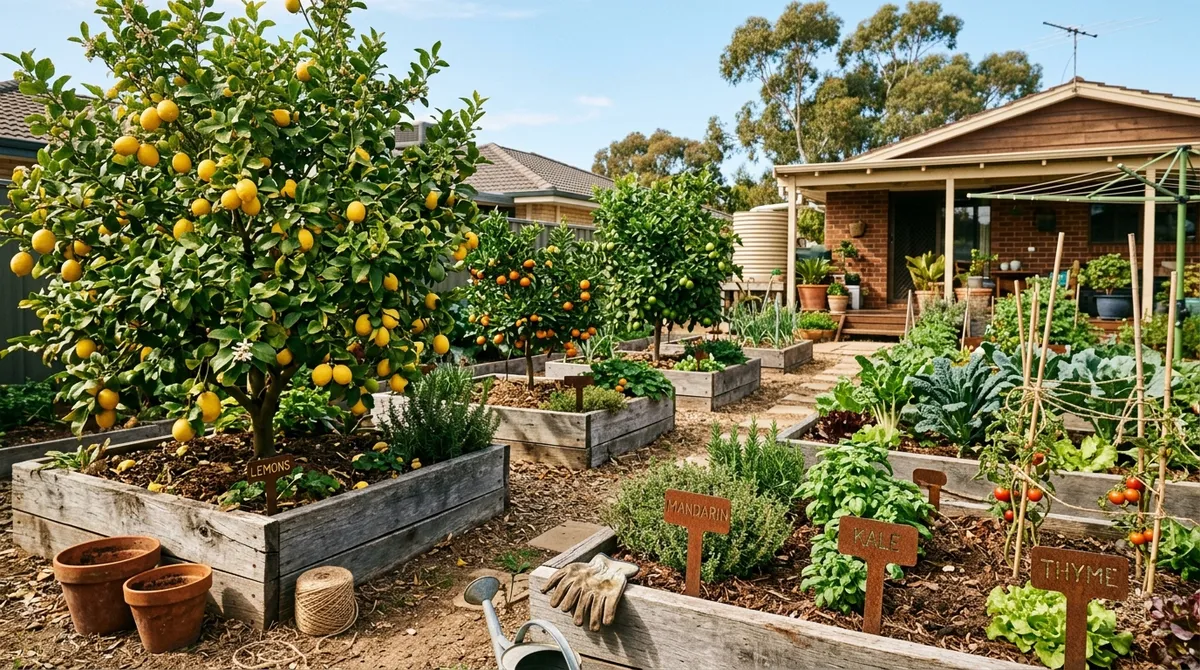
Growing Citrus in Perth
Lemons, limes, oranges, and mandarins for Perth's ideal citrus climate
Perth's climate is one of the best in Australia for citrus. Warm, dry summers and mild winters mirror the conditions where citrus trees evolved. The sandy, well-drained soil that causes headaches for vegetable growers is actually an advantage for citrus, which hates wet feet. A healthy citrus tree in a Perth garden will produce fruit for decades with minimal fuss.
Most Perth suburbs can grow the full range of citrus. Coastal areas from Fremantle to Joondalup are frost-free and suit even the most frost-sensitive varieties like Tahitian lime. Perth Hills suburbs (Kalamunda, Mundaring, Roleystone) get occasional light frosts, so plant citrus in a sheltered spot with northern exposure in these areas.
🌱 Plants in this guide: Cumquat, Finger Lime, Grapefruit Tree, Lemon Tree, Lime Tree, Mandarin and Orange Tree. Each plant profile has sowing times for your region, companion plants and common pests.
Best Citrus Varieties for Perth
Eureka Lemon
The classic backyard lemon and the most widely planted citrus tree in Perth. Eureka fruits almost year-round, with the heaviest crop from winter through spring. The tree grows 3 to 4 metres tall unpruned. It is thorny but extremely productive. A single mature tree produces far more lemons than most families can use, which makes it a popular gift tree to neighbours. Eureka lemons produce true acid lemons with thick skin that works well for zesting, juicing, and preserving.
Meyer Lemon
Sweeter and less acidic than Eureka. Meyer is a lemon-orange hybrid, which gives it a rounder flavour and thinner skin. The tree is smaller (2 to 3 metres), making it suited to compact gardens and large pots. Thin-skinned fruit with orange-tinted flesh. Fruits winter through spring. More cold-tolerant than Eureka, so a good choice for Perth Hills gardens. Meyer lemons are outstanding for cooking and baking where you want lemon flavour without strong acidity.
Washington Navel Orange
The eating orange. Sweet, seedless, and easy to peel. Fruits from June to September. Grows 3 to 4 metres tall. Perth's warm summers develop excellent sugar levels in the fruit. Washington Navel is the standard variety for backyard growing. The fruit is ready when the skin turns fully orange and the fruit feels heavy for its size. Leave fruit on the tree until you need it, as oranges hold well.
Imperial Mandarin
Australia's favourite mandarin and the best choice for Perth. Easy to peel, sweet, with few seeds. Fruits from May to July. Compact tree (2 to 3 metres), excellent for smaller gardens. Imperial is an Australian-bred variety that performs reliably across Perth. Afourer mandarin is an alternative with deeper colour and virtually no seeds, fruiting slightly later (July to September).
Tahitian Lime
The standard lime for Perth. Seedless, juicy, and productive. Fruits from late summer through winter. Tahitian lime is the most frost-sensitive common citrus, so coastal and inner suburbs are best. In Perth Hills, plant in a sheltered, north-facing position against a brick wall. The reflected heat and frost protection from the wall often make the difference. Tahitian lime grows well in large pots (50 centimetres or larger), which lets you move the tree under cover if an unusual frost is forecast.
Other Varieties Worth Growing
- Valencia Orange: The juicing orange. Fruits later than Navel (September to January), so plant both for year-round oranges. Slightly smaller tree than Navel. Makes outstanding fresh juice.
- Lisbon Lemon: Similar to Eureka but slightly more cold-tolerant. Good choice for Perth Hills suburbs where winter nights are cooler.
- Cumquat (Nagami): Ornamental and edible. Small oval fruit eaten whole, skin and all. Makes excellent marmalade. Compact tree (1.5 to 2 metres) suited to pots and small gardens. Very hardy.
- Finger Lime: Native Australian citrus with caviar-like pulp. Grows well in Perth's climate. Thorny shrub growing 2 to 3 metres tall. Available from specialist nurseries. The pulp pops in your mouth and works beautifully with seafood.
- Grapefruit (Marsh or Ruby): Perth's heat produces sweet grapefruit with less bitterness than those grown in cooler climates. Large tree (4 to 5 metres) that needs space. Ruby has pink flesh and a sweeter taste than Marsh.
Planting Citrus in Perth's Sandy Soil
When to Plant
Plant citrus in autumn (April to May) or spring (September to October). Autumn planting is slightly better in Perth because the roots establish during the mild, wet winter before facing summer heat. Avoid planting in the peak of summer (December to February) when heat stress and water demands are at their highest.
Site Selection
Full sun (6 or more hours per day) and shelter from strong winds. Perth's afternoon sea breeze (the Fremantle Doctor) can be harsh in coastal suburbs like Scarborough, Cottesloe, and City Beach. A fence, wall, or hedge on the western side provides useful wind protection. Avoid low-lying areas where cold air pools on still winter nights.
Soil Preparation
Perth's sandy soil drains well, which citrus trees appreciate. The problem is nutrient retention. Sandy soil lets water and fertiliser wash straight through.
Dig a hole twice the width of the root ball and mix the backfill sand with generous compost and aged cow manure. Add a handful of dolomite lime if your sand is very acidic (Bassendean sand often is). Do not add bentonite clay around citrus, as they prefer free-draining conditions. Bentonite is useful for vegetables but can create too much moisture retention for citrus roots.
Mound the soil slightly above the surrounding ground level. The graft union (the bulge on the trunk near the base) must sit above soil level. Burying the graft can cause rootstock suckering and disease. Firm the soil gently and water in deeply.
Container Growing
Dwarf citrus varieties grow well in large pots. Dwarf Meyer Lemon, Dwarf Tahitian Lime, and Dwarf Washington Navel are all available at Perth nurseries. Use a container at least 50 centimetres in diameter with drainage holes. Fill with premium potting mix (look for the Australian Standards red tick). Potted citrus needs more frequent watering and feeding than in-ground trees. Repot every 3 to 4 years into fresh mix or a slightly larger pot.
Watering Citrus in Perth's Dry Summers
Perth's summers are hot and dry. From November to March, little to no rain falls, and temperatures regularly exceed 35 degrees. Citrus trees need consistent water during this period, especially while fruit is developing.
- First year: Water deeply twice a week during summer. Build a watering basin (a raised ring of soil) around the tree to concentrate water at the root zone. Each watering should deliver 20 to 30 litres directly to the root area.
- Second year: Water deeply once a week during summer. The root system is expanding and becoming more self-sufficient.
- Established trees (3 years and older): A deep soaking every 2 to 3 weeks during summer is usually sufficient for in-ground trees. Perth's winter rain covers the tree's needs from May to September with no supplemental watering needed.
Mulch around the tree with a 10-centimetre layer of sugar cane mulch or wood chips. This slows evaporation, keeps roots cool during summer heat, and adds organic matter as it breaks down. Keep mulch 15 centimetres away from the trunk to prevent collar rot. Under Perth's water restrictions, drip irrigation to fruit trees is permitted at any time on your allocated watering days.
Feeding Citrus in Perth
Citrus are heavy feeders, and Perth's sandy soil loses nutrients quickly through leaching. Feed four times a year for best results.
- Late winter (August): Apply a complete citrus fertiliser. This fuels the spring flowering flush. Richgro Citrus Food, Yates Thrive Citrus, and Baileys Citrus Fertiliser are all widely available at Perth nurseries and hardware stores.
- Spring (October): A second application supports fruit set and new growth. Add chelated iron and trace elements if leaves show yellowing between the veins (a common problem in Perth's alkaline sand).
- Summer (January): Light feed to sustain fruit development. Supplement with liquid seaweed and fish emulsion, which provide micronutrients and stimulate soil biology.
- Autumn (April): Final feed before the tree slows down for winter. Include potash (potassium) to harden new growth and improve fruit quality.
Trace element deficiency is common in Perth's alkaline sandy soils. Iron, manganese, and zinc are the usual culprits. Yellowing leaves with green veins (interveinal chlorosis) indicate iron deficiency. Pale new growth suggests manganese deficiency. Apply chelated trace elements as a foliar spray or soil drench twice a year (spring and autumn). Citrus-specific fertilisers with added trace elements are the easiest solution.
Citrus Gall Wasp Management
Citrus gall wasp is established across Perth and is the most significant citrus pest in WA backyards. The adult wasp lays eggs in young citrus branches during spring (September to November). The larvae develop inside the branch, causing it to swell into a distinctive gall (a lumpy, bulging section of branch). Heavy infestations weaken the tree, reduce fruiting, and distort the canopy.
How to Control Citrus Gall Wasp
- Prune out galls before August: Adult wasps emerge from galls in late August and September. Prune off all branches with visible galls before this happens to break the cycle. Cut well below the gall into clean wood.
- Destroy prunings: Burn or bin gall-affected prunings. Do not compost them, as wasps can still emerge from composted material. Do not dump prunings in green waste bins unless your local council processes green waste at temperatures high enough to kill the larvae.
- Inspect annually: Check trees each winter (June to July) for new galls. Young, actively growing branches are the most vulnerable. Galls are easy to spot once you know what to look for. They appear as rounded swellings 1 to 3 centimetres in diameter on pencil-thin branches.
- Keep trees healthy: Well-fed, well-watered trees tolerate gall wasp better than stressed trees. Avoid excessive nitrogen fertiliser in spring, which produces the soft new growth that wasps prefer for egg-laying.
- Avoid heavy spring pruning: Pruning in spring stimulates a flush of soft new growth, which attracts gall wasps. Prune citrus in winter instead (June to August).
Other Pests and Problems
Scale and Sooty Mould
Scale insects suck sap and excrete honeydew, which attracts black sooty mould. Spray with horticultural oil (PestOil or Eco-Oil) in spring and autumn, covering all leaf surfaces. The oil smothers scale insects and the sooty mould clears as the scale population dies off. Ants farm scale insects, so controlling ants with a sticky band around the trunk helps reduce scale populations.
Mediterranean Fruit Fly
Medfly attacks ripening citrus from late autumn through winter. Exclusion netting over small trees is effective. For larger trees, hang Cera Trap or protein bait traps from branches starting in March. Pick fruit as it ripens rather than leaving it on the tree. Report medfly catches to the WA Department of Primary Industries and Regional Development (DPIRD) if you are in a medfly-free area, as some Perth suburbs are within managed zones.
Twenty-Eight Parrots
These WA-native parrots peck holes in ripening citrus, especially oranges and mandarins. Bird netting is the only reliable protection. Use 40-millimetre or smaller mesh and ensure the netting is taut to prevent birds becoming entangled. Frame netting over the tree rather than draping it directly on branches.
Frequently Asked Questions
What citrus trees grow best in Perth?
Eureka and Meyer lemons, Tahitian limes, Washington Navel and Valencia oranges, and Imperial mandarins all perform excellently in Perth. The sandy, well-drained soil and warm summers suit citrus perfectly. Cumquats, finger limes, and grapefruit also do well.
When should I plant citrus trees in Perth?
Plant citrus in autumn (April to May) or spring (September to October). Autumn planting lets roots establish during the mild wet season before summer heat arrives. Avoid planting in the peak of summer.
How do I manage citrus gall wasp in Perth?
Prune out branches with gall swellings before August, when adult wasps emerge. Burn or bin the prunings. Inspect trees each winter. Well-fed, well-watered trees tolerate gall wasp better than stressed trees. Avoid heavy spring pruning that produces soft new growth.
How do I feed citrus trees in Perth's sandy soil?
Feed citrus four times a year: late winter (August), spring (October), summer (January), and autumn (April). Use a complete citrus fertiliser with added trace elements. Sandy soil leaches nutrients fast, so regular feeding is essential.
Why are the leaves on my Perth citrus tree yellow?
Yellow leaves on Perth citrus usually indicate trace element deficiency, most commonly iron or manganese. Perth's sandy, alkaline soils lock up these elements. Apply chelated iron and manganese as a foliar spray or soil drench.
Plant profiles
Each profile has sowing times for your region, companion plants and common pests.
Free Monthly Planting Calendar
Get a personalised email each month with what to plant, seasonal tips, and harvest reminders for your region.
We send one email per month. Unsubscribe any time.