
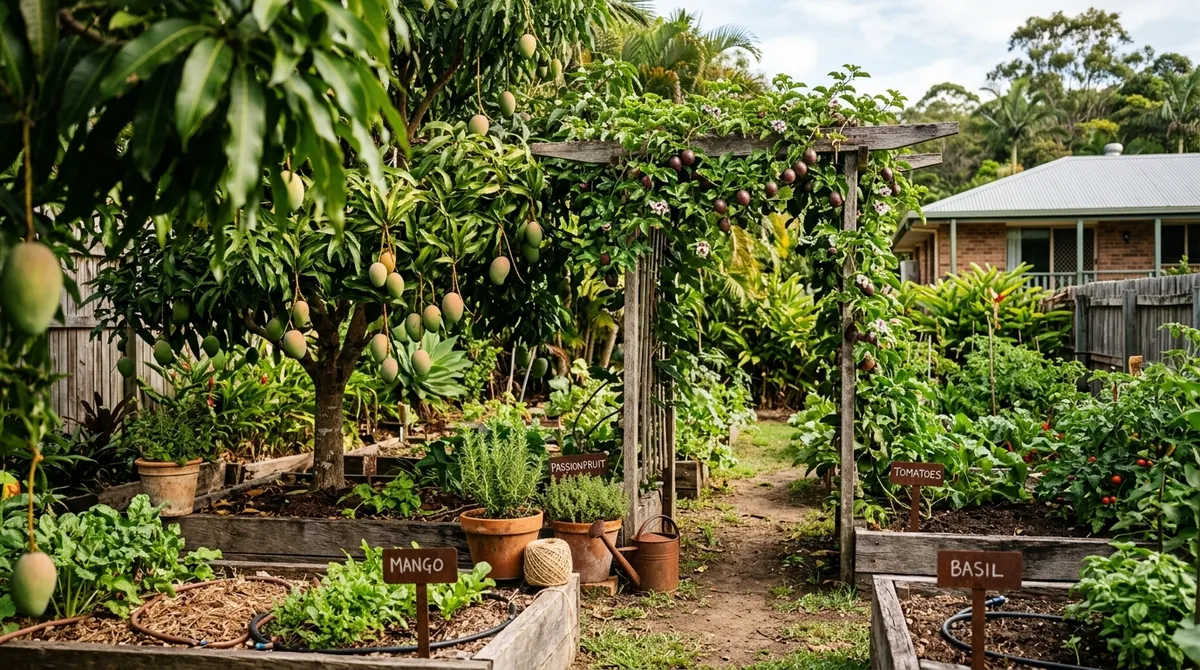
Growing Subtropical Fruit in South East Queensland
Mango, avocado, lychee, dragonfruit, passionfruit, banana, and pawpaw for SEQ backyards
SEQ sits in one of the best subtropical fruit-growing regions in Australia. The combination of warm wet summers, mild dry winters, and reliable sunshine means you can grow fruit here that gardeners in Melbourne and Sydney can only dream about. A single backyard in Indooroopilly or Buderim can produce mangoes, avocados, bananas, and passionfruit all at once.
The key is choosing the right varieties for your specific location, understanding pollination needs, and giving trees the space and soil they require.
🌱 Plants in this guide: Mango, Avocado, Banana, Pawpaw, Lychee, Dragon Fruit and Passionfruit. Each plant profile has sowing times for your region, companion plants and common pests.
Mango
SEQ is mango country. Trees flower in winter (July to September) and fruit from November to February, depending on the variety. Plant grafted trees for reliable fruit within 3-5 years.
- Kensington Pride (Bowen): The classic Australian mango. Sweet, aromatic, and fibreless. Large tree (8-10 metres) that needs space. Reliable cropper in SEQ.
- R2E2: Large, colourful fruit with firm flesh. Good shelf life. The commercial variety grown through the Bundaberg to Mareeba corridor. Performs well in SEQ backyards.
- Nam Doc Mai: Thai variety with elongated, sweet fruit. Slightly smaller tree than Kensington Pride. Excellent flavour and popular at markets.
- Honey Gold: Developed in Queensland. Rich, honey-sweet flavour. Medium-sized tree. Becoming the favourite backyard variety in SEQ.
Plant mangoes in full sun with excellent drainage. They tolerate SEQ's clay soils if planted on a mound. Avoid watering during flowering (July to September), as moisture encourages anthracnose fungus on flowers. Fruit fly protection is essential from October onwards.
Frost-prone areas (Ipswich valley floors, Gatton, Beaudesert) should protect young trees for the first 3 winters. Mature trees handle brief frosts to minus 1 degree but lose fruit and flowers at those temperatures.
Avocado
SEQ produces some of Australia's best avocados. The region around Tamborine Mountain, the Sunshine Coast hinterland (Nambour, Palmwoods, Montville), and parts of the Gold Coast hinterland are commercial avocado country.
- Hass: The standard. Dark, pebbly skin, rich creamy flesh. Fruits from May to October in SEQ. Type A flowering.
- Shepard: Green-skinned with buttery flesh. Fruits earlier (February to April). Type B flowering. Developed in Redland Bay, Queensland.
- Wurtz (Little Cado): Dwarf variety, reaching only 3-4 metres. Ideal for small gardens and large pots. Produces Hass-like fruit.
- Reed: Large round fruit with excellent flavour. Late season (August to November). Type A flowering.
Avocados demand perfect drainage. They will die in waterlogged soil, which is common in SEQ's heavy clay during the wet season. Plant on a raised mound at least 30 centimetres above the surrounding soil level. Add gypsum and compost to improve clay drainage. Water deeply but allow the soil to dry between waterings.
Cross-pollination improves fruit set. Planting a Type A (Hass) and Type B (Shepard) near each other increases yields for both trees.
Banana and Pawpaw
Banana
Bananas grow fast in SEQ's warm, humid summers. A new sucker planted in October can produce a bunch within 12-18 months. Backyard varieties available at SEQ nurseries include:
- Cavendish (Williams): The standard supermarket banana. Reliable producer in SEQ. Grows to 3-4 metres.
- Lady Finger: Smaller, sweeter fruit with a thinner skin. Slightly more cold-tolerant than Cavendish.
- Ducasse (Sugar Banana): Compact plant with very sweet, creamy fruit. Good for smaller gardens.
- Red Dacca: Ornamental and edible. Red-skinned fruit with orange flesh. Striking in the garden.
Plant in a sheltered spot protected from wind. Banana leaves shred in strong wind, reducing the plant's ability to photosynthesize. A north-facing fence line or wall is ideal. Feed heavily with compost, manure, and potassium-rich fertiliser. Remove all but 3 stems per clump (the mother, a daughter, and a granddaughter) for consistent production.
Pawpaw (Papaya)
Pawpaw is one of the fastest fruit crops in SEQ. Seed sown in October can produce fruit by the following autumn. Plant in full sun, in rich soil with excellent drainage. Pawpaw trees are short-lived (3-5 years of productive life), so keep new plants coming.
Red-fleshed varieties (Southern Red, Sunrise Solo) are sweeter for eating fresh. Yellow-fleshed types (Hybrid Yellow) are better for cooking as green pawpaw. Bisexual varieties produce fruit without needing a separate male pollinator.
Lychee and Dragonfruit
Lychee
SEQ is at the southern limit of reliable lychee production, but gardeners in frost-free areas grow excellent crops. Lychees need a cool, dry winter (which SEQ provides) to trigger flowering, followed by warm, humid conditions for fruit development.
- Kwai May Pink: The most reliable variety for SEQ. Small seed, sweet flesh, fruits in November and December.
- Wai Chee: Later fruiting (January). Larger fruit with good flavour.
- Tai So: Early season. Vigorous grower. Good for younger gardens as it crops relatively quickly.
Plant in a sheltered position protected from westerly winds. Lychees are slow to establish (5-7 years to first fruit from a grafted tree) but long-lived and productive once mature. Mulch heavily and keep roots cool and moist.
Dragonfruit (Pitaya)
Dragonfruit is a climbing cactus that thrives in SEQ's climate. It needs a sturdy post or trellis to climb and produces spectacular fruit from January to April. Varieties available at SEQ nurseries:
- White-fleshed (Hylocereus undatus): The most common. Mild, sweet flavour.
- Red-fleshed (Hylocereus costaricensis): Sweeter than white. Deep magenta flesh. Striking on the plate.
- Yellow (Selenicereus megalanthus): Small fruit with white flesh. The sweetest variety. Thorny skin.
Plant from cuttings in spring. Provide a concrete or hardwood post (2 metres tall) for the plant to climb. Feed monthly with a balanced fertiliser during the growing season. Dragonfruit handles SEQ's summer heat and winter dry season well. It dislikes heavy clay, so plant in raised beds or mounded soil with added sand and compost. Some varieties need a second, different variety for cross-pollination, so check the label or plant two varieties. Hand-pollinate at night when the flowers open to improve fruit set.
Passionfruit
Passionfruit is one of the easiest and fastest subtropical fruits for SEQ. A vine planted in October will produce fruit within 6-8 months. The classic Nellie Kelly (a grafted Panamanian rootstock) handles SEQ conditions well, but the straight black passionfruit (Passiflora edulis) is more vigorous in subtropical climates and does not suffer from the rootstock suckering problems that Nellie Kelly can have in warm areas.
Plant against a strong fence or trellis in full sun. Feed monthly with a potassium-rich fertiliser (tomato food works well). Passionfruit vines are short-lived, typically producing heavily for 3-5 years before declining. Keep new vines coming by planting a replacement every 2-3 years.
Harvest fruit when it drops from the vine. Wrinkled skin indicates ripeness. In SEQ, the main crop runs from December to April, with a smaller flush in spring.
Frequently Asked Questions
What subtropical fruit grows best in SEQ?
Mango, avocado, banana, pawpaw, passionfruit, lychee, dragonfruit, and macadamia all grow well in SEQ. The region sits in the subtropical sweet spot with warm wet summers and mild dry winters, which suits these crops perfectly.
Can I grow mango trees in Brisbane?
Yes. Brisbane and the Gold Coast are excellent for mangoes. Plant grafted trees like Kensington Pride, R2E2, or Nam Doc Mai in full sun. Trees fruit from November to February. Allow 6-8 metres of space for a full-size tree, or choose a dwarf variety for smaller gardens.
How do I grow avocado in SEQ?
SEQ is one of Australia's best avocado regions. Plant grafted Hass, Shepard, or Wurtz varieties in well-drained soil. Avocados hate wet feet, so mound the soil if your yard has clay. Water deeply but infrequently. Expect fruit 3-4 years after planting a grafted tree.
When should I plant subtropical fruit trees in SEQ?
Plant from September to November, at the start of the warm wet season. Trees establish their root systems through summer and are well settled before the following winter. Avoid planting in the dry winter months unless you can water consistently.
Plant profiles
Each profile has sowing times for your region, companion plants and common pests.
Free Monthly Planting Calendar
Get a personalised email each month with what to plant, seasonal tips, and harvest reminders for your region.
We send one email per month. Unsubscribe any time.