
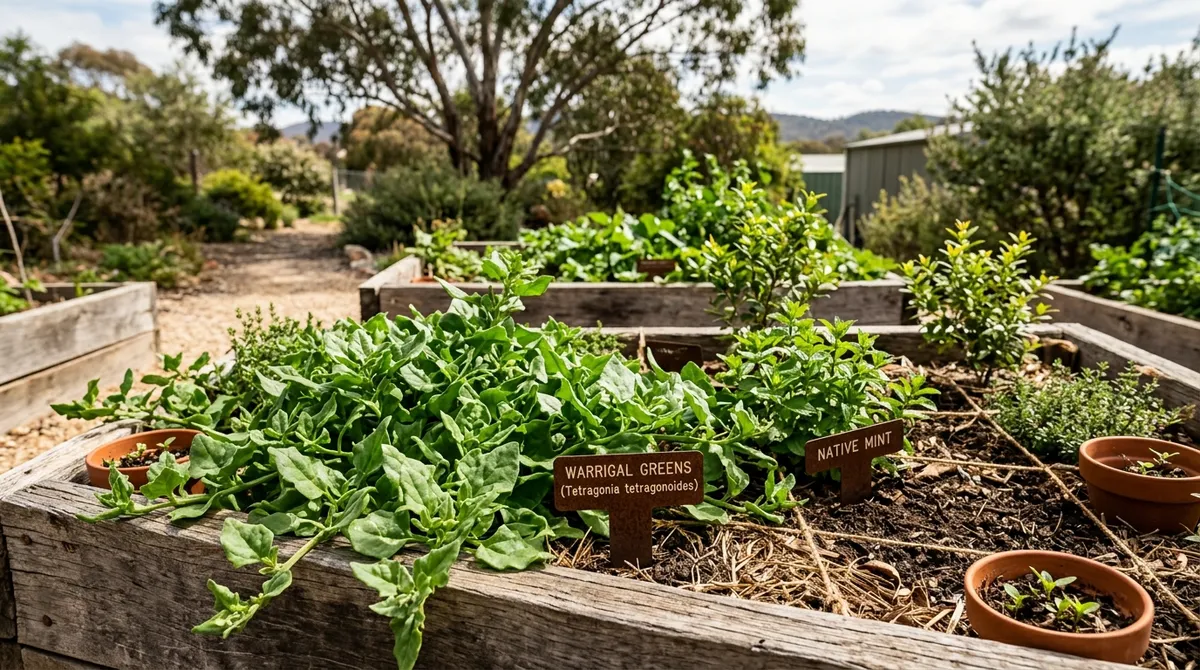
Growing Native Edibles in Canberra
Hardy Australian bush food plants that thrive in Canberra's frost, heat, and alkaline soils
Canberra sits within the traditional range of many cold-hardy Australian edible plants. The surrounding Brindabella Ranges, Namadgi National Park, and the highland woodlands support native species that have evolved to handle hard frosts, dry summers, and poor soils. These same species make resilient, low-maintenance additions to Canberra gardens, producing leaves, berries, seeds, and spices with distinctive Australian flavours.
Native edibles suit Canberra particularly well because they need less water than exotic crops, tolerate the alkaline clay soils without heavy amendment, and require minimal pest management. Several species also provide year-round interest as ornamental garden plants.
🌱 Plants in this guide: Mountain Pepper, Native Raspberry and Warrigal Greens. Each plant profile has sowing times for your region, companion plants and common pests.
Top Native Edibles for Canberra
Mountain Pepper (Tasmannia lanceolata)
Mountain pepper is the standout native edible for cold climates. It grows naturally in the alpine and subalpine regions of southeastern Australia, handling temperatures down to minus 10 degrees without damage. Both the leaves and berries are edible, delivering an intense peppery heat followed by a numbing sensation. Dried mountain pepper berries sell for $150-200 per kilogram, making this a valuable crop for home gardeners and small producers.
Plant mountain pepper in a partly shaded position with moist, well-drained soil. It tolerates Canberra's frost and summer heat, though it prefers some afternoon shade during the hottest months. You need both male and female plants for berry production. Plants reach 2-4 metres over several years. Harvest berries in autumn when they turn dark purple to black.
Native Raspberry (Rubus parvifolius)
Native raspberry grows wild across the ACT, including in bushland around Black Mountain, Mount Ainslie, and the Brindabellas. The small red berries are sweet and flavourful, ripening in late summer. Plants spread by suckers and can form dense thickets, so give them a dedicated bed or grow them in a contained area.
Plant in full sun to part shade. Native raspberry handles Canberra's frost easily and is drought-tolerant once established. It produces fruit on second-year canes, similar to European raspberries. Cut old canes to the ground after fruiting. The thorny canes also provide habitat for small birds.
Alpine Mint Bush (Prostanthera cuneata)
This compact shrub grows to about 1 metre and produces strongly aromatic leaves that make excellent herbal tea. It is native to the Australian Alps and tolerates Canberra's hardest frosts. White flowers with purple spots appear in summer and attract native bees. The leaves have a fresh, minty flavour with eucalyptus undertones.
Plant in well-drained soil in full sun. Alpine mint bush dislikes waterlogging, so raised beds or sloping positions suit it well. Prune lightly after flowering to maintain a compact shape. This is an excellent container plant for balconies and courtyards.
Warrigal Greens (Tetragonia tetragonioides)
Warrigal greens is a native spinach that grows wild along the NSW coast but also performs well in Canberra gardens. The thick, fleshy leaves need blanching before eating (soak in boiling water for 3-5 minutes, then rinse in cold water) to reduce oxalate levels. The flavour is mild and spinach-like.
Sow seeds directly in spring after the last frost. Warrigal greens grows quickly in warm weather and can spread vigorously. It dies back in Canberra's winters but self-seeds reliably. Harvest individual leaves regularly to encourage bushy growth. This plant handles Canberra's heat and dry conditions well once established.
Native Currant (Coprosma nitida)
Native currant is a small shrub (1-2 metres) that produces glossy orange-red berries in autumn. The berries are sweet with a mild flavour, eaten fresh or used in jams. The plant is native to alpine and subalpine regions of southeastern Australia and handles Canberra's frosts without protection.
Plant in full sun to part shade in well-drained soil. It grows slowly but is long-lived and very hardy once established. Both male and female plants are needed for fruit production. Native currant works well as a low hedge or border planting.
Sourcing Native Edible Plants in Canberra
The Australian National Botanic Gardens holds plant sales several times a year and regularly stocks native edible species. Yarralumla Nursery carries a basic selection. For specialist stock, online nurseries like Daleys Fruit Tree Nursery (Kyogle, NSW) and Australian Plants Online ship to the ACT. The Canberra Region native plant nurseries at Pialligo and in the surrounding region carry seasonal stock.
Seed is available from Australian seed suppliers including Nindethana Seed Service and the Australian Seed Company. Mountain pepper and native raspberry are also available through the Southern Harvest seed catalogue, which specialises in cool-climate edibles.
Garden Design with Native Edibles
Native edible plants combine well with conventional food gardens. Use mountain pepper and alpine mint bush as hedging or screening plants around vegetable beds. Warrigal greens works as a ground cover between fruit trees. Native raspberry fills gaps along fences and boundaries where its spreading habit is an advantage.
A dedicated native food garden might include mountain pepper at the back (tallest), native currant in the middle layer, alpine mint bush as low hedging, and warrigal greens as ground cover. This layered approach mimics natural plant communities and creates a productive, low-maintenance food garden that handles Canberra's extremes.
Mulch with eucalyptus leaf litter or fine bark chips to 5-8 centimetres depth. Most native edibles are adapted to nutrient-poor soils and do not need heavy fertilising. A light application of native plant fertiliser (low phosphorus) in spring is sufficient.
Seasonal Calendar for Native Edibles in the ACT
Spring (September to November): Plant new specimens after the last frost. Sow warrigal greens seeds. Alpine mint bush flowers in late spring.
Summer (December to February): Harvest native raspberry berries and warrigal greens leaves. Water new plantings during dry spells. Mountain pepper produces new growth.
Autumn (March to May): Harvest mountain pepper berries and native currant berries. Plant new specimens while soil is still warm. Mulch before winter.
Winter (June to August): Mountain pepper and native currant are dormant or semi-dormant. Alpine mint bush remains evergreen. No watering needed for established plants.
Frequently Asked Questions
What native edible plants grow in Canberra?
Several Australian native edibles handle Canberra's hard frosts well. Mountain pepper (Tasmannia lanceolata) is one of the hardiest, tolerating minus 10 degrees. Native raspberry (Rubus parvifolius) grows wild in the ACT's bushland. Alpine mint bush (Prostanthera cuneata), native currant (Coprosma nitida), and warrigal greens (Tetragonia tetragonioides) all perform reliably in Canberra gardens.
Where can I buy native edible plants in Canberra?
The Australian National Botanic Gardens plant sales (held several times a year) stock native edibles. Yarralumla Nursery carries a good selection. Online suppliers like Daleys Fruit Tree Nursery and Australian Plants Online ship to the ACT. The Canberra Organic Growers Society markets occasionally feature native edible seedlings from local growers.
Can I grow lemon myrtle in Canberra?
Lemon myrtle (Backhousia citriodora) is a subtropical species that struggles with Canberra's hard frosts. It can survive against a sheltered north-facing wall in inner Canberra, but it will suffer leaf burn and dieback in cold winters. Growing it in a large pot and moving it to a protected position in winter is a more reliable approach. Mountain pepper and native mint are hardier alternatives for cool climates.
Do native edible plants need much maintenance in Canberra?
Most native edibles are low-maintenance once established. They are adapted to Australian soils and conditions, so they need less fertiliser, less water, and less pest management than exotic food plants. The main care requirements are mulching to retain moisture, occasional pruning to maintain shape, and watering through Canberra's dry summer months until plants are fully established (usually two to three years).
Plant profiles
Each profile has sowing times for your region, companion plants and common pests.
Free Monthly Planting Calendar
Get a personalised email each month with what to plant, seasonal tips, and harvest reminders for your region.
We send one email per month. Unsubscribe any time.