
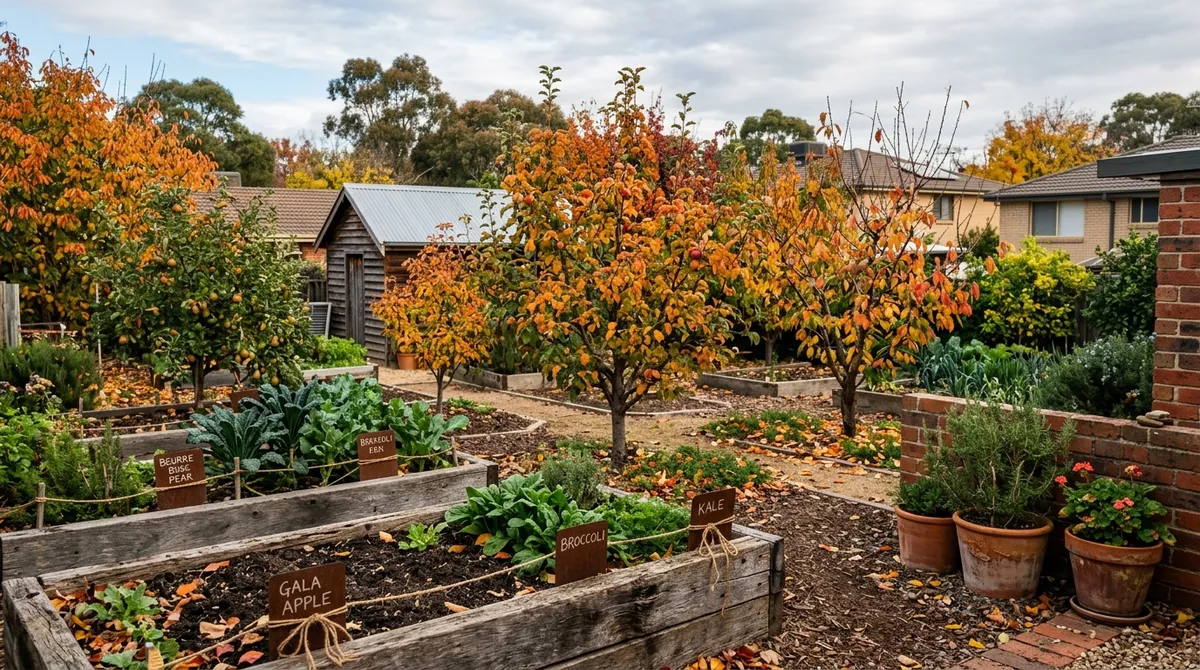
Best Fruit Trees for Canberra
Cold winters, high chill hours, and intense summer sun produce outstanding deciduous fruit
Canberra is one of Australia's best locations for growing deciduous fruit trees. The cold winters deliver 800-1000 chill hours (hours below 7 degrees between May and August), which is more than enough for apples, pears, plums, cherries, apricots, peaches, and nectarines. The hot, dry summers ripen fruit with concentrated flavour. The challenge is late spring frost, which can destroy blossoms and wipe out an entire season's crop in a single night.
The strategy for Canberra fruit trees is straightforward: choose varieties that bloom late enough to dodge the last frost, prepare your soil well, and understand which suburbs sit in frost hollows.
🌱 Plants in this guide: Apricot, Peach, Nectarine, Plum, Cherry, Apple, Pear and Quince. Each plant profile has sowing times for your region, companion plants and common pests.
Stone Fruit: Canberra's Strength
Stone fruit thrives in Canberra's continental climate. The dry summers reduce fungal disease pressure, and the cold winters ensure full dormancy. Every stone fruit type performs well here, provided you select varieties with late bloom times.
- Apricots: The best performer in the ACT. Moorpark is the classic variety, available at Yarralumla Nursery and most Canberra garden centres. Trevatt is another reliable choice with heavy crops. Apricots bloom early (August), so plant them in elevated positions rather than frost hollows. Inner Canberra suburbs (Griffith, Red Hill, Barton) provide enough warmth to protect early blossoms.
- Peaches and nectarines: Golden Queen peach is a proven Canberra variety, ripening in late January. Anzac peach matures earlier (mid-January) and handles cold well. For nectarines, Goldmine and Sunraycer are good choices. All need full sun and well-drained soil.
- Plums: Santa Rosa (Japanese plum) produces heavily in Canberra and ripens in January. For European plums, Greengage and Damson handle the cold well. European plums bloom later than Japanese types, making them safer in frost-prone suburbs.
- Cherries: Canberra has enough chill hours for cherries, and several commercial orchards operate in the surrounding region (Pialligo, Hall, Murrumbateman). Stella is self-fertile and reliable. Lapin and Bing need a pollination partner. Net trees against birds, as currawongs and cockatoos will strip a tree in hours.
Apples and Pears
Apples and pears are among the most reliable fruit trees for the ACT. They bloom later than stone fruit (September to October), which reduces frost risk. Both need a pollination partner: plant at least two different varieties.
- Apples: Granny Smith, Fuji, Gala, Pink Lady, and Cox's Orange Pippin all produce well. Jonathan is an older variety that handles Canberra's heat and cold. For heritage orchardists, Gravenstein, Sturmer Pippin, and Democrat are excellent high-chill varieties rarely available in warmer parts of Australia.
- Pears: Williams (Bartlett) is the standard eating pear and crops reliably. Beurre Bosc produces large, russeted fruit with rich flavour. Packham's Triumph, developed in Australia, handles Canberra's conditions well. Nashi pears also thrive; Nijisseiki (20th Century) is widely available.
- Quinces: Often overlooked, quinces are tough trees that handle Canberra's frost and heat without fuss. Smyrna is the most common variety. The fruit is harvested in autumn and used for paste, jams, and slow-cooked dishes.
Frost Hollows and Site Selection
Cold air drains downhill on still, clear nights and pools in valleys and low-lying areas. The ACT's landscape creates pronounced frost hollows that can be 5-7 degrees colder than elevated suburbs just a few kilometres away.
- Tuggeranong Valley: Canberra's coldest residential area for fruit growing. Frost records of minus 7 degrees have been measured here. Avoid early-blooming stone fruit unless you have a north-facing slope. Apples and pears are safer choices.
- Belconnen and Gungahlin: Valley suburbs around Lake Ginninderra and the Gungahlin town centre sit in frost pockets. Choose late-blooming varieties. Elevated areas in Giralang and Kaleen fare better.
- Inner Canberra (Red Hill, Griffith, Barton, Forrest): Urban heat island and good elevation make these the warmest suburbs for fruit growing. Apricots, peaches, and cherries perform best here.
- Weston Creek and Woden: Moderate conditions. Protected by surrounding ridges. Most fruit trees perform well with standard late-variety selection.
Plant fruit trees on the highest ground available in your garden. A slope of even 2-3 metres provides meaningful frost protection by allowing cold air to drain away. North-facing slopes receive more winter sun and warm the soil earlier in spring.
Planting and Soil Preparation
Plant bare-root fruit trees in winter (June to August) while they are dormant. This is when Canberra nurseries, including Yarralumla Nursery, Pialligo Plant Farm, and the annual Canberra Region Heritage Apple Day sales, stock the widest range of varieties.
Canberra's alkaline clay soil needs improvement for fruit trees. Dig a planting hole three times the width of the root ball and mix in generous compost, well-rotted manure, and some gypsum to improve clay structure. Do not add fertiliser to the planting hole; it can burn young roots. Mulch with woodchip or pea straw to 10 centimetres depth, keeping mulch 15 centimetres away from the trunk to prevent collar rot.
Water deeply once a week through the first two summers. Established trees (three years and older) need less irrigation, but Canberra's hot, dry January and February still demand supplementary water. Drip irrigation on a timer is the most efficient method under ACT water restrictions.
Pruning and Maintenance
Prune deciduous fruit trees in winter while fully dormant (June to July in Canberra). Stone fruit is an exception: prune after harvest in late summer to reduce the risk of bacterial gummosis entering through winter pruning cuts.
Open vase shapes work well for stone fruit, allowing sunlight and airflow into the canopy. Apples and pears suit central leader or modified central leader forms. Espaliered fruit trees along north-facing fences are popular in Canberra's smaller suburban gardens and benefit from the reflected warmth of masonry walls.
Feed fruit trees with a balanced organic fertiliser in early spring (August) as buds begin to swell. A second feed after fruit set in November supports heavy crops. Potash (from seaweed extract or wood ash) applied in autumn improves fruit quality the following season.
Common pests in Canberra include codling moth (apples and pears), fruit fly (stone fruit), and birds. Codling moth traps placed in October reduce damage. Exclusion netting is the most reliable protection against both fruit fly and birds.
Frequently Asked Questions
What fruit trees grow best in Canberra?
Canberra's cold winters (800-1000 chill hours) suit most deciduous fruit trees. Apples, pears, plums, cherries, apricots, peaches, nectarines, and quinces all perform well. The key challenge is late spring frost, which can damage blossoms on early-flowering stone fruit. Choose late-blooming varieties for frost-prone suburbs like Tuggeranong and Belconnen.
When should I plant fruit trees in Canberra?
Plant bare-root fruit trees in winter, from June to August. This is when nurseries stock the widest range. Potted trees can go in year-round, but winter planting gives roots time to establish before the growing season. Water well at planting and mulch thickly, keeping mulch 15 centimetres away from the trunk.
Can I grow citrus in Canberra?
Citrus is difficult in Canberra because of the hard frosts. Meyer lemons and Satsuma mandarins are the most frost-tolerant citrus varieties and can survive in sheltered spots against north-facing brick walls. Most gardeners grow citrus in large pots and move them under cover during winter. Expect fruit quality below what warmer regions produce.
Do I need two apple trees for pollination in Canberra?
Most apple varieties need a different apple variety nearby for cross-pollination. Plant at least two compatible varieties. Granny Smith and Fuji are a good pairing. Crabapples also work as pollinators. Some self-fertile varieties exist (Cox's Orange Pippin is partially self-fertile), but yields improve with a pollination partner.
Plant profiles
Each profile has sowing times for your region, companion plants and common pests.
Free Monthly Planting Calendar
Get a personalised email each month with what to plant, seasonal tips, and harvest reminders for your region.
We send one email per month. Unsubscribe any time.