
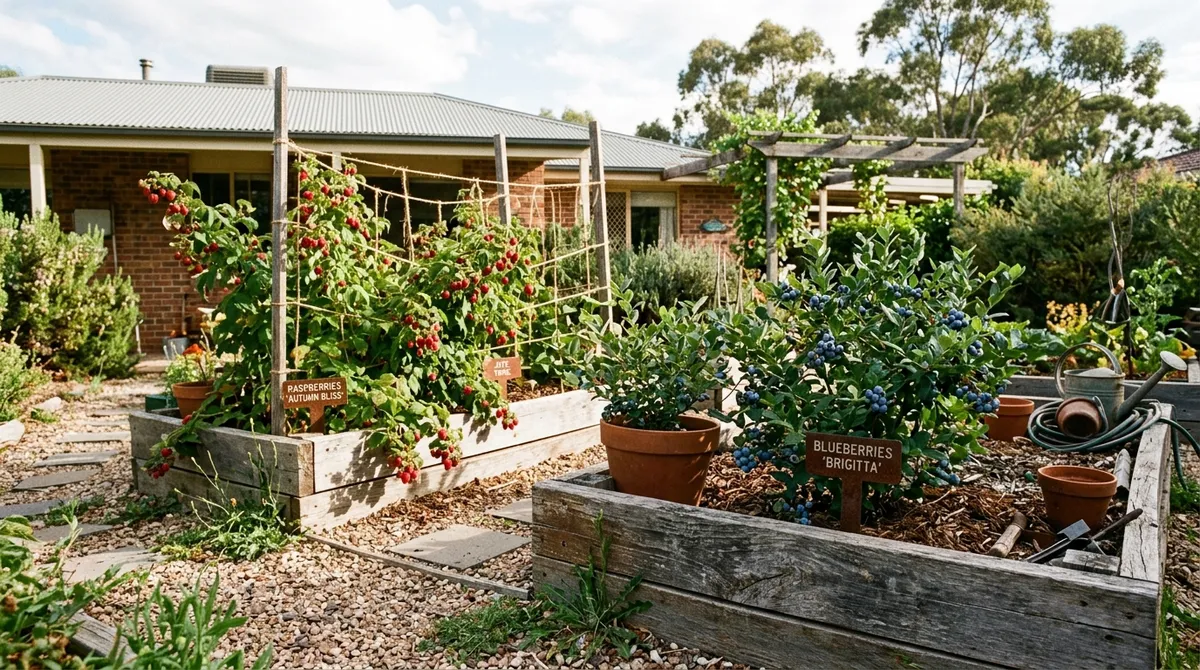
Growing Berries in Canberra
Cold winters give Canberra an advantage for raspberries, currants, and high-chill blueberry varieties
Canberra's cold winters are a genuine advantage for berry growing. Raspberries, currants, gooseberries, and high-chill blueberries all need the prolonged cold period that the ACT provides (800-1000 chill hours). These crops struggle in Australia's warmer capitals but thrive in Canberra's highland climate. The dry summers also reduce fungal disease on fruit, producing clean, flavourful berries.
The one catch is blueberries. They need acidic soil (pH 4.5-5.5), and Canberra's natural soil is alkaline clay (pH 7.0-7.5). The solution is simple: grow blueberries in pots or raised beds with acidic potting mix.
🌱 Plants in this guide: Blueberry, Raspberry and Strawberry. Each plant profile has sowing times for your region, companion plants and common pests.
Raspberries
Raspberries are the easiest and most productive berry crop for Canberra. The cold winters trigger proper dormancy, and the dry summers keep fruit clean and free of botrytis (grey mould), which plagues raspberry growers in humid coastal areas.
- Heritage: The most reliable variety for Canberra. An everbearing type that produces a smaller summer crop on old canes and a larger autumn crop on new canes (February to April). Medium-sized, firm, bright red fruit with good flavour. Self-supporting canes, though a trellis improves air circulation.
- Willamette: A summer-bearing variety that produces one large crop of dark red, highly flavoured berries in December and January. Excellent for jam and freezing. Vigorous canes that need a strong trellis system.
- Fallgold: A golden-yellow everbearing raspberry. Sweet, mild flavour. Produces autumn crops on first-year canes. Eye-catching in the garden and excellent for fresh eating.
- Chilcotin: Large, firm berries on a summer-bearing plant. Excellent fresh eating quality. Good disease resistance.
Plant bare-root raspberry canes in winter (June to August), spaced 40-50 centimetres apart in a row. Install a T-trellis (two horizontal wires at 60 and 120 centimetres height) to support the canes. Raspberries spread by underground suckers, so contain them with a 30-centimetre deep root barrier or plant in raised beds.
Prune summer-bearing varieties by cutting all fruited canes to ground level after harvest. Everbearing types can be managed two ways: cut all canes to the ground in winter for a single large autumn crop, or leave strong canes standing for a smaller summer crop plus an autumn crop.
Blueberries
Blueberries produce well in Canberra, but the alkaline clay soil is unsuitable for direct planting. The solution is to create an acidic growing environment.
The easiest approach is large pots (50-litre minimum) or half-wine barrels filled with a commercial camellia and azalea potting mix. This mix has a pH of 5.0-5.5, which blueberries need. Alternatively, build a dedicated raised bed and fill it with a blend of composted pine bark, peat moss, and perlite. Test pH annually and adjust with sulphur if needed.
Choose high-chill varieties that take advantage of Canberra's cold winters.
- Brigitta: Late-season variety with large, firm berries. Excellent flavour and long harvest period (February to March). Needs 800+ chill hours, which Canberra provides easily.
- Denise: Mid-season producer with consistently large fruit. Good disease resistance. Available at Bunnings and specialist nurseries.
- Northland: An early-season variety that produces from late December. Medium-sized, very sweet berries. Cold-hardy to well below Canberra's minimum temperatures.
- Misty: A lower-chill variety (300 hours) that still performs in Canberra. Produces early fruit from December. Semi-evergreen foliage.
Plant at least two different blueberry varieties for cross-pollination. While some varieties are partially self-fertile, cross-pollination increases berry size and total yield by 30-50 percent. Water blueberries with rainwater if possible; Canberra's tap water is slightly alkaline and can raise soil pH over time. Feed with an azalea and camellia fertiliser in spring and again after fruiting.
Currants and Gooseberries
Blackcurrants, redcurrants, and gooseberries are cold-climate berries that perform exceptionally well in Canberra. They are rarely grown in most Australian gardens because the major capitals are too warm. Canberra's cold winters give gardeners here a distinctive advantage.
- Blackcurrants: Ben Lomond and Magnus are high-yielding varieties. The berries are rich in vitamin C and make outstanding jam, cordial, and liqueur (cassis). Plants are compact bushes (1-1.5 metres) that handle minus 7 degrees without any protection. Harvest in January.
- Redcurrants: Jonkheer van Tets and Red Lake produce translucent red berries on elegant trusses. Tart flavour, excellent for jelly and garnishes. More ornamental than blackcurrants, with attractive clusters of jewel-like fruit.
- Gooseberries: Invicta (green, mildew-resistant) and Captivator (red, nearly thornless) are the best varieties for the ACT. Gooseberries are supremely cold-hardy and virtually pest-free in Canberra. The fruit is tart when green (excellent for pies and sauces) and sweet when fully ripe.
Plant currants and gooseberries in winter. They tolerate partial shade better than most fruit crops, making them useful for east-facing or partly shaded positions. Prune in winter by removing branches older than three years to encourage productive new wood. Mulch with compost or well-rotted manure in autumn.
Strawberries
Strawberries are quick to establish and produce fruit within months of planting. They handle Canberra's frost well once established, though flowers and green fruit can be damaged by late spring frosts.
Plant runners in March or April for harvest the following spring (October to December). Red Gauntlet is the classic variety for cool climates, producing firm, sweet berries. Chandler produces large, flavourful fruit. For everbearing production (multiple harvests), Albion and Seascape crop from spring through autumn.
Strawberries grow well in raised beds, hanging baskets, vertical towers, and traditional garden rows. In all cases, good drainage is essential. Mulch around plants with straw (the name "strawberry" literally refers to this practice) to keep fruit clean and prevent soil splash. Replace plants every 3-4 years as productivity declines. Save runners from your best-performing plants to establish new beds.
Bird Protection
Every berry grower in Canberra needs bird netting. King parrots, crimson rosellas, currawongs, and blackbirds all target ripening berries. Without netting, you will lose most of your crop.
Use proper bird netting with a mesh size of 10 millimetres or smaller. Larger mesh sizes (20mm+) entangle and kill small birds, which is both illegal and harmful. Build a permanent frame over berry beds using PVC pipe or timber, and drape netting over the frame. Ensure netting is secured tightly at ground level so birds cannot enter from below. Install netting as fruit begins to colour, and remove it after harvest to allow pollinators access during flowering the following season.
Frequently Asked Questions
Can I grow blueberries in Canberra?
Blueberries grow well in Canberra with one critical requirement: acidic soil. Canberra's natural soil is alkaline clay (pH 7.0-7.5), but blueberries need a pH of 4.5-5.5. The easiest approach is to grow them in large pots or raised beds filled with an acidic potting mix (camellia and azalea mix). Add sulphur to lower pH and mulch with pine bark. High-chill varieties like Brigitta, Denise, and Northland produce well with Canberra's 800-1000 chill hours.
What raspberry varieties grow best in Canberra?
Canberra's cold winters suit raspberries perfectly. Heritage (everbearing, produces summer and autumn crops) is the most reliable variety. Willamette produces large, flavourful fruit in a single summer crop. For golden raspberries, Fallgold is a hardy everbearing choice. All raspberry varieties need full sun, well-drained soil, and a trellis or support system for the canes.
When should I plant berries in Canberra?
Plant bare-root berry bushes and canes in winter (June to August) while dormant. Potted plants can go in year-round, but winter planting gives the best results because roots establish before the growing season. Water well at planting and mulch thickly. Most berries produce their first small crop in the second year and reach full production by year three.
Can I grow strawberries in Canberra?
Strawberries perform well in Canberra. Plant runners in March or April for a spring and early summer harvest. Red Gauntlet, Tioga, and Chandler are reliable varieties for the ACT. Strawberries handle Canberra's frost when established but benefit from straw mulch around the crowns in the coldest months. Expect the main harvest from October to December.
Plant profiles
Each profile has sowing times for your region, companion plants and common pests.
Free Monthly Planting Calendar
Get a personalised email each month with what to plant, seasonal tips, and harvest reminders for your region.
We send one email per month. Unsubscribe any time.