
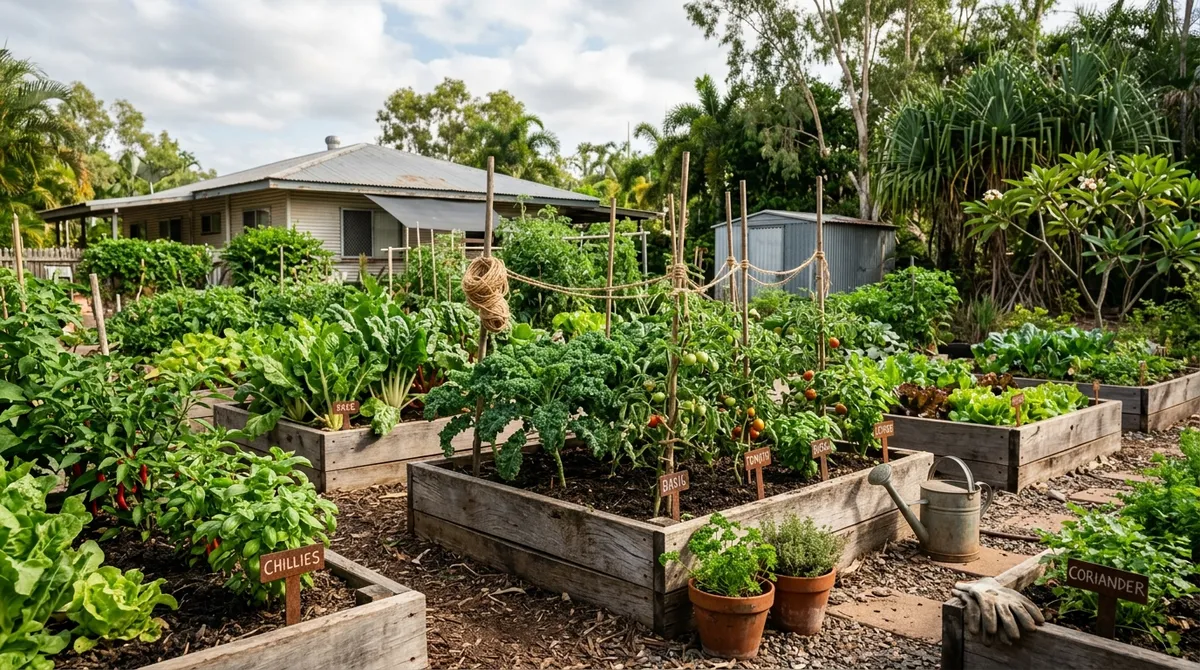
Dry Season Gardening in Darwin
The main vegetable window: month-by-month planting, irrigation, and managing the build-up transition
The dry season is the heart of vegetable gardening in Darwin and the Top End. From May to September, the monsoon retreats, humidity drops, and temperatures settle into a range that supports a wide variety of crops. Darwin receives less than 15mm of total rainfall from May to September. Days are warm (30-33 degrees), nights are mild (19-22 degrees), and skies are clear.
This guide covers what to plant each month, how to manage irrigation through the driest months, and how to handle the build-up transition as the wet season approaches.
May: The Season Opens
May is the first true dry season month. The last wet season storms have passed, humidity drops noticeably, and overnight temperatures fall below 22 degrees. This is the most important planting month in Darwin's calendar.
Plant now: Tomatoes (cherry varieties and Tropic), capsicum, chilli, eggplant, snake beans, cucumber, zucchini, Asian greens (bok choy, pak choi, tatsoi, Chinese cabbage), spring onions, Thai basil, chives, and perennial coriander (sawtooth herb).
Prepare beds by topping up with compost and aged manure. Install drip irrigation if you have not already. Set timers for early morning watering. Apply 10 centimetres of sugar cane mulch over all bare soil.
June: Peak Planting
June is Darwin's coolest month alongside July. Overnight temperatures drop to 19-20 degrees. Days are 31 degrees and sunny. These are the best conditions you will get for growing vegetables in the Top End.
Plant now: Everything from May, plus lettuce (all types), beetroot, carrots, radish, turnip, silverbeet, and even broccoli and cauliflower. June and July are the only months cool enough for these temperate crops in Darwin. Sow lettuce seeds every 2 weeks for succession harvests.
June is also the best month for starting herb gardens. Plant rosemary, parsley (Italian flat-leaf handles the warmth better than curly), dill, and sage. These herbs struggle in the wet season but produce well through the dry.
July: Peak Harvest
July is the coolest month, with overnight lows around 19 degrees. Gardens are at peak production. Tomatoes planted in May are producing heavily. Lettuce, Asian greens, and herbs are thriving.
Plant now: Succession sowings of lettuce, radish, beetroot, and Asian greens every 2-3 weeks. Continue harvesting beans, tomatoes, capsicum, and cucumbers. This is the best month for brassicas. Broccoli and cauliflower planted in June are heading up.
Fruit fly remains active even in July. Maintain exclusion netting on all fruiting crops. Continue weekly protein bait sprays. Pick tomatoes at the first sign of colour change.
August: Warmth Returns
August marks the beginning of warming. Daytime temperatures climb to 32-33 degrees, and overnight lows start rising above 20 degrees. The dry season is past its midpoint.
Plant now: Final sowings of lettuce and beetroot (choose bolt-resistant varieties). Continue with beans, cucumbers, and herbs. Plant pumpkin and watermelon seeds for a late harvest, though these are a gamble as the build-up may cut the season short.
Lettuce and brassicas start struggling by late August. Harvest everything you can before the heat arrives. Side-dress tomatoes and capsicum with fertiliser for a final flush of fruit production.
September: The Build-Up Begins
September is the transition month. Darwin's famous build-up begins: temperatures climb above 34 degrees daily, humidity increases noticeably, and afternoon thunderstorms start rolling in. Overnight temperatures rise above 25 degrees by late September.
Plant now: Heat-tolerant crops only. Sweet potato slips, kangkong cuttings, snake beans (a second planting), okra, and lemongrass. Pull out any remaining tomatoes, lettuce, and brassicas. They will decline rapidly.
The build-up is psychologically tough for gardeners. Your productive dry season garden transitions into a challenging period where heat and humidity dominate. Focus on preparation for the wet season: repair beds, clear drainage channels, and plant wet season crops that will establish before the monsoon.
Managing the Build-Up (September to November)
The build-up deserves its own section because it is the most difficult gardening period in Darwin. Temperatures regularly exceed 35 degrees, humidity climbs to 70-80%, and violent afternoon thunderstorms drop heavy rain on hot soil.
Install 50% shade cloth over remaining garden beds to reduce heat stress on crops. Water in the early morning only. Reduce irrigation frequency if afternoon storms are providing moisture. Monitor soil moisture with a finger test before watering. The combination of rain events and irrigation can waterlog beds quickly.
Pest pressure intensifies during the build-up. Grasshoppers arrive in large numbers and can strip a garden bed overnight. Fine mesh netting is the most effective control. Whitefly populations surge as temperatures rise. Maintain neem oil or horticultural soap sprays every 5-7 days.
The build-up is the right time to plant sweet potato, cassava, kangkong, and tropical herbs. These crops establish during September and October and grow vigorously once the monsoon rain arrives in December or January.
Irrigation Through the Dry Season
Darwin's dry season receives almost no rain. Your garden depends entirely on you for water from May to September.
Drip irrigation on a timer is the standard approach for successful Darwin gardens. Set timers for early morning (5-6am) before the heat of the day. Water deeply every 1-2 days. Sandy Darwin soils drain fast, and the warm, dry conditions evaporate surface moisture quickly.
A typical raised bed needs 15-20 litres per square metre every 1-2 days during the dry season. Monitor your plants and adjust. Wilting in the afternoon is normal on hot days, but if plants are still wilted in the early morning, they need more water.
Mulch is your most important water-saving tool. A 10 centimetre layer of sugar cane mulch reduces evaporation by up to 70%. Replace it every 3-4 weeks as it breaks down in the tropical warmth. Keep mulch 5 centimetres away from plant stems to prevent collar rot.
Feeding Schedule
Warm soils, frequent watering, and fast-growing crops use nutrients quickly. Feed more often than you would in a southern garden.
- At planting: Mix compost and aged manure into the top 15 centimetres. Add a handful of blood and bone per plant.
- Every 2-3 weeks: Side-dress with pelletised chicken manure or a balanced organic fertiliser.
- Fortnightly: Liquid seaweed as a foliar spray or soil drench for root health and stress tolerance.
- Fruiting crops: Liquid potash fortnightly from fruit set onwards to improve fruit quality.
Frequently Asked Questions
When is the dry season in Darwin?
Darwin's dry season runs from May to September. These are the coolest, driest months, with overnight temperatures of 19-22 degrees and virtually no rainfall. The build-up (September to November) follows, with increasing heat, humidity, and afternoon storms before the monsoon arrives in December.
What can I plant each month during Darwin's dry season?
May: tomatoes, capsicum, beans, Asian greens, cucumbers, herbs. June to July: add lettuce, beetroot, carrots, radish. These are the only months cool enough for temperate leafy greens. August: final plantings of fast-maturing crops. September: transition to heat-tolerant crops like sweet potato, kangkong, and okra.
How do I manage the build-up transition in my Darwin garden?
The build-up (September to November) is the hardest time to garden in Darwin. Pull out dry season crops that are declining. Plant heat-tolerant wet season crops like sweet potato, kangkong, and snake beans. Use 50% shade cloth over beds to reduce heat stress on remaining plants.
How much water does a Darwin vegetable garden need in the dry season?
Water deeply every 1-2 days. Darwin receives almost no rain from May to September. Use drip irrigation on a timer. Mulch beds with 10 centimetres of sugar cane mulch. A typical bed needs 15-20 litres per square metre every 1-2 days.
Free Monthly Planting Calendar
Get a personalised email each month with what to plant, seasonal tips, and harvest reminders for your region.
We send one email per month. Unsubscribe any time.