
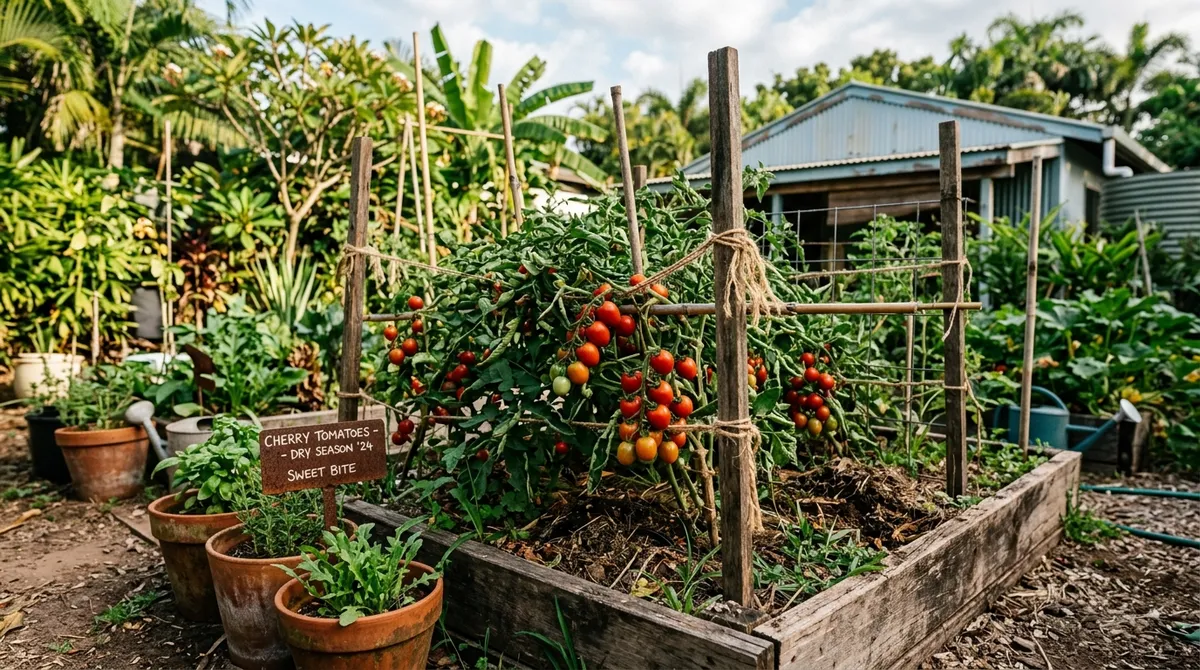
When to Plant Tomatoes in Darwin
Dry season timing, cherry varieties, and managing extreme pest pressure in the Top End
Growing tomatoes in Darwin is one of the toughest challenges in Australian gardening. The growing window is short (May to August), pest pressure is relentless, and the heat returns fast. Cherry tomatoes are your best bet. They fruit quickly, ripen before conditions deteriorate, and produce enough to make the effort worthwhile.
The reward for getting it right is vine-ripened tomatoes during the dry season months when Darwin's weather is at its finest. Here is how to make it work.
🌱 Plant profile: Tomato, with sowing times for your region, companion plants and common pests.
Darwin's Tomato Timeline
Start Seeds: April
Sow seeds in early April as the wet season ends. Soil temperatures are still warm (above 25 degrees), so germination is fast, typically 4-6 days. Use seed-raising mix in small pots or cell trays. Place in a spot with morning sun and afternoon shade. The April humidity is still high, so watch for damping off in seedlings. Good airflow and avoiding overwatering are essential.
Transplant: May
May is the ideal transplanting month. Humidity drops, overnight temperatures fall to 19-22 degrees, and rainfall decreases significantly. Transplant seedlings when they have 4-6 true leaves. Space plants 50 centimetres apart. Stake every plant at planting time and apply insect exclusion netting immediately.
May conditions in Darwin: average maximum 32 degrees, average minimum 22 degrees, average rainfall 21mm. This is warm compared to southern tomato-growing climates, but it is the coolest Darwin gets.
Peak Harvest: July to August
July is Darwin's coolest month, with overnight temperatures around 19 degrees and daytime highs of 30-31 degrees. This is when tomatoes produce their best fruit. Cherry varieties planted in May are producing heavily by July. Pick fruit regularly to encourage continued production.
August conditions begin warming (maximums of 32-33 degrees). Continue harvesting but expect production to slow by late August as the build-up approaches.
Season End: September
By September, Darwin's build-up is underway. Overnight temperatures climb above 25 degrees, humidity surges, and afternoon storms begin. Tomato fruit set stops when overnight temperatures exceed 24 degrees consistently. Pull out plants by mid-September and switch to wet season crops.
Best Tomato Varieties for Darwin
Cherry and small-fruited varieties are the most reliable producers in Darwin. They mature faster, so you get a harvest within the short window. Larger varieties often fail to ripen enough fruit before the build-up ends the season.
- Tommy Toe: The go-to cherry tomato for Top End gardens. Extremely productive, sweet, and handles variable conditions. Plants produce masses of small red fruit from 8-10 weeks after transplanting.
- Sweet Bite: Cocktail-sized cherry with disease resistance. Good truss production and consistent ripening. A step up in size from Tommy Toe.
- Cherry Grande: Large cherry tomato with outstanding heat tolerance. Sets fruit reliably in warm conditions that stop other varieties.
- Tropic: The best full-sized tomato for the Top End. Bred for tropical conditions with strong resistance to fusarium wilt and bacterial diseases. Medium-sized red fruit with good flavour.
- Roma VF: Works for sauce making if planted early in May. The VF disease resistance is essential in Darwin's conditions. Harvest before September.
Avoid large heirloom varieties like Brandywine and Mortgage Lifter. They need a longer season than Darwin provides and are highly susceptible to the fungal and bacterial diseases that thrive in the tropics.
Pest Management: The Biggest Challenge
Fruit Fly
Fruit fly pressure in Darwin is among the worst in Australia. Queensland fruit fly is active year-round, with no winter break to reduce populations. Every tomato fruit is at risk from the moment it begins to swell.
Exclusion netting is mandatory. Cover entire plants with fine insect mesh (less than 1mm openings) from the moment flowers appear. Secure the netting at the base so no gaps exist. Apply protein bait sprays (Naturalure or similar) to surrounding foliage weekly. Pick fruit at the first sign of colour change and ripen indoors. Remove every fallen fruit from the ground immediately.
Whitefly
Whitefly populations in Darwin are enormous. They cluster on the undersides of tomato leaves, sucking sap and spreading viral diseases. Yellow sticky traps placed near plants help monitor numbers. Spray with horticultural soap or neem oil every 5-7 days during heavy infestations. The combination of netting (for fruit fly) and regular spraying (for whitefly) is the standard approach for Darwin tomato growers.
Bacterial Wilt
Ralstonia solanacearum is widespread in Darwin soils. Plants wilt suddenly and die within 2-3 days. There is no cure. Prevention relies on rotating planting positions, using raised beds with fresh potting mix, and choosing resistant varieties (Tropic has moderate resistance). Grafted tomatoes on resistant rootstock are available from some NT nurseries and offer the best protection.
Caterpillars
Heliothis (corn earworm) bores into tomato fruit. Cluster caterpillar attacks foliage. Check plants daily and hand-pick caterpillars. Apply Bt (Bacillus thuringiensis) spray weekly as a preventive measure. Exclusion netting helps reduce caterpillar access if the mesh is fine enough.
Soil and Watering
Darwin's soils are generally sandy and low in organic matter. Most successful tomato growers in the Top End use raised beds filled with a custom mix rather than planting into native soil.
Fill raised beds with 50% quality compost, 30% aged cow manure, and 20% coarse sand or perlite. This mix retains moisture while draining freely. Top with 8-10 centimetres of mulch (sugar cane or lucerne hay). Mulch breaks down fast in Darwin's warmth, so replace it every 3-4 weeks.
Water deeply every 1-2 days during the dry season. Darwin's low humidity and consistent warmth dry out soil faster than in coastal Queensland. Drip irrigation on a timer is the most reliable method. Water in the early morning. Consistent moisture prevents blossom end rot and supports steady fruit development.
Feed with liquid organic fertiliser every 2 weeks from transplanting. Add liquid potash fortnightly once fruit begins to set. Liquid seaweed every 2 weeks supports root health and stress tolerance.
Summary: Your Darwin Tomato Calendar
April: Sow seeds in trays. Choose cherry and heat-tolerant varieties.
May: Transplant seedlings. Install exclusion netting. Mulch and set up irrigation.
June to August: Peak growing and harvest season. Pick fruit as it colours. Manage whitefly and caterpillars.
September: Season ends as the build-up begins. Pull out plants and prepare for wet season crops.
Frequently Asked Questions
When should I plant tomatoes in Darwin?
Plant tomatoes during the dry season only, from late April to July. Sow seeds from April and transplant seedlings from May. The growing window is short because Darwin's build-up (September to October) brings extreme heat and humidity that stops fruit set. Cherry varieties produce fastest and give you the best chance of a harvest.
What tomato varieties grow best in Darwin?
Cherry tomatoes are the most reliable. Tommy Toe, Sweet Bite, and Cherry Grande produce quickly and handle the heat better than larger varieties. Tropic is the best full-sized tomato for Darwin. Avoid large heirloom varieties, which rarely produce well in the Top End.
Why is it so hard to grow tomatoes in Darwin?
Darwin's extreme conditions create multiple challenges. Year-round fruit fly pressure, bacterial wilt in warm soils, whitefly infestations, and a very short window of suitable temperatures (overnight lows below 24 degrees occur only from May to August). The wet season makes tomato growing impossible.
Do I need netting for tomatoes in Darwin?
Exclusion netting is absolutely essential in Darwin. Fruit fly is active year-round and will sting every accessible fruit. Fine insect mesh over the entire plant from flowering onwards is the only reliable protection.
Plant profile
The tomato profile has sowing times for your region, companion plants and common pests.
Free Monthly Planting Calendar
Get a personalised email each month with what to plant, seasonal tips, and harvest reminders for your region.
We send one email per month. Unsubscribe any time.