
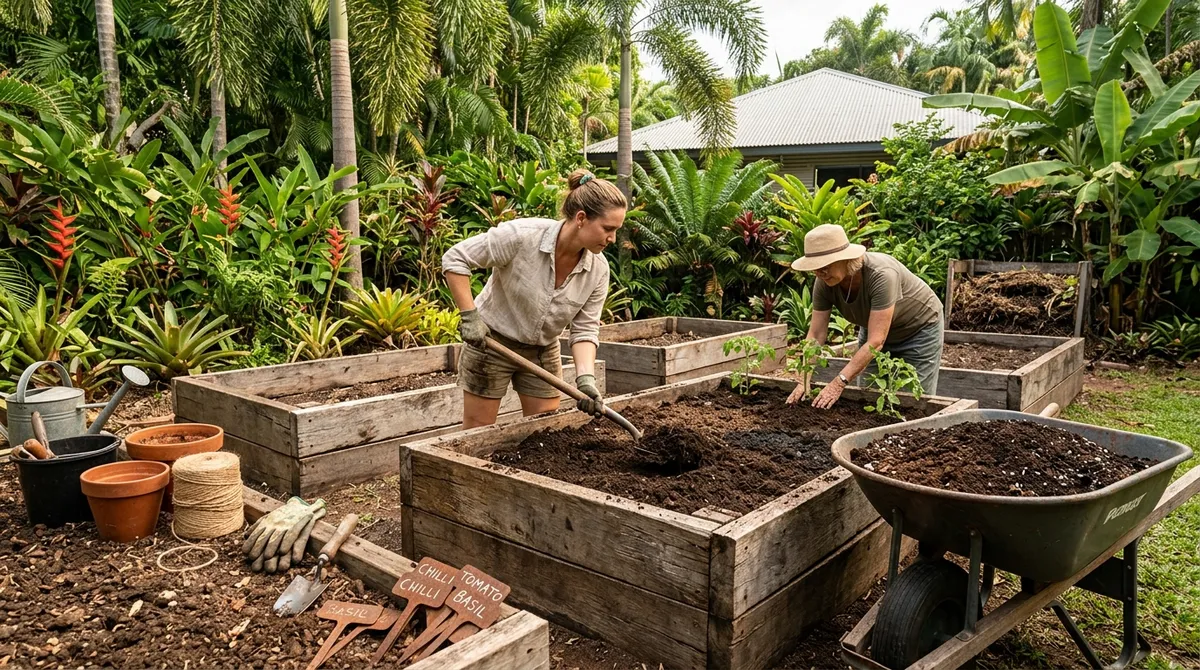
How to Start a Vegetable Garden in Darwin
Dry season focus, termite-resistant beds, watering strategies, and the best starter crops for the Top End
Starting a vegetable garden in Darwin means learning to work with one of Australia's most extreme climates. Two seasons define your year: the wet (November to April) and the dry (May to September), with the build-up (September to November) in between. The dry season is your main vegetable growing window. Focus your energy there, and add wet season crops once you have the basics down.
May is the perfect month to start. The humidity drops, rain stops, and temperatures settle into a range that supports a wide variety of crops. Build your beds in late April, plant in May, and you have 5 months of productive gardening ahead.
🌱 Plants in this guide: Snake Beans and Spring Onion. Each plant profile has sowing times for your region, companion plants and common pests.
Choosing Your Garden Site
Full sun (6-8 hours daily) is important for most vegetables, but afternoon shade during the build-up months (September to November) extends the growing season. A site with eastern exposure (morning sun) and a building or tree providing western shade is ideal for Darwin.
Avoid areas that flood during the wet season. In suburbs like Rapid Creek, Stuart Park, and Nightcliff, low-lying areas can go underwater during monsoon downpours. Raised beds are essential for most Darwin gardens.
Position your garden near a tap. Dry season irrigation is critical, and hauling water across the yard gets old fast. A garden hose connection within a few metres of your beds saves time and encourages consistent watering.
Building Termite-Resistant Raised Beds
Termites are a serious consideration for any garden structure in Darwin. Subterranean termites are active year-round, and untreated timber can be compromised within a single wet season. Choose your bed materials carefully.
- Galvanised steel: The best option for Darwin. Corrugated steel beds (available from Bunnings, local hardware stores, and online suppliers) resist termites completely, handle the wet season moisture, and last 15-20 years. Line the inside with shade cloth to reduce soil temperature against the hot metal in the dry season sun.
- Hardwood sleepers: Ironbark and spotted gum are naturally termite resistant. More expensive than steel but attractive and durable. Source from Darwin timber yards.
- Concrete blocks: Termite-proof and inexpensive. Stack blocks 2-3 courses high without mortar for easy rearrangement. Fill the cavities with soil for added stability.
- Treated pine (H4 rated): Acceptable for ground contact but monitor regularly for termite activity. H4 treatment provides protection but is not indefinite in the Top End.
Build beds 30-40 centimetres high. This height improves drainage during the wet season and lifts root zones above potential waterlogging. Bed width of 1-1.2 metres lets you reach the centre from either side without stepping on the soil.
Soil and Mulch for Darwin
Darwin's native soils are generally sandy, low in organic matter, and low in nutrients. Most successful gardens use a completely imported soil mix in raised beds.
Fill beds with 50% quality compost, 30% aged cow or horse manure, and 20% coarse sand or perlite. This mix drains well during the wet season, retains enough moisture during the dry, and provides the nutrients that sandy Darwin soils lack. Local landscape suppliers in Winnellie, Yarrawonga, and Palmerston sell premixed "veggie bed" blends.
Mulch is essential. Apply 10 centimetres of sugar cane mulch or lucerne hay over bare soil. Mulch reduces moisture loss dramatically during the dry season, keeps soil temperatures stable, and feeds soil organisms as it breaks down. Replace mulch every 3-4 weeks, as it decomposes rapidly in the tropical warmth.
Your First Dry Season Crops (May to September)
Start with reliable crops that produce quickly. These five are proven winners for Darwin beginners:
- Cherry tomatoes: Plant seedlings in May. Tommy Toe and Sweet Bite produce from 8 weeks. Cover with insect exclusion netting for fruit fly. Harvest through to August.
- Asian greens: Bok choy, pak choi, and tatsoi grow fast in the dry season. Sow seeds directly every 2 weeks for succession harvests. Ready in 6-8 weeks.
- Snake beans: Sow seeds directly in May. Provide a trellis. Pick at 30-40 centimetres every 2-3 days. Continuous production for 3-4 months.
- Spring onions: Sow seeds or plant bunches from the nursery. Ready in 8-10 weeks. Low maintenance and largely pest-free.
- Herbs: Thai basil, chives, and perennial coriander (sawtooth coriander) handle Darwin conditions better than their temperate counterparts. Standard sweet basil and regular coriander bolt fast; choose tropical-adapted types.
Watering: The Dry Season Lifeline
Darwin's dry season is genuinely dry. Rainfall between May and September averages around 15mm total. Your garden relies entirely on irrigation.
Drip irrigation is the best system. It delivers water directly to plant roots, keeps foliage dry (important for reducing fungal disease), and wastes very little to evaporation. A basic drip system with a battery timer costs under $100 from Bunnings or Darwin irrigation suppliers.
Water deeply every 1-2 days. Darwin's low dry season humidity, consistent warmth, and sandy soils mean moisture is lost faster than in southern climates. A typical raised bed needs 15-20 litres per square metre every 1-2 days. Water in the early morning (before 7am) to reduce evaporation.
During the build-up (September to November), watering needs change. Humidity increases dramatically, rain events become more frequent, and the challenge shifts from too-dry to too-wet. Reduce irrigation as the build-up progresses and ensure beds drain freely.
Managing Pests in Darwin
Pest pressure in Darwin is extreme. Warm temperatures year-round, combined with high wet season humidity, create ideal conditions for insects and diseases.
- Fruit fly: Active year-round in Darwin. Exclusion netting is mandatory for all fruiting crops (tomatoes, capsicum, eggplant, cucumbers). Protein bait sprays weekly. Pick fruit early and ripen indoors.
- Whitefly: Darwin's biggest sap-sucking pest. Yellow sticky traps monitor populations. Spray with horticultural soap or neem oil every 5-7 days during infestations. Neem oil also acts as a feeding deterrent.
- Caterpillars: Cluster caterpillar and diamondback moth attack leafy greens. Check plants daily. Apply Bt (Bacillus thuringiensis) spray at the first sign of damage.
- Grasshoppers: Major problem during the build-up. Fine mesh netting over beds is the most effective control.
- Termites: Monitor garden beds regularly. Keep mulch 10 centimetres away from house walls. Use termite-resistant bed materials.
Expanding into the Wet Season
Once you have a dry season garden running smoothly, try wet season crops. Sweet potato slips planted in October grow through the monsoon and produce tubers by April. Kangkong cuttings in a pot of water give you fresh greens all wet season. Snake beans, okra, and lemongrass are other good wet season additions.
The wet season garden requires different expectations. Growth is fast but pest pressure is higher, and many temperate crops fail. Focus on tropical species that evolved in monsoon climates.
Frequently Asked Questions
When is the best time to start a vegetable garden in Darwin?
May is the ideal month. The dry season runs from May to September, giving you 5 months of productive growing. Humidity drops, rainfall stops, and temperatures are the most comfortable of the year (30-32 degree days, 19-22 degree nights).
What should I build raised beds from in Darwin?
Use termite-resistant materials. Galvanised steel is the best option for Darwin, resisting both termites and wet season moisture. Hardwood sleepers (ironbark, spotted gum) also work. Avoid untreated pine, which termites can destroy within months.
What vegetables grow best in Darwin?
In the dry season: cherry tomatoes, Asian greens, snake beans, herbs, spring onions, and cucumbers. In the wet season: sweet potato, kangkong, okra, eggplant, and snake beans. Choose tropical-adapted varieties.
How often should I water my vegetable garden in Darwin?
During the dry season, water deeply every 1-2 days. Darwin's dry season has very low humidity and consistent warmth, so soil dries out faster than in other parts of Australia. Drip irrigation on a timer is the most reliable method. Mulch heavily to reduce evaporation.
Plant profiles
Each profile has sowing times for your region, companion plants and common pests.
Free Monthly Planting Calendar
Get a personalised email each month with what to plant, seasonal tips, and harvest reminders for your region.
We send one email per month. Unsubscribe any time.