
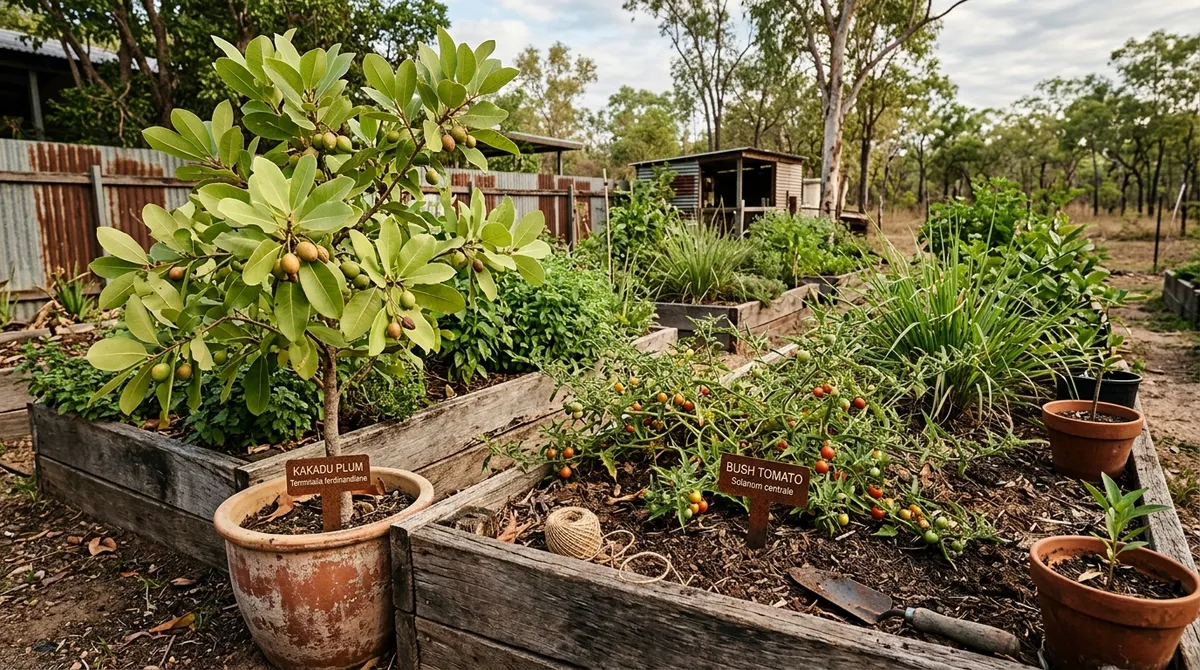
Growing Native Edibles in Darwin
Kakadu plum, green plum, bush tomato, native ginger, and Top End species for Darwin, Palmerston, Humpty Doo, and Berry Springs
The Top End is home to some of Australia's most valuable native food plants. Kakadu plum, the world's richest source of vitamin C, grows wild in the bushland around Darwin, Palmerston, and rural areas like Humpty Doo and Berry Springs. Green plum trees line creek beds across the region. Native ginger grows in shaded monsoon vine thickets. These plants are already adapted to Darwin's extreme climate: 35-degree dry seasons, monsoon downpours, cyclones, and sandy soils.
Growing native edibles in a Darwin backyard makes practical sense. They need less water than introduced crops, handle the wet season without drama, and produce food during the months when vegetable gardens are at their most challenging.
🌱 Plants in this guide: Kakadu Plum, Plum, Native Ginger, Bush Tomato and Warrigal Greens. Each plant profile has sowing times for your region, companion plants and common pests.
Top Native Edibles for Darwin
Kakadu Plum (Terminalia ferdinandiana)
Kakadu plum is the Top End's most significant native food plant. The small deciduous tree (6-12 metres) grows across savannah woodland from Darwin to Katherine and beyond. The fruit contains up to 100 times the vitamin C of an orange. It ripens from December to March, producing clusters of small yellow-green fruit with a tart, slightly astringent flavour.
Plant Kakadu plum in full sun with well-drained soil. It thrives in Darwin's sandy soils and handles the dry season heat without supplementary watering once established. Trees are deciduous, losing their leaves during the dry season and putting on vigorous new growth with the first wet season storms. Fruit production begins from the third or fourth year. Rural blocks around Humpty Doo and Berry Springs are ideal, but trees also grow well in suburban Darwin and Palmerston backyards with enough space.
Green Plum (Buchanania obovata)
Green plum is a small to medium tree (5-10 metres) common in open woodland around Darwin. The small green fruit ripens in the late wet season (February to April) and has a sweet, slightly resinous flavour. It is eaten fresh or made into jams and chutneys. The fruit is high in vitamin C and folate.
Green plum grows naturally in Darwin's sandy, laterite soils and needs virtually no maintenance once established. Plant in a sunny position and water through the first dry season. After that, the tree manages on rainfall alone. Green plum is slower to establish than Kakadu plum, with fruit production beginning around year five. Several mature specimens grow in Darwin parks and along rural roadsides around Berry Springs.
Native Ginger (Alpinia caerulea)
Native ginger is a clumping plant that reaches 1.5-2 metres tall with attractive blue berries and aromatic rhizomes. The berries are sweet and mildly spicy, eaten fresh or added to drinks. The rhizomes have a ginger flavour and are used in cooking, though they are milder than commercial ginger (Zingiber officinale).
Plant native ginger in a shaded or semi-shaded position with moist, humus-rich soil. It grows naturally in monsoon vine thickets, so it prefers protection from full sun. Under large trees or on the south side of a building works well. Water through the dry season to keep the soil moist. Native ginger spreads steadily by rhizome, forming attractive clumps over 2-3 years. It handles the wet season without any issues.
Bush Tomato (Solanum chippendalei and related species)
Several bush tomato species grow in the drier parts of the Top End and produce small, edible fruit. Solanum chippendalei (bush tomato or bush raisin) is found in sandy inland areas and produces fruit that dries on the bush, concentrating the sweet flavour. Bush tomatoes suit Darwin's dry season conditions and grow well in full sun with minimal water.
Plant bush tomato in the sunniest, driest part of the garden. Sandy, well-drained soil is essential. The plants are frost-free in Darwin, so they grow as perennials. Fruit production is best during the dry season. Protect from excessive wet season rain by planting on raised mounds or in large containers that can be moved under cover.
Warrigal Greens (Tetragonia tetragonoides)
Warrigal greens (also called New Zealand spinach) grow as a spreading ground cover with thick, triangular leaves. The leaves taste similar to spinach and are used the same way in cooking. Plants spread vigorously in Darwin's warmth and tolerate both full sun and partial shade.
Warrigal greens grow year-round in Darwin, making them one of the few leafy greens that handles both the wet and dry season. Plant from seed or cuttings in a garden bed or large container. Water regularly during the dry season. The plant self-seeds freely, so it can become weedy if not managed. Harvest leaves regularly to keep growth compact. Blanch leaves briefly before eating to reduce oxalate content.
Establishing Native Edibles in Darwin's Soils
Darwin's soils are predominantly sandy and low in organic matter. Most native edibles are adapted to these conditions, but adding compost at planting time improves establishment and early growth.
Dig a planting hole at least twice the width of the root ball. Mix the excavated sandy soil with a bucket of compost and a handful of aged cow manure. Backfill around the root ball and water in thoroughly. Mulch with 10-15 centimetres of coarse wood chips, keeping mulch 10 centimetres away from the trunk.
Avoid adding synthetic fertilisers to native edibles. Most Top End species have adapted to low-nutrient soils and can be damaged by high-phosphorus fertilisers. If feeding is needed, use a slow-release native plant fertiliser (low phosphorus formula) applied once at the start of the wet season.
Seasonal Care
The wet season (November to April) is the active growing and fruiting period for most Top End native edibles. Kakadu plum and green plum flower and fruit during the wet. Native ginger grows most vigorously. Warrigal greens produce their lushest growth. Little intervention is needed during this time; the monsoon rains provide all the water required.
The dry season (May to October) is the dormant period for deciduous species like Kakadu plum and green plum. Water newly planted trees through their first two dry seasons. Established trees manage without supplementary water, though a deep soak every 3-4 weeks during the driest months (August to October) keeps them healthier and more productive in the following wet season.
Cyclone preparation for native edible trees is straightforward. Most Top End species are naturally wind-resistant, having evolved with cyclones. Young trees (under 3 years) benefit from staking. Remove any dead branches that could become projectiles. Native species recover from cyclone damage faster than most introduced fruit trees.
Harvesting and Using Native Edibles
Kakadu plum fruit drops when ripe. Collect fruit from the ground daily during the wet season harvest period. Process quickly, as the fruit softens rapidly in the heat. Freeze whole fruit for later use, or process into puree, jam, or powder. The tart flavour works well in sauces, marinades, and drinks.
Green plum is picked from the tree when the fruit feels slightly soft. Eat fresh or make into jam. The fruit has a short shelf life (2-3 days at room temperature), so process or freeze promptly.
Native ginger berries are picked when blue and fully coloured. Eat fresh, add to fruit salads, or muddle into drinks. Harvest rhizomes by digging at the outer edge of the clump and taking what you need. The plant regenerates from the centre.
Frequently Asked Questions
What native edibles grow well in Darwin?
Kakadu plum is the standout species, growing naturally across the Top End. Green plum (Buchanania obovata) is another excellent local fruit tree. Native ginger produces edible berries and aromatic rhizomes. Warrigal greens grow as a spreading ground cover and produce spinach-like leaves year-round. Bush tomato species from drier areas also suit Darwin's dry season.
Can I grow Kakadu plum in my Darwin backyard?
Yes. Kakadu plum is native to the Top End and grows well in Darwin backyards. Plant in a sunny position with well-drained soil. Trees are deciduous, dropping leaves in the dry season and leafing up with the first wet season rains. Fruit ripens from December to March. Trees begin producing fruit from the third or fourth year.
Where can I buy native edible plants in Darwin?
Greening Australia's Top End nursery stocks native edible species. The Darwin Community Garden sometimes has seedlings available. Online suppliers ship to Darwin. Rural area nurseries around Humpty Doo and Berry Springs occasionally carry native food plants. The annual Darwin Garden Spectacular is a good place to find specialist growers.
Do native edibles survive Darwin's wet season?
Most Top End native edibles are perfectly adapted to the wet season. They evolved with the monsoon and actually depend on wet season rains for flowering and fruiting. Kakadu plum and green plum fruit during the wet. The main consideration is drainage; plant on slightly elevated ground so roots do not sit in waterlogged soil.
Plant profiles
Each profile has sowing times for your region, companion plants and common pests.
Free Monthly Planting Calendar
Get a personalised email each month with what to plant, seasonal tips, and harvest reminders for your region.
We send one email per month. Unsubscribe any time.