
Growing Tropical Fruit in Darwin
Mango, jackfruit, rambutan, dragon fruit, banana, and custard apple for the Top End
Darwin is Australia's mango capital, and the broader Top End region grows some of the best tropical fruit in the country. Year-round warmth, a distinct wet/dry season cycle, and long hours of tropical sunshine create ideal conditions for fruit trees that would struggle anywhere south of the Tropic of Capricorn.
A single Darwin backyard can produce mango, banana, papaya, jackfruit, and dragon fruit. With careful variety selection and cyclone-conscious pruning, fruit trees are a productive and low-maintenance part of any Top End garden.
🌱 Plants in this guide: Mango, Jackfruit, Rambutan, Dragon Fruit, Banana and Custard Apple. Each plant profile has sowing times for your region, companion plants and common pests.
Mango
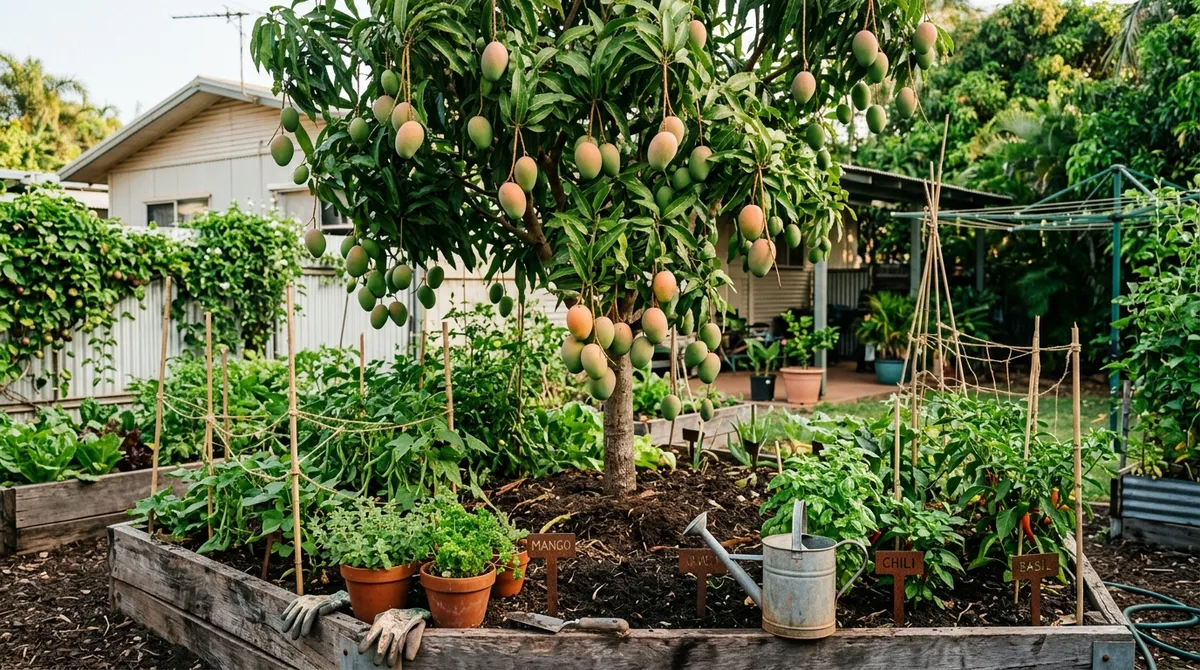
Every Darwin backyard deserves a mango tree. The Northern Territory produces a significant share of Australia's mango crop, and backyard trees in suburbs from Rapid Creek to Palmerston produce extraordinary fruit with minimal care once established.
The best varieties for Darwin gardens include Kensington Pride (the classic Australian mango, sweet and fragrant, heavy bearer), Nam Doc Mai (Thai variety, slim fruit, intensely sweet, less fibrous), R2E2 (very large fruit, firm flesh, colourful skin), Honey Gold (rich golden flesh, outstanding flavour), and Brooks (early season, compact tree, good for smaller gardens).
Plant grafted trees at the start of the wet season (October to December). Choose a spot in full sun with good drainage. Space trees 8-10 metres apart. Young trees need protection from the harsh dry season sun for the first year. Water regularly through the first two dry seasons. Once established (3-4 years), mango trees need very little irrigation.
Flowering occurs during the dry season (June to August). Fruit develops through the build-up and wet season, ripening from October to January depending on the variety. The main threats to ripe fruit are flying foxes, birds, and fruit fly. Net trees when fruit starts to colour, or harvest at the mature green stage and ripen on the kitchen bench. Mango anthracnose (a fungal disease causing black spots) is common in the wet tropics. Copper-based sprays applied at flowering reduce infection.
Jackfruit
Jackfruit is spectacular in Darwin gardens. The world's largest tree-borne fruit, individual jackfruit can weigh 10-30 kilograms. Trees grow fast in the Top End's heat and humidity, reaching 10-15 metres within 5-6 years.
Plant in full sun in well-drained soil. Fruit grows directly from the trunk and major branches. The sweet, aromatic flesh segments can be eaten fresh when ripe. Unripe jackfruit has a meat-like texture and is used in curries, tacos, and stir-fries. Seeds are edible when roasted or boiled.
Seedling trees fruit in 3-5 years. Named varieties are available from specialist tropical fruit nurseries in the Darwin region. Trees need annual pruning to keep them at a manageable height and to maintain structural strength for cyclone season.
Rambutan
Rambutan thrives in the Top End's wet tropics. The trees need consistent moisture and high humidity, making Darwin's wet season ideal for growth and fruit development. Rambutan fruit ripens from December to February, producing clusters of hairy red fruit with translucent, sweet flesh.
Plant in a sheltered position with rich, deep soil. Trees grow 10-12 metres tall but can be kept smaller with pruning. Mulch heavily and water during dry spells. Grafted trees from tropical nurseries fruit in 3-4 years. Rambutan is closely related to lychee but more suited to Darwin's conditions because it tolerates higher humidity and warmer temperatures.
Dragon Fruit (Pitaya)
Dragon fruit is one of the easiest tropical fruits to grow in Darwin. The climbing cactus produces stunning, large fruit from November to April. Plants grow quickly from cuttings, often fruiting within 12-18 months.
Build a sturdy support structure: a concrete or timber post (2 metres tall) with a circular frame on top. Plant 4-6 cuttings around the base. The stems climb the post and cascade from the top, where fruit develops.
Red-fleshed varieties (Hylocereus costaricensis) are the most popular for home gardens. The flesh is sweeter and more visually striking than white-fleshed types. Yellow-skinned dragon fruit (Selenicereus megalanthus) is the sweetest variety but grows more slowly. Some varieties need a second, different variety for cross-pollination, so check the label or plant two varieties. Flowers open at night and are pollinated by moths and bats, and hand-pollinating at night when the flowers open improves fruit set.
Dragon fruit tolerates Darwin's dry season with minimal watering. It produces more fruit with consistent moisture and regular feeding during the wet season.
Banana
Bananas grow year-round in Darwin. Cavendish (the standard supermarket variety) is reliable, but Lady Finger (smaller, sweeter, creamier) and Ducasse (a cooking banana, also called Sugar Banana) are more interesting choices for home gardens. Red Dacca produces striking red-skinned fruit with orange flesh.
Plant suckers in full sun at the start of the wet season. Space plants 3-4 metres apart. Each plant produces one bunch over 12-18 months, then the stem dies. New suckers grow from the base to continue the cycle. Remove all but 2-3 suckers per clump to maintain production.
Bananas are heavy feeders. Apply aged manure and compost generously. Mulch thickly. Water deeply during the dry season. Wind protection is important during cyclone season. The fleshy stems snap easily in strong wind. Grow bananas against a north-facing wall or fence for shelter.
Custard Apple
Custard apple (also called sugar apple or cherimoya) produces soft, sweet, creamy white flesh that is one of the finest tropical fruit flavours. Trees grow 4-6 metres tall and produce fruit from February to May.
African Pride is the most commonly available variety in Darwin nurseries. It is self-fertile and produces consistent crops. Plant in full sun in well-drained soil. Trees are semi-deciduous, losing leaves during the dry season. Hand-pollination improves fruit set. Use a small paintbrush to transfer pollen between flowers in the early morning.
Planting and Care for Cyclone Country
Cyclone preparedness is essential for fruit trees in Darwin. Every tree in your garden should be pruned annually during the dry season (June to August) to maintain a strong, balanced canopy.
- Remove crossing branches that rub and create weak points.
- Thin dense canopies to allow wind to pass through rather than catching like a sail.
- Keep trees at a manageable height. A 6 metre mango tree survives cyclone winds better than a 12 metre tree.
- Stake young trees for the first 2-3 wet seasons with sturdy timber stakes and soft ties.
- Remove dead wood before each wet season. Dead branches become dangerous projectiles in strong wind.
Feed all fruit trees twice a year: once at the start of the wet season (October) with compost and aged manure, and once after harvest with a balanced organic fertiliser. Liquid seaweed applied monthly supports root health and stress tolerance.
Frequently Asked Questions
What tropical fruit grows best in Darwin?
Mango is the standout performer. Darwin is Australia's mango capital, and backyard trees produce enormous crops. Jackfruit, rambutan, dragon fruit, banana, custard apple, papaya, and soursop also grow exceptionally well.
When should I plant fruit trees in Darwin?
Plant at the start of the wet season (October to December) when warm rain helps trees establish. Avoid planting during the dry season unless you can provide daily irrigation. Container-grown trees from nurseries can be planted year-round with consistent watering.
How do I protect fruit trees from cyclones in Darwin?
Prune trees annually during the dry season to maintain a compact, balanced canopy. Remove crossing branches and thin dense growth to allow wind to pass through. Stake young trees for the first 2-3 wet seasons. Avoid letting trees grow tall and top-heavy.
How long before a mango tree fruits in Darwin?
Grafted mango trees fruit in 3-4 years. Some precocious varieties like Nam Doc Mai may produce a small crop in year 2. Seedling trees take 5-8 years. Always buy grafted trees from a reputable Darwin nursery.
Plant profiles
Each profile has sowing times for your region, companion plants and common pests.
Free Monthly Planting Calendar
Get a personalised email each month with what to plant, seasonal tips, and harvest reminders for your region.
We send one email per month. Unsubscribe any time.