
El Niño in South East Queensland: What to Plant This Spring
Updated September 2026
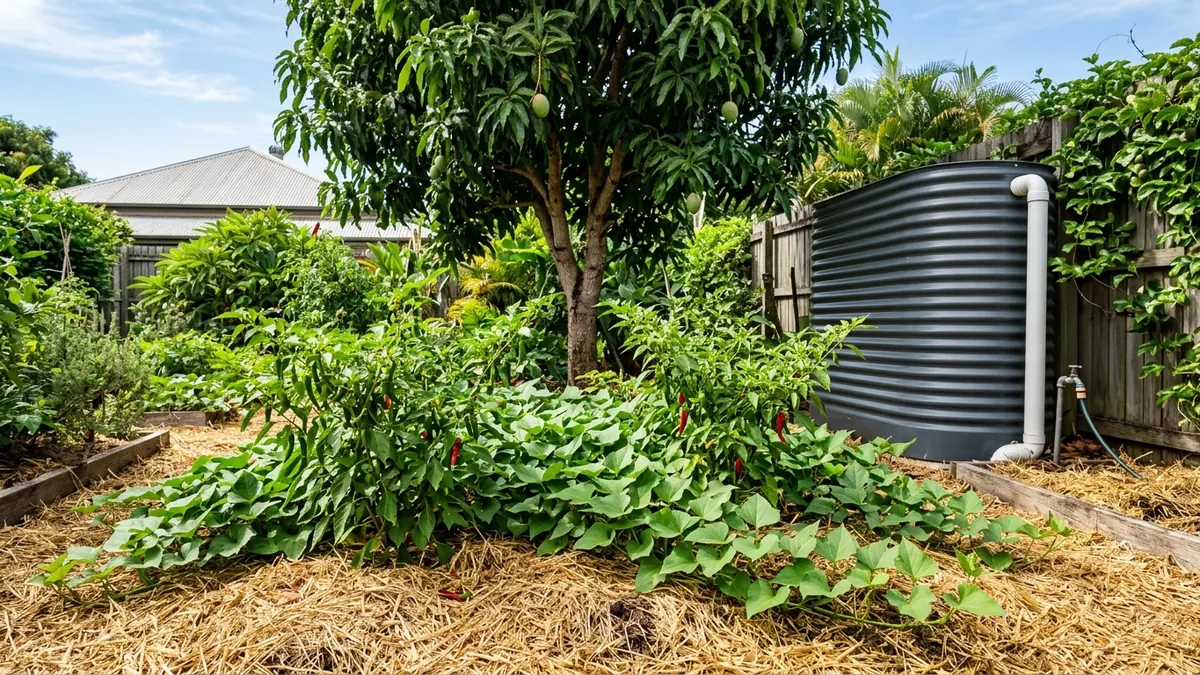
Brisbane, Gold Coast, Sunshine Coast, Ipswich and the hinterland. Spring storms may be late, so plan the patch around water you can actually count on.
Spring in South East Queensland is usually the dry run-up to storm season. In an El Niño year the storms tend to arrive late and light, so October and November can pass with barely a drop while the days climb into the 30s. The subtropics still grow plenty through this. The trick is choosing crops that treat a dry warm spring as home ground, and getting water to them without waste.
🌱 Plants in this guide: Sweet Potato, Chilli, Capsicum, Eggplant, Okra, Snake Beans, Pumpkin, Rockmelon and 20 more, all listed under Plant profiles at the end of this guide. Each plant profile has sowing times for your region, companion plants and common pests.
What to plant in South East Queensland this spring
Plant with confidence
- Sweet potato. Runners in now, ground cover by December, drought-hardy once away.
- Chilli, capsicum, eggplant. Plant out now. They will carry through to autumn.
- Okra and snake beans. Made for a hot dry spring. Sow direct into warm soil.
- Pumpkin, rockmelon, watermelon. Give them room and a deep soak at the base twice a week.
- Rosella. Sow now for an autumn harvest. Loves the heat.
- Cherry tomatoes. Small-fruited types set in heat where beefsteaks drop flowers. Get them in early.
- Ceylon spinach, warrigal greens, amaranth, kang kong (in a wet tub). The leafy greens that do not bolt.
- Basil, lemongrass, ginger, turmeric. Plant ginger and turmeric now under mulch.
Hold back or plant small
- Lettuce, coriander, rocket. Bolt in a week. Small batches in afternoon shade only.
- Broccoli, cauliflower, cabbage. Finished for the year. Wait for April.
- English spinach, celery, peas. Too hot, too dry.
- Sweet corn. Only if you can water a block deeply every two or three days.
- Cucumber. Goes bitter under stress. Wicking bed or skip.
- New fruit trees in the ground. Hold for autumn unless you are on a tank you trust.
The full month-by-month list for your area is on the South East Queensland planting calendar, and the app's Plant Now shelf filters it to this month automatically.
Timing this year
Frost is gone for almost all of the coast, so plant heat-lovers now rather than waiting for the traditional October date. You want roots down before the first 35C run. Plant in the evening, water the hole first, and shade transplants for three or four days. Save the salad and coriander for a late-February sowing that matures into autumn. If you are in the hinterland or the Lockyer, check your postcode in the frost lookup; late cold snaps still happen out there.
Water: the local picture
Seqwater's storages have been healthy, but a dry spring on top of a warm winter draws them down fast, and regional Queensland towns are already restricting. Set the garden up now as if restrictions are coming. Sugar cane mulch is cheap and local, so use it deep. Sandy coastal soils drain fast; dig in compost and consider a wetting agent. On the clay soils inland, water slower for longer so it soaks in instead of running off. A wicking bed for the thirsty crops and a tank on the shed for everything else will get most SEQ gardens through without touching the mains much at all.
Heat and fire
Heatwaves in SEQ are humid, which is hard on fruit set and on chickens. Shade cloth at 30 percent over tomatoes, capsicum and chilli during hot runs cuts blossom drop. Water in the morning so leaves are dry by night; humid warm nights breed fungal disease. For fire, the risk sits in the hinterland, the Scenic Rim, and anywhere backing onto bush. Clear litter, clean gutters and check the QFES guidance now. Fire weather in Queensland starts earlier in El Niño years, often before the southern states.
Your prep checklist
- Mulch every bed to 75mm before the first hot week.
- Lay drip or soaker line under the mulch, on a tap timer.
- Get heat-lovers in as soon as frost risk passes. Hold salad and brassicas for autumn.
- Buy shade cloth (30 to 50 percent) now.
- Check the rain tank, pump and gutters. Clear litter near the house.
- Set up shade and a second water source for chickens and bees.
Print the free El Niño garden prep checklist for the shed door.
Frequently Asked Questions
Will Brisbane get its spring storms this year?
Probably later and lighter than usual. El Niño tends to delay storm season in South East Queensland, so plan on hand watering seedlings through October and November rather than waiting for rain.
What vegetables handle a hot dry Brisbane spring?
Sweet potato, chilli, capsicum, eggplant, okra, snake beans, pumpkin, melons, rosella, cherry tomatoes and heat-tolerant greens like Ceylon spinach and warrigal greens. All do well under deep mulch with a twice-weekly soak.
Can I still grow lettuce in SEQ in spring?
Small batches in afternoon shade, picked young. Most lettuce bolts within a week of hot weather here. The reliable window is autumn to early spring, so sow again in late February.
Is it too late to plant ginger and turmeric?
No, now is the time. Plant rhizomes into rich soil under mulch in September or October and keep them moist. They love the heat and harvest in autumn.
Plant profiles
Each profile has sowing times for your region, companion plants and common pests.