
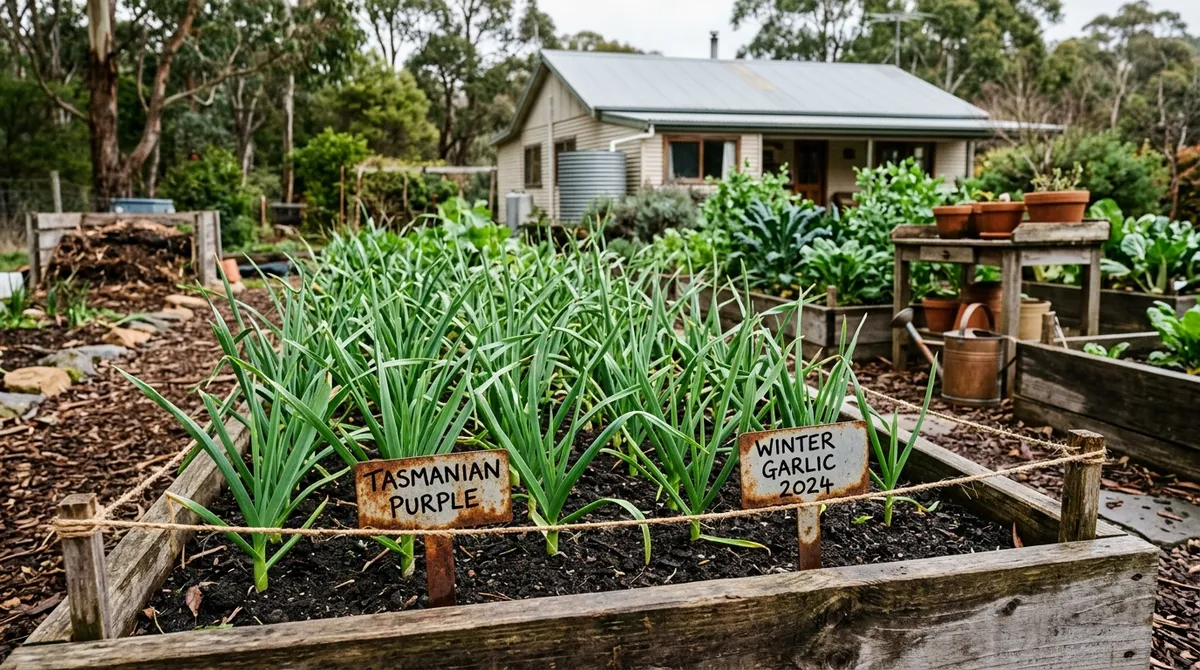
Growing Garlic in Tasmania
Tasmania's cold winters deliver the chill hours garlic needs for large, well-formed bulbs
Tasmania is one of the best places in Australia to grow garlic. The cold winters provide 8-12 weeks of temperatures below 10 degrees, which garlic needs to form properly differentiated cloves. Gardeners in warmer states struggle with garlic that refuses to split into cloves, producing round, undivided bulbs instead. Tasmanian growers rarely have this problem.
Several small-scale garlic farms operate across Tasmania, supplying farmers markets in Hobart and Launceston with varieties you cannot find in supermarkets. Growing your own is straightforward and satisfying. A row of 20 cloves planted in April takes up minimal space and produces enough garlic to last most of the year.
🌱 Plant profile: Garlic, with sowing times for your region, companion plants and common pests.
Garlic Types for Tasmania
Hardneck Garlic
Hardneck varieties are the best choice for Tasmania's cold climate. They produce a stiff central stem (the "scape") and typically 4-8 large, easy-to-peel cloves per bulb. The flavour is often more complex and pungent than softneck types. Hardneck garlic stores for 4-6 months after harvest.
- Purple Stripe: Beautiful purple-streaked wrappers with rich, full garlic flavour. 8-12 cloves per bulb. One of the most reliable types for Tasmania. Harvest December.
- Rocambole: Considered the finest-flavoured garlic by many growers. Easy-to-peel, tan-skinned cloves with a warm, complex flavour. 6-10 cloves per bulb. Shorter storage life (3-4 months), so use first. Harvest December.
- Porcelain: Large, white-skinned bulbs with 4-6 fat cloves. Strong, hot flavour. Stores well (5-6 months). Music is the most widely available Porcelain variety in Australia. Harvest December to January.
- Australian Purple: A reliable hardneck widely grown in southern Australia. Strong flavour, attractive purple skin, and good storage. Available from most Australian seed garlic suppliers.
Softneck Garlic
Softneck garlic produces more cloves per bulb (10-20) and stores longer (8-12 months) than hardneck types. The cloves are smaller and arranged in layers. Softneck garlic can be braided for storage. It generally has a milder flavour than hardneck varieties.
- Printanor: A French softneck that grows well in Tasmania. Mild, sweet flavour. Produces large bulbs with tight, white wrappers. Stores for 8-10 months.
- Italian White: Strong-flavoured softneck with a sharp, hot bite. Reliable in cold climates. Good storage. Widely available.
Elephant Garlic
Elephant garlic is technically a leek relative, producing very large bulbs with 4-6 mild cloves. The flavour is gentle, almost sweet, and excellent roasted whole. Elephant garlic grows very well in Tasmania and produces impressively sized bulbs. Plant cloves 15 centimetres deep and 20 centimetres apart. Harvest January to February.
Planting Garlic in Tasmania
Plant garlic cloves from late March to mid-May. Earlier planting gives a longer growing season and generally produces larger bulbs. The cloves need the cold winter period to trigger clove differentiation; late planting still works but yields smaller heads.
Preparing the Bed
Garlic prefers fertile, well-drained soil. Dig in compost and aged manure 2-3 weeks before planting. Tasmania's heavy clay soils (common around Hobart) benefit from added compost to improve drainage. Waterlogged soil causes bulb rot, so raised beds are an excellent option for clay gardens.
Choose a position in full sun. Garlic needs at least 6 hours of direct sunlight daily. Avoid areas that have grown garlic, onions, or leeks in the previous 2 years to reduce the risk of white rot and other allium diseases.
Planting Cloves
Break bulbs into individual cloves just before planting. Use the largest, healthiest cloves from each bulb (save smaller cloves for cooking). Plant each clove pointy end up, 5 centimetres deep, with 15 centimetres between cloves and 25 centimetres between rows.
Water in well after planting. Mulch with 5-8 centimetres of pea straw or sugar cane mulch to suppress weeds, retain moisture, and insulate the soil. Shoots emerge 2-3 weeks after planting and grow slowly through winter.
Growing Through Winter and Spring
Garlic needs very little attention through winter. Keep beds weeded (garlic competes poorly with weeds) and water only if conditions are unusually dry. Tasmania's winter rain usually provides enough moisture.
Growth accelerates in September and October as days lengthen and temperatures rise. Begin watering regularly in spring if rainfall is light. Feed with a liquid fertiliser (Seasol PowerFeed or similar) every 3 weeks from September to November.
Removing Scapes
Hardneck varieties produce a curling flower stem (scape) in late October to November. Snap or cut the scape off when it has made one full curl. Removing scapes directs the plant's energy into bulb growth rather than flower production. Scapes are edible and delicious; chop them into stir-fries, pestos, or scrambled eggs.
Harvesting and Curing
Garlic is ready to harvest when the lower 3-4 leaves have turned brown but 4-5 green leaves remain at the top. Each green leaf corresponds to a wrapper layer around the bulb; you need enough wrappers for good storage. In Tasmania, this is typically late November (early varieties) to January (late varieties).
Dig bulbs carefully with a fork. Do not pull them by the stem, as this can damage the wrappers. Brush off loose soil but do not wash the bulbs.
Cure garlic in a warm, dry, well-ventilated spot for 2-4 weeks. A covered veranda, shed, or carport works well. Lay bulbs in a single layer on mesh or hang in bundles. Once the outer wrappers are papery and the stem is completely dry, trim the roots and cut the stem to 3 centimetres above the bulb (or leave long for braiding softneck varieties).
Store cured garlic in a cool, dry, dark place with good airflow. A mesh bag or open basket in the pantry is ideal. Avoid the fridge, which triggers premature sprouting. Well-cured hardneck garlic stores for 4-6 months. Softneck varieties store for 8-12 months.
Saving Seed Garlic
Set aside your best, largest bulbs at harvest time for replanting in autumn. This builds a garlic strain adapted to your specific garden and conditions over successive years. Store seed bulbs in the same conditions as eating garlic but keep them separate so you do not accidentally use them in the kitchen.
Frequently Asked Questions
When should I plant garlic in Tasmania?
Plant garlic cloves from late March to May. Earlier planting produces larger bulbs. The cold winter provides the chill period garlic needs to form well-defined cloves. Harvest from late November to January.
What garlic varieties grow best in Tasmania?
Hardneck varieties thrive in Tasmania's cold climate. Purple Stripe, Rocambole, Porcelain, and Australian Purple all produce well. For softneck types, Printanor and Italian White handle Tasmanian conditions. Elephant garlic also grows very well.
How do I know when garlic is ready to harvest in Tasmania?
Garlic is ready when the lower 3-4 leaves have turned brown but 4-5 green leaves remain. This usually happens from late November to January in Tasmania. Dig up one test bulb to check that cloves fill the wrapper tightly.
Can I plant supermarket garlic in Tasmania?
Supermarket garlic is often imported and may carry diseases or be treated to prevent sprouting. Buy certified Australian seed garlic from suppliers like The Garlic Farm Tasmania, Tasmanian Gourmet Garlic, or reputable online sellers.
Plant profile
The garlic profile has sowing times for your region, companion plants and common pests.
Free Monthly Planting Calendar
Get a personalised email each month with what to plant, seasonal tips, and harvest reminders for your region.
We send one email per month. Unsubscribe any time.