
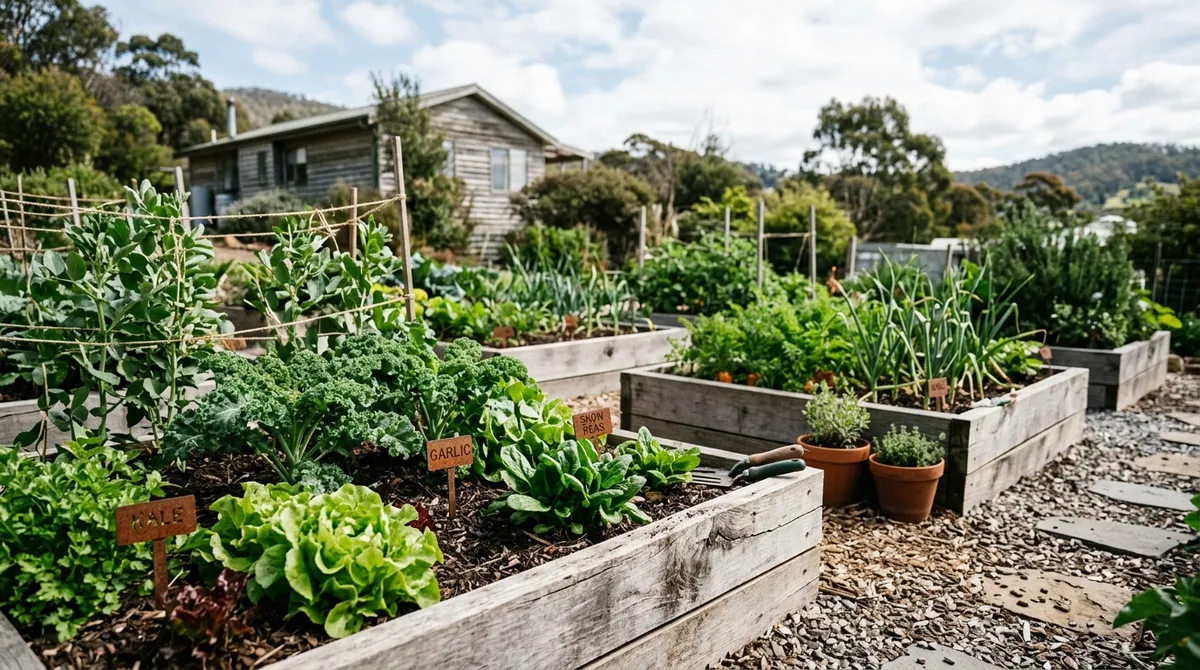
Raised Bed Gardening in Tasmania
Warmer soil, better drainage, and a longer growing season for Tasmanian vegetable gardens
Raised beds solve two of Tasmania's biggest gardening challenges: cold soil and heavy clay. Ground-level soil in Hobart stays cold well into October, delaying spring planting by weeks compared to warmer states. Raised beds warm up 2-3 weeks faster because air circulates around all sides and the elevated soil drains freely instead of sitting in waterlogged clay.
For Tasmanian gardeners, those extra 2-3 weeks at the start of the season and again at the end can mean the difference between ripe tomatoes and green ones still hanging on the vine when frost arrives in April.
🌱 Plants in this guide: Tomato and Garlic. Each plant profile has sowing times for your region, companion plants and common pests.
Why Raised Beds Work Well in Tasmania
- Faster soil warming: Raised beds sit above the cold ground. The soil warms earlier in spring, letting you plant sooner. Combine with black plastic mulch for even faster warming.
- Better drainage: Tasmania's dolerite clay soils hold water and become waterlogged in winter. Raised beds drain freely, preventing root rot and allowing you to work the soil earlier after rain.
- Improved soil quality: You control the soil mix inside the bed. Fill with quality compost-enriched mix instead of working with whatever clay or rock sits beneath your garden.
- Easier frost protection: Drape frost cloth, cloches, or plastic hoops directly over a raised bed. The defined edges make covering and uncovering quick and simple.
- Less bending: Beds 40-50 centimetres high reduce the strain of planting, weeding, and harvesting. For gardeners with back problems, beds 60-80 centimetres high (bench height) make a real difference.
Choosing Materials
Timber
Hardwood timber is the traditional choice and blends naturally into Tasmanian gardens. Tasmanian oak sleepers, recycled hardwood, and treated pine (H4 rated for ground contact) are all suitable. Avoid CCA-treated pine (the older green-tinted treatment) for edible gardens; modern H4 treated pine uses safer copper azole preservatives. Untreated hardwood like Tasmanian oak lasts 8-12 years. Treated pine lasts 15-20 years.
Standard dimensions for a timber raised bed: 200 millimetres wide boards stacked 2-3 high for a 400-600 millimetre deep bed. Keep beds no wider than 1.2 metres so you can reach the centre from either side without stepping on the soil.
Corrugated Steel
Colorbond corrugated steel raised beds are popular across Tasmania. They last 20-30 years, look tidy, and absorb heat during the day, releasing it at night. This thermal mass effect is a genuine advantage in cool climates, warming the root zone and extending the season at both ends. Birdie's Garden Products (available at Bunnings) and Birdies raised bed kits are widely used. Custom beds can be made from standard Colorbond fencing sheets.
Other Options
Concrete blocks, recycled bricks, and natural stone all work well. Stone walls absorb and radiate heat, providing thermal mass. Avoid old railway sleepers (they contain creosote, a carcinogen) and tyres (which leach chemicals).
Positioning Your Raised Beds
Place raised beds where they receive maximum sunlight. In Tasmania, a north-facing position is essential for summer crops. Avoid the shadow of buildings, fences, and large trees, especially on the north side. Most Hobart gardens slope, and south-facing slopes receive significantly less winter sun than north-facing ones.
Leave at least 60 centimetres between beds for comfortable access with a wheelbarrow. Orient beds east to west so the sun moves along the length of the bed, giving all plants equal light.
Avoid placing beds in the lowest point of the garden where cold air collects on frosty nights (frost hollows). Slightly elevated positions on a gentle slope are ideal.
Filling Raised Beds
The soil mix is the most important part of a raised bed. Use a blend of 60% quality loam or garden soil, 30% mature compost, and 10% aged cow or chicken manure. Local soil suppliers in Hobart sell pre-mixed vegetable garden blends. Barwick's Garden Supplies in Derwent Park, Statewide Landscape Supplies, and Tas Landscape Supplies all deliver bulk soil mixes suitable for raised beds.
For deep beds (over 40 centimetres), you can fill the bottom third with coarse organic matter: woody prunings, straw, or leaf litter. This breaks down slowly, feeds the soil from below, and reduces the volume of expensive soil mix needed. This is similar to the hugelkultur method and works particularly well in Tasmania's moist climate.
Top up beds with 5 centimetres of compost at the start of each growing season (September in Tasmania). The soil mix settles and decomposes over time, so annual top-ups are needed to maintain the bed level.
Extending the Season with Raised Beds
Raised beds pair naturally with season-extension techniques. In Tasmania, gaining extra weeks at the start and end of the season is worth the effort.
- Hoop tunnels: Bend 20 millimetre poly pipe into hoops over the bed and cover with clear plastic or frost cloth. This creates a mini greenhouse that raises temperatures by 5-10 degrees inside. Use clear plastic in early spring (September to October) for maximum warming. Switch to frost cloth in autumn (March to April) for frost protection while maintaining airflow.
- Black plastic mulch: Cover the bed surface with black plastic for 2-3 weeks before planting. This raises soil temperature by 3-5 degrees, which is enough to bring forward planting by 2 weeks. Cut planting holes through the plastic and leave it in place as a weed suppressant and soil warmer through the growing season.
- Cold frames: Build a removable glass or polycarbonate lid that sits on top of the raised bed. This turns the bed into a cold frame for starting seedlings in August and September, well before outdoor conditions allow. Open or remove the lid on warm days to prevent overheating.
What to Grow in Raised Beds
Raised beds are ideal for all vegetable crops in Tasmania. The warmer soil and improved drainage make them especially valuable for heat-loving crops that struggle in ground-level beds.
- Tomatoes: The warmer root zone helps tomatoes establish faster and produce earlier. Combine with a hoop tunnel for the best results.
- Root vegetables: Carrots, parsnips, and beetroot thrive in the loose, stone-free soil of raised beds. No clay clods or rocks to fork around.
- Garlic: Raised beds provide the drainage garlic needs through wet Tasmanian winters, reducing the risk of bulb rot.
- Salad greens: Lettuce, rocket, and mesclun grow well in raised beds year-round. Add a frost cloth cover for winter harvesting.
- Herbs: Mediterranean herbs (thyme, oregano, rosemary) prefer the sharper drainage of raised beds. Tasmania's clay soil is often too wet for these species at ground level.
Frequently Asked Questions
Why are raised beds good for Tasmanian gardens?
Raised beds warm up faster in spring, giving you a 2-3 week head start. They drain freely, solving waterlogging in heavy clay soils. The soil stays loose and workable, and frost protection is simple to add.
How deep should raised beds be in Tasmania?
A minimum of 30 centimetres for leafy greens and herbs. 40-50 centimetres is better for root vegetables and tomatoes. Deeper beds insulate roots better during cold winters.
What material should I use for raised beds in Tasmania?
Hardwood timber and corrugated Colorbond steel are the most popular options. Colorbond lasts longer and absorbs heat, which is a benefit in Tasmania's cool climate. Avoid CCA-treated pine for edible gardens.
What soil mix should I fill raised beds with in Tasmania?
Fill with a mix of 60% quality loam, 30% compost, and 10% aged manure. Local soil suppliers in Hobart sell pre-mixed vegetable garden blends. Top up with compost each season.
Plant profiles
Each profile has sowing times for your region, companion plants and common pests.
Free Monthly Planting Calendar
Get a personalised email each month with what to plant, seasonal tips, and harvest reminders for your region.
We send one email per month. Unsubscribe any time.