
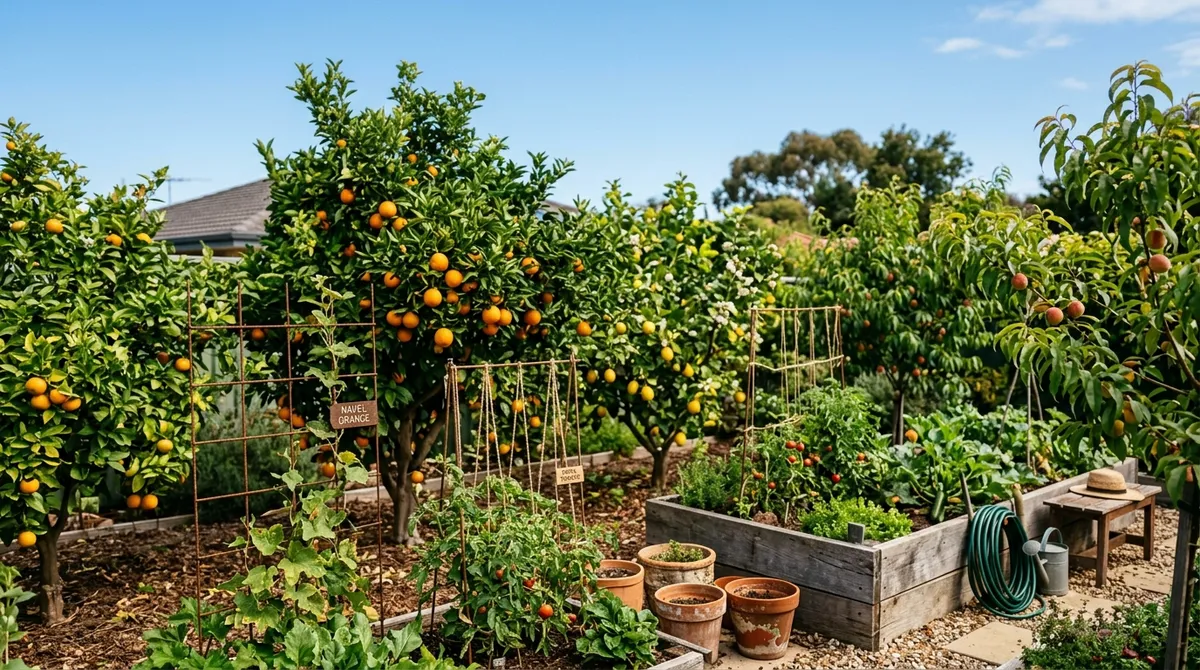
Best Fruit Trees for Perth
Figs, stone fruit, pomegranates, and olives suited to Perth's Mediterranean climate
Perth's hot, dry summers and mild winters create ideal conditions for Mediterranean fruit trees. Figs, stone fruit, pomegranates, and olives all produce reliably here, often with less effort than in cooler or more humid parts of Australia. The sandy soil that frustrates vegetable growers actually suits many fruit trees, providing the sharp drainage they prefer.
The biggest challenge is Mediterranean fruit fly (Medfly). Every Perth fruit tree grower needs a Medfly strategy. Beyond that, selecting the right varieties, planting at the right time, and providing summer water are the keys to heavy harvests.
🌱 Plants in this guide: Fig, Peach, Nectarine, Plum, Apricot, Pomegranate and Olive. Each plant profile has sowing times for your region, companion plants and common pests.
Best Fruit Trees for Perth's Climate
Figs
Figs are arguably Perth's easiest fruit tree. They handle extreme heat, tolerate sandy soil, and produce heavily with minimal care. The most popular varieties at Perth nurseries are Black Genoa (rich, dark flesh, excellent fresh or dried), Brown Turkey (reliable heavy cropper, milder flavour), and White Adriatic (sweet green-skinned fig, great for drying). Preston Fig Nursery in Donnybrook and specialty outlets like Lullfitz Nursery in Wanneroo stock a wide range of fig cultivars.
Figs fruit on new season growth, so prune in winter to encourage fresh shoots. Most Perth fig trees produce two crops: a small breba crop in November from last year's wood, and a larger main crop from February to April. Plant in full sun with room to spread. Figs grow 4-6 metres wide if left unpruned.
Stone Fruit
Peaches, nectarines, plums, and apricots all grow well in Perth, provided you choose low-chill varieties. Perth's winters average 200-400 chill hours (hours below 7 degrees), which is enough for many stone fruit cultivars but too few for varieties bred for colder climates.
- Peaches: Tropic Snow, Flordaprince, and Anzac are low-chill varieties available from Dawson's Garden World in Forrestfield and most Bunnings stores. They fruit from November to January.
- Nectarines: Goldmine and Sunraycer handle Perth's heat and low chill. Goldmine is a white-fleshed heirloom with outstanding flavour.
- Plums: Mariposa, Santa Rosa, and Satsuma are reliable in Perth. Santa Rosa is partly self-fertile but crops better with a pollination partner.
- Apricots: Trevatt and Story are the safest picks for Perth. Apricots are the fussiest stone fruit here; late winter rain during flowering can cause brown rot. Plant in the most sheltered, north-facing spot you have.
Pomegranates
Pomegranates are perfectly matched to Perth's climate. They love heat, tolerate drought once established, and thrive in sandy soil. The Wonderful variety is widely stocked and produces large, ruby-red fruit from March to May. Elche is a softer-seeded option gaining popularity. Plant in full sun and avoid overwatering; pomegranates produce sweeter fruit under mild water stress.
Olives
Olives grow so well in Perth that many suburban streets are lined with ornamental olive trees. For fruit production, choose Frantoio (oil), Manzanilla (table), or Kalamata (dual purpose). Olives are slow to establish but incredibly long-lived and drought tolerant once mature. Most varieties need a cross-pollinator, so plant at least two different cultivars. Zanthorrea Nursery in Maida Vale carries a good selection of grafted olive trees.
Planting and Soil Preparation
Plant bare-root fruit trees from June to August during winter dormancy. This is the cheapest way to buy trees and gives roots time to establish before summer. Container-grown trees can go in year-round, but autumn (April to May) planting is preferred.
Perth's sandy soil actually suits most fruit trees better than heavy clay. Dig a hole twice the width of the root ball but no deeper. Mix compost and aged manure through the backfill soil. Do not add bentonite clay around fruit trees the way you would for veggie beds; most Mediterranean fruit trees prefer fast drainage. Mulch with woodchip or pea straw, keeping it 15 centimetres away from the trunk to prevent collar rot.
For hills suburbs (Kalamunda, Mundaring, Roleystone), the laterite and gravel soils drain well and suit stone fruit particularly. Coastal suburbs (Cottesloe, Scarborough, Trigg) have very deep sand; dig in extra compost and water more frequently during establishment.
Medfly Management for Fruit Trees
Mediterranean fruit fly is the single biggest threat to Perth fruit trees. Medfly lays eggs inside ripening fruit, and the larvae destroy the crop from the inside. Activity peaks from November to March, coinciding exactly with stone fruit and fig harvest.
- Exclusion netting: Cover individual trees or small orchards with fine mesh netting (1 millimetre or smaller) from October through to April. This is the most reliable control. Fruit Fly Netting kits sized for backyard trees are available at Bunnings and specialist garden suppliers across Perth.
- Protein bait traps: Hang Cera Trap or Naturalure traps in and around fruit trees from September. Replace bait every 4-6 weeks. Position traps on the northern side of the tree at head height.
- Early picking: Harvest stone fruit and figs as soon as they begin colouring. Ripen indoors on a bench or in a paper bag. Leaving fruit to fully ripen on the tree is an open invitation to Medfly.
- Hygiene: Pick up every fallen fruit daily. Bag it in plastic and bin it. Do not compost infested fruit. One rotting peach on the ground can produce 50 or more new flies.
The WA Department of Primary Industries and Regional Development runs a sterile Medfly release program across Perth suburbs. Check their website for trap catch data and suburb-level risk maps.
Watering Fruit Trees Through Perth Summers
Newly planted fruit trees need regular deep watering through their first two summers. Water 2-3 times per week with a slow drip at the base for 30-60 minutes per session. The goal is to wet the soil to at least 30 centimetres deep.
Established trees (3 years and older) are more drought tolerant but still need supplemental water during Perth's dry summer months. A deep soak once a week through December to February keeps fruit size up and prevents premature drop. Drip irrigation on a timer is the most water-efficient method and complies with Perth's water restrictions (sprinkler rosters do not apply to drip systems).
Pomegranates and olives need the least water once established. Figs are moderately drought tolerant. Stone fruit needs the most consistent moisture, especially during fruit swell from October to December.
Feeding and Pruning
Feed fruit trees in late winter (July to August) with a balanced organic fertiliser. Apply a second feed after fruit set in October. Scatter fertiliser under the canopy drip line and water in well. Sandy soil leaches nutrients fast, so smaller, more frequent feeds work better than a single heavy application.
Prune stone fruit in late summer (February to March) after harvest. This timing reduces the risk of silverleaf disease and bacterial canker, both of which enter through winter pruning cuts. Figs, pomegranates, and olives are pruned in winter (June to July) while dormant. Remove dead wood, crossing branches, and inward-growing shoots to keep an open vase shape that allows airflow and light penetration.
Frequently Asked Questions
What fruit trees grow best in Perth?
Figs, stone fruit (peaches, nectarines, plums), pomegranates, and olives all thrive in Perth's Mediterranean climate. These trees handle hot, dry summers and mild winters. Choose low-chill stone fruit varieties bred for warm climates.
When should I plant fruit trees in Perth?
Plant bare-root trees from June to August during winter dormancy. Container-grown trees can go in year-round, but autumn (April to May) and winter planting gives roots time to establish before summer heat.
How do I protect fruit trees from Medfly in Perth?
Use exclusion netting over trees from October onwards. Hang Cera Trap or protein bait traps nearby. Pick fruit as soon as it starts colouring and ripen indoors. Remove all fallen fruit from the ground immediately.
Can I grow stone fruit in Perth's sandy soil?
Stone fruit grows well in Perth's sandy soil because it provides excellent drainage. Improve the planting hole with compost and aged manure. Mulch heavily and water deeply through summer.
Plant profiles
Each profile has sowing times for your region, companion plants and common pests.
Free Monthly Planting Calendar
Get a personalised email each month with what to plant, seasonal tips, and harvest reminders for your region.
We send one email per month. Unsubscribe any time.