
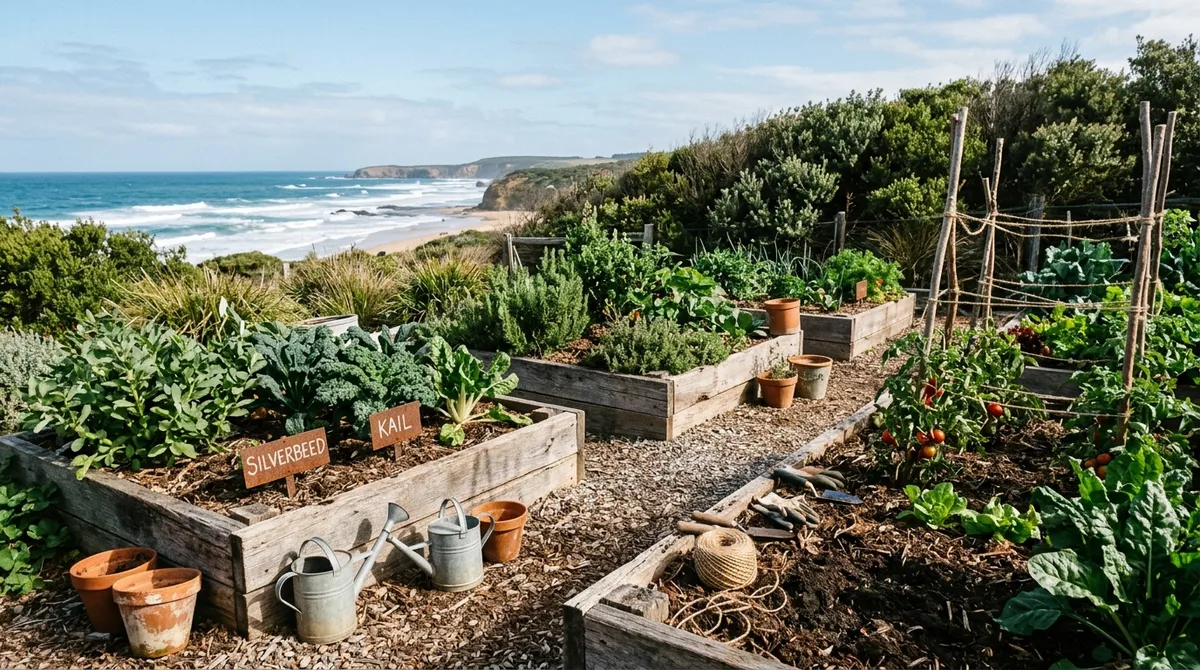
Coastal Gardening in Sydney
Salt wind, sandy soil, and strong sun, but also frost-free winters and a long growing season
Coastal Sydney gardens, from the Northern Beaches through the Eastern Suburbs to Cronulla and the Illawarra coast, have advantages and challenges that inland gardens don't face. The mild, frost-free winters mean you can grow warm-climate crops year-round. The sea breeze moderates summer extremes. But salt wind burns leaves, sandy soil drains too fast, and exposed positions cop strong winds that damage plants.
The strategy is straightforward: build a windbreak, improve the soil, and choose plants that handle salt exposure.
🌱 Plants in this guide: Rosemary, Silverbeet, Kale, Beetroot, Broad Beans, Peas, Thyme, Oregano and 5 more, all listed under Plant profiles at the end of this guide. Each plant profile has sowing times for your region, companion plants and common pests.
The Salt Wind Problem
Salt-laden wind from the ocean burns the foliage of many vegetables and fruit trees. The damage shows as brown, crispy leaf edges that look like drought stress but happen even when the soil is moist. Plants closest to the ocean cop the worst of it, with intensity dropping off sharply even 50 to 100 metres inland.
Gardens in the front line (first row of houses from the beach in Bondi, Manly, Cronulla) deal with constant salt exposure. Gardens a few streets back get occasional salt spray during storms but are largely protected by surrounding buildings.
Building a Windbreak
A permeable windbreak is more effective than a solid fence. A solid wall creates turbulence on the leeward side, which can actually increase wind damage to plants directly behind it. A hedge or screen that filters the wind reduces speed without creating turbulence.
Salt-tolerant hedge plants for Sydney:
- Westringia (coastal rosemary): The best all-round coastal hedge. Salt-tolerant, drought-tolerant, and easy to shape. Grows 1.5 to 2 metres. Grey-green foliage, white or mauve flowers. Plant 50 centimetres apart for a dense hedge.
- Banksia integrifolia (coastal banksia): A larger option for properties with space. Grows 3 to 5 metres. Extremely salt and wind tolerant. Yellow flower spikes attract birds.
- Correa (native fuchsia): Compact, salt-tolerant, and flowers through winter. Good for a lower windbreak hedge (1 to 1.5 metres).
- Leptospermum (tea tree): Fast-growing, salt-tolerant, and dense. A good option for establishing a windbreak quickly.
Place your vegetable garden behind the windbreak. Even a 1.5-metre hedge dramatically reduces salt exposure in the area behind it.
Improving Sandy Coastal Soil
Sandstone-derived sandy soils along Sydney's coast drain extremely fast and hold few nutrients. Water runs straight through. Fertiliser washes out within days. Plants in pure sand are constantly thirsty and hungry.
The fix is organic matter, and lots of it:
- Compost: Dig in 10 to 15 centimetres before planting. Compost acts like a sponge, holding moisture and nutrients in the root zone. Add more compost every time you replant.
- Mulch: Apply 8 to 10 centimetres of straw or sugarcane mulch. Mulch reduces evaporation and breaks down over time, adding organic matter to the soil.
- Bentonite clay: This natural clay product, available at garden centres, improves water-holding capacity when mixed into sandy soil. Apply at the rate on the packet and dig in thoroughly.
- Wetting agents: Sandy soil can become hydrophobic (water-repellent) when it dries out completely. Apply a soil wetting agent at the start of each growing season.
Feed more frequently in sandy soil. Liquid fertiliser every 2 weeks is more effective than slow-release granules, which can wash through sand before plants absorb the nutrients.
Best Edibles for Coastal Sydney
Salt-Tolerant Vegetables
- Silverbeet: One of the most salt-tolerant vegetables. Grows year-round in coastal Sydney gardens, even in exposed positions.
- Kale: Handles salt spray reasonably well. Tuscan kale is particularly tough.
- Beetroot: Naturally salt-tolerant (it's related to sugar beet, which grows in brackish soils). Grow from March to September.
- Broad beans: Salt-tolerant and wind-resistant because of their sturdy stems. Grow from April to June.
- Peas: Moderate salt tolerance. Grow behind a windbreak from April to July.
Salt-Tolerant Herbs
- Rosemary: A Mediterranean coastal plant that thrives in salt wind, sandy soil, and full sun. The perfect coastal Sydney herb.
- Thyme: Same conditions as rosemary. Both handle exposed positions well.
- Oregano: Hardy, drought-tolerant, and salt-tolerant. Grows vigorously in sandy coastal soil.
- Mint: Surprisingly salt-tolerant. Keep in pots to prevent spreading.
Native Edibles for the Coast
- Warrigal greens: A native coastal plant that grows wild along Sydney's beaches. Completely salt-tolerant. The ideal edible groundcover for exposed coastal gardens.
- Pigface: Another native coastal plant with edible fruit and leaves. Grows on headlands and dunes throughout Sydney. Drought-proof and salt-proof.
- Coastal saltbush: Silver-grey leaves with a salty flavour, used like an herb in cooking. Extremely salt and drought tolerant. A useful windbreak plant that is also edible.
Fruit Trees Behind a Windbreak
- Fig: Tolerates salt wind better than most fruit trees. Brown Turkey is the best variety for small coastal gardens.
- Citrus: Grow well behind a windbreak. The frost-free coastal conditions are ideal. Rinse leaves with fresh water after heavy storms that carry salt inland.
- Feijoa: Moderate salt tolerance. Grows well in the second row behind a windbreak hedge.
- Olive: Very salt and drought tolerant. Not technically a fruit tree for eating fresh, but excellent for curing and oil. Grows well in sandy coastal soil.
Advantages of Coastal Gardening
Coastal Sydney has genuine advantages over inland areas:
- Frost-free: The ocean moderates winter temperatures. You can grow warm-season crops like citrus, passionfruit, and subtropicals that would be damaged by frost in Western Sydney.
- Moderate summer heat: Sea breezes keep temperatures lower than inland. Coastal gardens rarely experience the 40-plus degree days common in Penrith and Blacktown. Heat-sensitive crops like lettuce and spinach grow longer into summer.
- Extended growing season: The combination of mild winters and moderate summers means you can grow food 12 months of the year without extreme heat or cold interruptions.
- Good airflow: The consistent sea breeze reduces fungal diseases, which thrive in still, humid air. Tomatoes, cucumbers, and other fungal-prone crops often perform better near the coast (once salt is managed).
Frequently Asked Questions
What vegetables grow well in coastal Sydney gardens?
Salt-tolerant vegetables that grow well in coastal Sydney include silverbeet, kale, beetroot, broad beans, peas, lettuce (in sheltered spots), and most herbs (rosemary, thyme, oregano, and mint are salt-tolerant). Native edibles like warrigal greens and pigface are naturally coastal plants. For fruiting crops, cherry tomatoes and capsicum grow well behind a windbreak.
How do I protect my garden from salt wind in Sydney?
Plant or build a windbreak on the prevailing wind side (northeast to southeast in Sydney). Use salt-tolerant hedge plants like westringia, coastal rosemary, or banksia. A solid fence is less effective than a permeable hedge because fences create turbulence on the leeward side. Place your vegetable garden behind the windbreak where it receives filtered wind.
How do I improve sandy coastal soil in Sydney?
Sandy coastal soil drains too fast and holds few nutrients. Add large quantities of compost (10 to 15 centimetres) and dig it in. Apply mulch thickly (8 to 10 centimetres) to retain moisture. Add bentonite clay to improve water-holding capacity. Feed more frequently than you would in clay soil because nutrients leach quickly through sand.
Can I grow citrus near the coast in Sydney?
Citrus grow well in coastal Sydney if they are sheltered from direct salt wind. Plant behind a windbreak hedge or building. The mild, frost-free conditions along the coast are ideal for citrus. Tahitian lime and Meyer lemon are the most reliable coastal citrus. Rinse salt spray off leaves after heavy sea storms.
Plant profiles
Each profile has sowing times for your region, companion plants and common pests.
Free Monthly Planting Calendar
Get a personalised email each month with what to plant, seasonal tips, and harvest reminders for your region.
We send one email per month. Unsubscribe any time.