
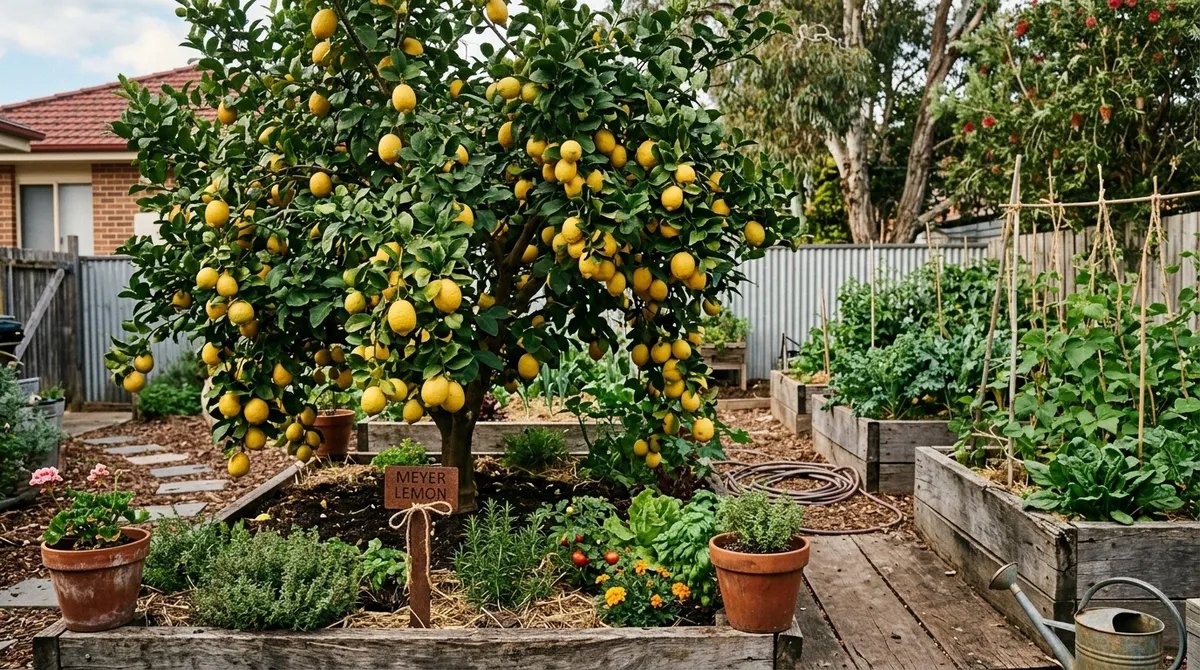
Growing Citrus Trees in Sydney
Sydney's climate is ideal for citrus, if you get the feeding and drainage right
Citrus trees are one of Sydney's most rewarding garden plants. The climate is warm enough for year-round growth, frost is minimal in most suburbs, and a single well-maintained lemon tree can produce over 100 fruit per year. The two things that trip people up are feeding (citrus are heavy feeders) and drainage (they hate wet feet).
🌱 Plants in this guide: Finger Lime, Lemon Tree, Lime Tree and Mandarin. Each plant profile has sowing times for your region, companion plants and common pests.
Best Citrus Varieties for Sydney
Lemon
Meyer lemon is the most popular backyard citrus in Sydney. It's a hybrid between a lemon and a mandarin, producing thinner-skinned, sweeter fruit than a commercial lemon. It flowers and fruits almost year-round, with the heaviest crop from May to September. A mature tree produces 100 to 200 fruit per year. Dwarf varieties stay under 2 metres and work well in large pots.
Eureka lemon is the classic commercial lemon. It produces thicker-skinned, more acidic fruit than Meyer, mainly from May to October. Eureka grows larger (3 to 4 metres) but can be pruned to stay compact. It's the better choice if you want traditional tart lemon juice.
Lime
Tahitian lime is the best lime for Sydney. It's slightly more cold-sensitive than lemon, so plant it in a warm, sheltered spot. A north-facing wall provides radiated heat that protects against cold snaps. Fruit ripens from January to June, turning yellow when fully ripe (green limes from the supermarket are picked early). Dwarf varieties grow well in 50-litre pots.
Kaffir lime (makrut lime) is grown mainly for its aromatic leaves, essential in Thai cooking. The fruit is knobbly and mostly rind. It grows well in a pot and handles part shade better than other citrus.
Mandarin
Imperial mandarin is the classic Sydney mandarin. Sweet, easy to peel, and productive. Fruits from May to August. The tree grows to 3 to 4 metres but responds well to pruning. Needs full sun and consistent watering during fruit development.
Satsuma mandarin is more cold-tolerant than Imperial, making it a good choice for Western Sydney and Blue Mountains fringe areas. Seedless fruit ripens from April to June.
Orange
Washington Navel is the standard eating orange for Sydney. Sweet, seedless, and easy to peel. Fruits from June to September. The tree is larger than mandarin or lemon (4 to 5 metres) so it needs more space. It's the best choice if you have room for only one large fruit tree.
Finger Lime
An Australian native citrus that produces elongated fruit filled with tiny juice vesicles (citrus caviar). It grows naturally in the rainforests of northern NSW and southern Queensland, and adapts well to Sydney's climate. Compact (2 to 3 metres), thorny, and shade-tolerant for a citrus. Fruits from May to September. Outstanding in a pot.
Planting
Plant citrus in Sydney from May to September (autumn to early spring). Winter planting lets roots establish before summer heat. Choose a spot with full sun (minimum 6 hours), good drainage, and shelter from strong winds.
Dig a hole twice the width of the root ball and the same depth. If your soil is heavy clay (common across Sydney), mound the planting area slightly so the root ball sits 5 centimetres above the surrounding soil level. This prevents waterlogging. Backfill with a mix of existing soil and compost. Water in deeply.
Keep the graft union (the bump on the lower trunk) well above soil level. If soil covers the graft, the rootstock can send up shoots that take over the tree.
Feeding Schedule
Citrus are among the heaviest-feeding garden plants. A tree that produces 100 lemons per year is pulling significant nutrients from the soil. Without regular feeding, leaves yellow, fruit is small, and the tree becomes susceptible to pests.
Feed three times per year:
- August (early spring): Apply citrus-specific fertiliser at the rate on the packet. This supports the spring growth flush.
- November (early summer): Second application. This supports fruit development through summer.
- February (late summer): Third application. This prepares the tree for autumn fruiting and the following year's flower buds.
Between feeds, apply liquid seaweed fortnightly from September to March. If leaves show yellowing between the veins (interveinal chlorosis), apply iron chelate as a soil drench and foliar spray. This is common in Sydney's alkaline clay soils where iron becomes unavailable to roots.
Common Pests in Sydney
Citrus Leaf Miner
Tiny moth larvae that tunnel through new leaves, leaving silvery trails. Worst from November to March when new growth is soft. Spray new growth with horticultural oil every 2 to 3 weeks during the flush period. Established trees tolerate leaf miner damage without serious harm.
Scale Insects
Brown or white lumps on stems and leaves. They suck sap and excrete honeydew, which attracts sooty mould. Spray with horticultural oil in winter (July to August) when the oil is most effective and beneficial insects are less active. Repeat if needed in spring.
Citrus Gall Wasp
Causes woody swellings (galls) on branches. The wasp is established across Sydney. Prune off galls before August (before the adult wasps emerge). Burn or bin the prunings, do not compost them. Regular pruning and feeding keeps trees vigorous enough to tolerate moderate gall wasp pressure.
Stink Bugs
Bronze orange bugs (stink bugs) feed on citrus flowers and developing fruit from August to November. Hand-pick them in the early morning when they're sluggish. Wear gloves and eye protection, as they spray a caustic liquid when disturbed. Knock them into a bucket of soapy water.
Pruning
Citrus need minimal pruning. Remove dead wood, crossing branches, and any growth below the graft union at any time. Shape the tree after the main harvest (September to October for most varieties). Keep the centre of the tree open for airflow, which reduces fungal problems.
For small gardens, prune citrus to a vase shape and keep to 2.5 to 3 metres tall. This makes picking easier and keeps the tree manageable in limited space.
Frequently Asked Questions
What citrus trees grow best in Sydney?
The best citrus for Sydney gardens are Meyer lemon (most reliable, fruits year-round), Eureka lemon (classic tart lemon), Tahitian lime (best lime for Sydney), Imperial mandarin (sweet, easy to peel), Washington Navel orange (classic eating orange), and Australian finger lime (native citrus, gourmet fruit).
When should I feed citrus trees in Sydney?
Feed citrus trees three times per year in Sydney: August (spring growth flush), November (fruit development), and February (pre-autumn). Use a citrus-specific fertiliser that contains nitrogen, potassium, and trace elements including iron, zinc, and manganese. Supplement with iron chelate if leaves turn yellow between the veins.
Why are the leaves on my citrus tree turning yellow?
Yellow citrus leaves in Sydney are usually caused by iron or manganese deficiency, which is common in Sydney's alkaline clay soils. Apply iron chelate as a soil drench and foliar spray. If the entire leaf yellows, the cause may be overwatering, poor drainage, or nitrogen deficiency. Check drainage and adjust watering before adding more fertiliser.
Can I grow citrus in pots in Sydney?
Dwarf citrus varieties grow well in large pots (minimum 50 litres) in Sydney. Dwarf Meyer lemon, dwarf Tahitian lime, and kumquat are the best pot choices. Use quality potting mix, feed every 6 to 8 weeks with citrus fertiliser, and water deeply when the top 3 centimetres of soil is dry. Potted citrus need full sun, at least 6 hours per day.
Plant profiles
Each profile has sowing times for your region, companion plants and common pests.
Free Monthly Planting Calendar
Get a personalised email each month with what to plant, seasonal tips, and harvest reminders for your region.
We send one email per month. Unsubscribe any time.