
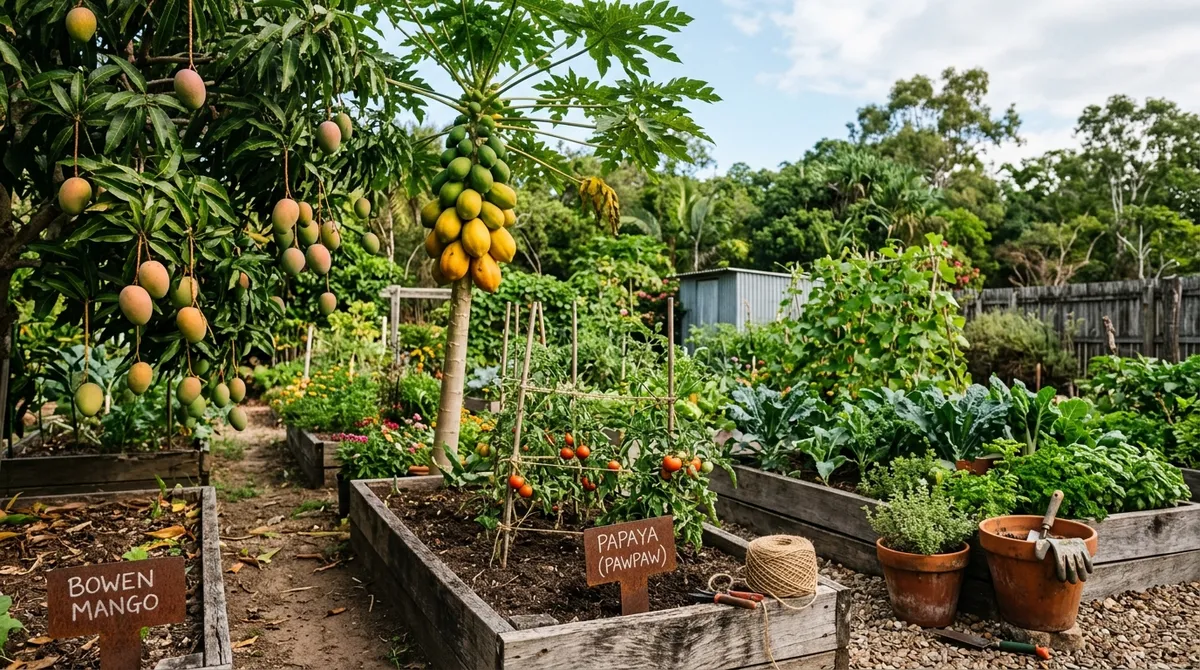
Growing Tropical Fruit in North Queensland: Mango, Lychee & More
Mango, lychee, rambutan, jackfruit, longan, and dragonfruit for Townsville, Cairns, and the Tablelands
North Queensland is one of the best places in Australia to grow tropical fruit. The combination of warm temperatures year-round, distinct wet and dry seasons, and fertile soils (especially on the Atherton Tablelands) supports an extraordinary range of fruit trees. Many of the tropical fruits sold in Australian supermarkets are grown commercially in this region.
Home gardeners have a real advantage here. A single backyard in Cairns or Townsville can produce mango, lychee, jackfruit, banana, papaya, and dragonfruit, providing fresh tropical fruit for most of the year.
🌱 Plants in this guide: Mango, Lychee, Rambutan, Jackfruit, Longan and Dragon Fruit. Each plant profile has sowing times for your region, companion plants and common pests.
Mango
Mango is the signature fruit of North Queensland. The region around Bowen and the Burdekin produces most of Australia's commercial mango crop, and backyard trees thrive from Mackay to Cooktown.
The best varieties for home gardens include Kensington Pride (the classic "Bowen mango," sweet and fragrant), R2E2 (large fruit, firm flesh, excellent eating), Nam Doc Mai (Thai variety, intensely sweet, slim fruit), and Honey Gold (rich golden flesh, outstanding flavour, developed in Queensland). Grafted trees from nurseries in Townsville, Cairns, and Mareeba produce fruit within 3-4 years.
Plant mango trees at the start of the wet season (October to December) in full sun. Space trees 8-10 metres apart, as mature trees grow large. Young trees need protection from strong wind during cyclone season. Water regularly for the first two dry seasons. Once established, mango trees are drought tolerant and require minimal irrigation.
Flowering occurs in July to August during the dry season. Fruit develops through the wet season and ripens from November to February depending on the variety. Flying foxes and birds are the main threats to ripe fruit. Net trees when fruit begins to colour, or pick fruit at the mature green stage and ripen on the kitchen bench.
Lychee
Lychee is a premium tropical fruit that grows exceptionally well across the wet tropics. Commercial orchards around Mareeba, the Atherton Tablelands, and coastal areas between Ingham and Mossman produce high-quality fruit from November to January.
Recommended varieties include Kwai May Pink (early season, reliable bearer), Wai Chee (large fruit, late season), and Tai So (vigorous tree, good flavour). Buy grafted or air-layered trees for consistent quality and earlier fruiting (3-5 years versus 8-10 years for seedlings).
Lychee trees need a cool, dry period to trigger flowering. North Queensland's dry season (June to August) provides this naturally, with night temperatures around 14-18 degrees. Trees grow 8-12 metres tall but can be kept smaller with annual pruning after harvest. Plant in deep, well-drained soil enriched with compost. Lychee roots are sensitive to waterlogging, so choose a site that drains freely.
Rambutan
Rambutan is closely related to lychee and thrives in the wetter tropical areas around Cairns, Innisfail, and Tully. The tree needs more consistent moisture than lychee and performs best where annual rainfall exceeds 1,500mm.
Trees grow 10-15 metres tall and produce clusters of hairy red fruit from December to February. The flesh is translucent, sweet, and similar in flavour to lychee. Rambutan trees are less cold tolerant than lychee, so they perform better in the humid coastal tropics than the drier Townsville region.
Plant in a sheltered position with rich, deep soil. Mulch heavily and water during dry spells. Grafted trees fruit in 3-4 years.
Jackfruit
Jackfruit is the world's largest tree-borne fruit, with individual fruit weighing 5-30 kilograms. The trees grow well from Townsville northward and produce massive crops with minimal care.
Plant in full sun in well-drained soil. Trees grow fast, reaching 10-15 metres in 5-6 years. Fruit grows directly from the trunk and major branches, making harvest easier than you might expect. The sweet, aromatic flesh segments can be eaten fresh, and the unripe fruit is used as a meat substitute in curries and stir-fries. Seeds are edible when roasted.
Jackfruit trees are available from tropical fruit nurseries in Cairns and the Tablelands. Seedling trees fruit in 3-5 years. Named varieties grafted onto seedling rootstock produce more consistent fruit quality.
Longan
Longan is a close relative of lychee with a more delicate, honey-like flavour. Trees produce clusters of small, brown-skinned fruit from January to March. The flesh is translucent and sweet.
Longan trees are slightly more cold-tolerant than lychee and grow well across the entire North Queensland tropical zone, from Townsville to Cooktown. Plant in a sunny, sheltered position in deep soil. Trees grow 8-12 metres tall. Named varieties available from specialist nurseries include Kohala (reliable producer, good flavour) and Biew Kiew (early season, large fruit).
Dragonfruit (Pitaya)
Dragonfruit is a climbing cactus that produces stunning fruit from November to April. The plants grow quickly, fruiting within 12-18 months of planting. They need a strong support structure, typically a concrete or timber post with a round frame on top that allows the stems to cascade downward.
Varieties include white-fleshed (Hylocereus undatus, the most common), red-fleshed (Hylocereus costaricensis, sweeter and more intensely coloured), and yellow-skinned (Selenicereus megalanthus, the sweetest but slower growing). Red-fleshed varieties are the most popular for home gardens.
Plant cuttings in well-drained soil in full sun. Dragonfruit tolerates poor soil but produces more fruit with regular feeding. Water during the dry season. The plants are drought tolerant once established but fruit size improves with consistent moisture. Flowers open at night and are pollinated by moths and bats. Some varieties need a second, different variety for cross-pollination, so check the label or plant two varieties. Hand-pollinate at night when the flowers open to improve fruit set.
Planting and Care Tips for All Tropical Fruit Trees
Dig a planting hole twice the width of the root ball and the same depth. Mix the backfill with compost but avoid adding fertiliser to the planting hole, as it can burn young roots. Water deeply after planting and apply 10-15 centimetres of mulch around the tree, keeping it 15 centimetres away from the trunk.
Feed young trees every 3 months with a balanced organic fertiliser. Mature trees benefit from two main feeds: one at the start of the wet season (October) and one after harvest. Liquid seaweed applied monthly supports root development and stress tolerance.
Cyclone preparedness matters. Prune trees annually to maintain a strong, balanced canopy that resists wind damage. Remove crossing branches and thin dense growth to allow wind to pass through. Young trees should be staked for the first 2-3 wet seasons.
Frequently Asked Questions
What tropical fruit grows best in North Queensland?
Mango, lychee, rambutan, jackfruit, longan, dragonfruit, papaya, banana, and custard apple all grow exceptionally well. North Queensland's tropical wet/dry climate provides the warm temperatures and seasonal rainfall these trees need to fruit heavily.
When should I plant tropical fruit trees in North Queensland?
Plant at the start of the wet season, from October to December. The warm rain helps trees establish quickly. Avoid planting during the dry season unless you can provide consistent irrigation. Container-grown trees from nurseries can be planted year-round with adequate watering.
How long before a mango tree fruits in North Queensland?
Grafted mango trees typically fruit in 3-4 years. Seedling trees take 5-8 years and may not produce fruit true to the parent variety. Always buy grafted trees from a reputable nursery for reliable fruit quality and earlier production.
Can I grow lychee in Townsville?
Lychee grows well in the Townsville region. Trees need a cool, dry period (June to August) to trigger flowering. North Queensland's distinct dry season provides this naturally. Plant in a sheltered spot with protection from strong winds during cyclone season.
Plant profiles
Each profile has sowing times for your region, companion plants and common pests.
Free Monthly Planting Calendar
Get a personalised email each month with what to plant, seasonal tips, and harvest reminders for your region.
We send one email per month. Unsubscribe any time.