
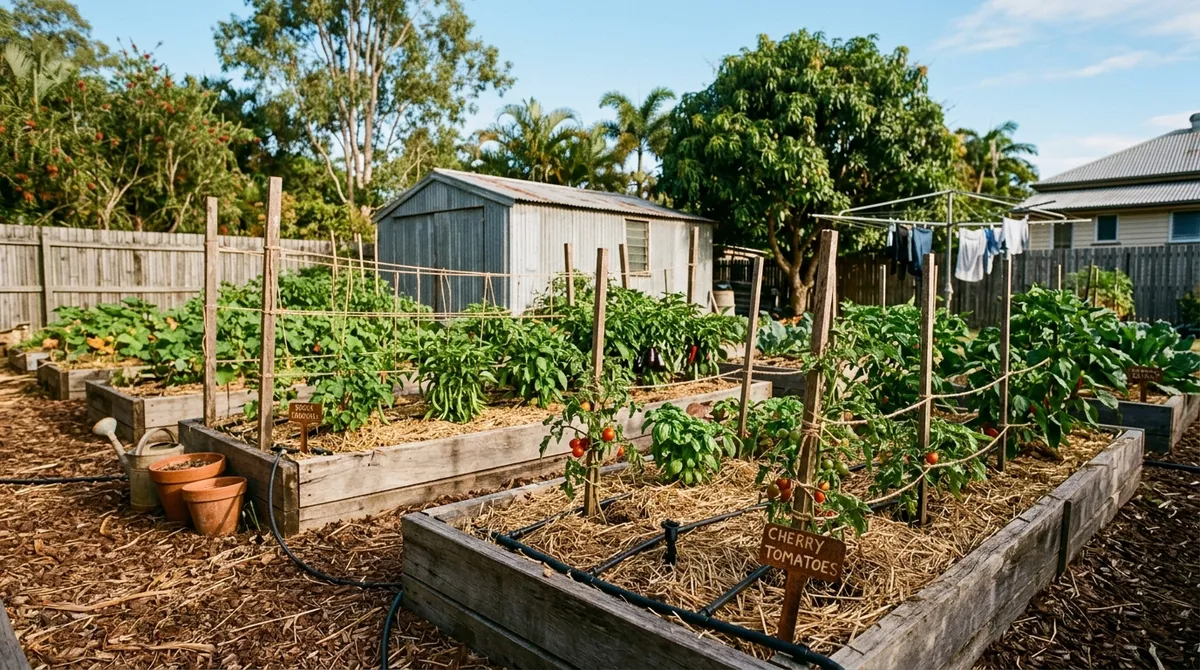
Dry Season Gardening in North Queensland
The prime vegetable growing window: month-by-month planting, irrigation, and crop selection from April to November
The dry season is the main event for vegetable gardeners across North Queensland. From April to November, humidity drops, rainfall stops, and temperatures settle into a range that supports a wide variety of crops. Townsville receives less than 50mm of total rainfall from May to October. Cairns is slightly wetter but still dry enough for productive gardening.
This guide breaks down what to plant each month, how to manage irrigation, and how to handle the build-up transition as the wet season approaches.
April: The Season Opens
April marks the transition from wet to dry. Humidity starts to drop, overnight temperatures fall below 24 degrees, and the last of the monsoon rain tails off. This is the month to get your main dry season crops in the ground.
Plant now: Tomatoes (seedlings), capsicum, chilli, eggplant, snake beans, cucumber, zucchini, Asian greens (bok choy, pak choi, tatsoi), spring onions, basil, coriander, and parsley.
Prepare beds by adding compost and aged manure. Mulch with 10 centimetres of sugar cane mulch. Install irrigation if you have not already. The dry months ahead require consistent watering.
May: The Sweet Spot Begins
May is one of the best planting months in the North Queensland calendar. Overnight temperatures around Townsville drop to 18-20 degrees. Days are warm (27-29 degrees) and sunny. Humidity is low. Conditions are ideal for a huge range of crops.
Plant now: Everything from April, plus lettuce (all types), beetroot, carrots, radish, turnip, snow peas, sugar snap peas, broccoli, cauliflower, cabbage, kale, silverbeet, and celery.
This is the month to sow cool-season crops that would fail in the heat of March or October. Lettuce, peas, and brassicas all perform well if planted now for a June to August harvest.
June to July: Peak Production
These are the coolest months, with Townsville overnight temperatures dropping to 14-16 degrees and Cairns to 17-19 degrees. The widest range of vegetables grows during this period. Gardens are at peak production.
Plant now: Succession sowings of lettuce, Asian greens, radish, and beetroot every 2-3 weeks. Continue harvesting tomatoes, beans, and capsicum planted in April. Sow a second round of broccoli and cauliflower for a late-season harvest.
Cool-season crops like snow peas and lettuce are at their best. Tomatoes planted in April are producing heavily. Fruit fly pressure drops slightly during the cooler months but remains a concern for all fruiting crops.
August: Warmth Returns
August brings warming days (29-31 degrees around Townsville) while nights remain mild (16-18 degrees). This is the last reliable month for cool-season crops. Lettuce and peas start to struggle by late August as temperatures climb.
Plant now: Final sowings of lettuce and beetroot (choose bolt-resistant varieties). Continue with beans, cucumbers, and herbs. Plant pumpkin and watermelon seeds for a late-season harvest before the wet returns.
Begin harvesting crops that will not tolerate the build-up heat. Pull out any snow peas and peas before they decline. Side-dress tomatoes and capsicum with organic fertiliser for a final flush of fruit.
September to October: The Build-Up
The build-up is the most challenging period for gardeners. Temperatures climb above 33 degrees, humidity increases, and afternoon storms begin. The combination of heat and humidity stresses most temperate vegetables.
Plant now: Heat-tolerant crops only. Sweet potato slips, kangkong, snake beans, okra, rosella, lemongrass, and eggplant. Pull out tomatoes, lettuce, and brassicas, which will decline rapidly.
September is the transition month. Finish harvesting dry season crops and begin preparing beds for wet season plantings. Add compost and manure to replenish nutrients used during the dry season. The last tomatoes should be picked by late September, as fruit fly pressure intensifies and heat stops fruit set.
November: Preparing for the Wet
November is hot, humid, and stormy. Temperatures regularly exceed 35 degrees with overnight lows above 25 degrees. The first monsoon troughs may bring heavy rain. Most vegetable gardens wind down during this month.
Plant now: Sweet potato (if not already in), cassava, kangkong, snake beans, and tropical herbs (lemongrass, turmeric, ginger). These crops will grow through the wet season.
Repair and improve raised beds before the heavy rains arrive. Check drainage channels are clear. Secure shade structures and trellises against the strong winds that accompany build-up storms.
Irrigation Through the Dry Season
Reliable watering is the difference between success and failure during the dry months. Townsville receives almost no rain from May to October. Your garden depends entirely on irrigation.
Drip irrigation is the best system for North Queensland vegetable gardens. It delivers water directly to plant roots, keeps foliage dry (reducing fungal disease), and wastes very little to evaporation. A simple system with a timer costs under $100 from Bunnings or Townsville and Cairns irrigation suppliers.
Water deeply every 2-3 days. A typical raised bed needs 10-15 litres per square metre every 2-3 days. Water in the early morning (before 8am) to reduce evaporation. Evening watering can encourage fungal growth on foliage overnight.
Mulch is your best friend. A 10 centimetre layer of sugar cane mulch reduces evaporation by up to 70%. Replace mulch every 4-6 weeks as it breaks down in the warmth. Keep mulch pulled back 5 centimetres from plant stems to prevent collar rot.
Feeding Your Dry Season Garden
Warm soils and frequent watering leach nutrients faster than in southern climates. Feed more often than you would in Melbourne or Sydney.
- At planting: Mix compost and aged manure into the top 15 centimetres of soil. Add a handful of blood and bone per plant.
- Every 3 weeks: Side-dress with a balanced organic fertiliser (pelletised chicken manure or an all-purpose blend).
- Fortnightly: Liquid seaweed applied as a foliar spray or soil drench. This supports root health and helps plants tolerate heat stress.
- Fruiting crops: Add liquid potash fortnightly from fruit set onwards. This improves fruit quality and flavour.
Frequently Asked Questions
When is the dry season in North Queensland?
The dry season runs from approximately April to November. Rainfall drops dramatically from April onwards, with May through October receiving very little rain. Townsville averages less than 50mm total rainfall from May to October. The build-up (October to November) brings increasing humidity and storms before the wet season returns in December.
What can I plant in each month of the dry season?
April: tomatoes, capsicum, beans, Asian greens, herbs. May to June: lettuce, beetroot, carrots, radish, broccoli, cauliflower, snow peas. July to August: continue cool-season crops, start planning wet season plantings. September: final plantings of fast-maturing crops, begin transitioning to heat-tolerant varieties.
How much should I water my garden in the dry season?
Water deeply every 2-3 days. Drip irrigation is the most efficient method. Apply 10 centimetres of sugar cane mulch to reduce evaporation. Water in the early morning. A typical raised bed needs 10-15 litres per square metre every 2-3 days during the dry season.
Can I grow cool-season vegetables in North Queensland?
June and July are cool enough in Townsville and Cairns (overnight lows of 14-18 degrees) to grow lettuce, beetroot, carrots, radish, snow peas, and even broccoli and cauliflower. These crops fail in the heat of October onwards. Timing is critical: sow in May for a June to August harvest window.
Free Monthly Planting Calendar
Get a personalised email each month with what to plant, seasonal tips, and harvest reminders for your region.
We send one email per month. Unsubscribe any time.