
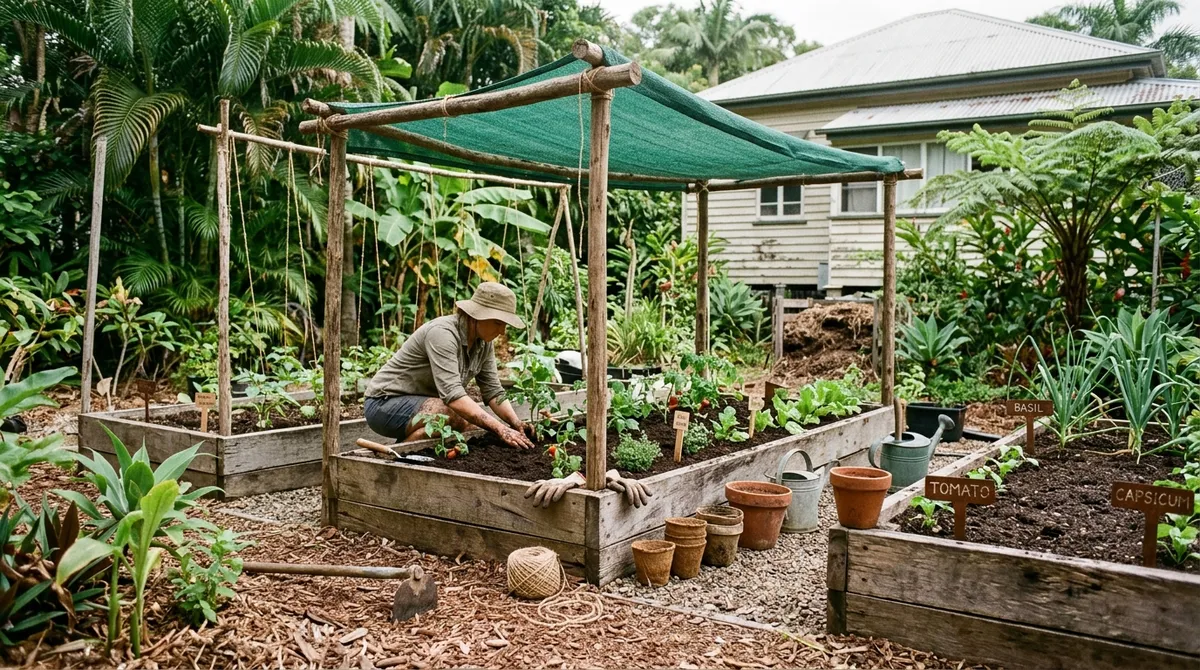
How to Start a Vegetable Garden in North Queensland
Wet/dry season timing, raised beds, soil preparation, and the best starter crops for tropical gardens
Starting a vegetable garden in North Queensland requires a different approach to gardening in southern Australia. Two seasons define your year: the wet (December to March) and the dry (April to November). Each season has its own set of crops, challenges, and opportunities. Getting the timing right is the single most important factor in your success.
The dry season is the main vegetable growing window. Start your garden in April and you will have 6-7 months of productive growing ahead. The wet season limits you to tropical crops, but with the right choices you can still harvest food year-round.
🌱 Plants in this guide: Snake Beans and Spring Onion. Each plant profile has sowing times for your region, companion plants and common pests.
Choosing Your Garden Site
Most vegetables need 6-8 hours of direct sun. In North Queensland, afternoon shade is beneficial during the build-up months (September to November) when temperatures regularly exceed 35 degrees. A spot with morning sun and dappled afternoon shade is ideal for most crops.
Avoid low-lying areas that flood during the wet season. If your entire yard sits low (common in Townsville suburbs like Aitkenvale, Kirwan, and Cranbrook), raised beds are essential. Position your garden near a water source, as dry season irrigation is critical.
Shade structures are worth considering. A removable 50% shade cloth frame over your beds protects crops during the hottest months and reduces water loss. Many successful North Queensland gardeners use a simple timber or PVC frame with shade cloth that clips on and off as needed.
Building Raised Beds for the Tropics
Raised beds solve two major problems in North Queensland: waterlogging during the wet season and poor drainage in heavy clay soils. Build beds at least 20-30 centimetres high. In areas prone to flooding, 40-50 centimetres is better.
Material options include treated pine (H4 rated for ground contact), hardwood sleepers (ironbark or spotted gum are termite resistant), corrugated galvanised steel, or concrete blocks. Avoid untreated softwood, which termites will destroy within a single wet season in the tropics.
Fill beds with a mix of 60% compost, 20% aged cow or horse manure, and 20% coarse river sand. This combination drains freely in the wet season while retaining enough moisture during the dry. Local landscape suppliers in Townsville and Cairns sell premixed "veggie bed" blends that work well.
Line the bottom of beds with weed mat to prevent grass and weeds growing up through the soil. Add a layer of coarse gravel or scoria beneath the soil mix in areas with severe drainage issues.
Soil and Mulch
Native soils across North Queensland vary widely. Townsville's coastal plain has heavy grey clay. The Atherton Tablelands have red volcanic krasnozem soils that are naturally fertile. Cairns coastal soils range from sandy loam to heavy clay depending on the suburb.
Regardless of your soil type, adding organic matter is the fastest path to productive soil. Compost, aged manure, and sugar cane mulch (cheap and widely available across the region) are the three essentials.
Mulch is critical in the tropics. A 10 centimetre layer of sugar cane mulch over bare soil reduces moisture loss by up to 70%, suppresses weeds, and keeps soil temperatures stable. Replace mulch every 4-6 weeks as it breaks down rapidly in warm, humid conditions. Avoid bark mulch, which can harbour termites and repels water when it dries out.
Your First Dry Season Crops (April to September)
Start with crops that produce quickly and tolerate heat. These five are reliable for beginners across the Townsville to Cairns corridor:
- Cherry tomatoes: Plant seedlings in April. Tommy Toe and Sweet Bite produce fruit from 8 weeks. Use exclusion netting for fruit fly. Harvest through to August.
- Snake beans: Sow seeds directly in April or May. Provide a trellis. Pick beans at 30-40 centimetres every 2-3 days. Continuous production for 3-4 months.
- Asian greens: Bok choy, pak choi, and tatsoi grow fast in the mild dry season. Sow seeds directly every 2-3 weeks for succession harvests. Ready in 6-8 weeks.
- Spring onions: Sow seeds or plant bunches from the nursery. Ready in 8-10 weeks. Tolerant of most conditions and largely pest-free.
- Herbs: Basil, coriander, chives, and parsley all grow well in the dry season. Plant in pots or directly in beds. Harvest regularly to keep plants productive.
Expanding into the Wet Season (December to March)
Once you have a dry season garden established, add wet season crops to keep your garden producing year-round. Sweet potato, kangkong, lemongrass, okra, and snake beans are the best crops for beginners during the monsoon.
Plant sweet potato slips in November or December. They spread to cover bare soil, require almost no care, and produce tubers 4-5 months later. Kangkong grows in standing water, so it thrives where other crops fail. Sow seeds or plant cuttings in a large pot sitting in a tray of water.
Managing Pests in the Tropics
Pest pressure in North Queensland is higher than anywhere else in Australia. Warm temperatures year-round mean insects breed continuously without a winter die-off.
- Fruit fly: The number one pest for fruiting crops. Use exclusion netting, protein bait sprays, and pick fruit early. This applies to tomatoes, capsicum, eggplant, and cucumbers.
- Caterpillars: Cluster caterpillar and diamondback moth attack leafy greens. Check undersides of leaves daily. Apply Bt (Bacillus thuringiensis) spray at the first sign of damage.
- Aphids and whitefly: Spray with horticultural soap or neem oil. Yellow sticky traps monitor populations. Encourage ladybirds and lacewings.
- Grasshoppers: A major problem during the build-up (September to November). Exclusion netting over beds is the most effective control. Chooks love them if you can catch a few.
- Termites: Use termite-resistant materials for garden beds. Keep mulch away from the house. Inspect beds regularly for mud tubes.
Watering in the Dry Season
Townsville receives less than 50mm of rain between May and October. Your garden will rely entirely on irrigation during these months. Drip irrigation is the most efficient system, delivering water directly to plant roots with minimal waste.
Water deeply every 2-3 days rather than lightly every day. Deep watering encourages roots to grow down into cooler soil layers. Water in the early morning to reduce evaporation. A timer on your irrigation system ensures consistent watering even when you are away.
Frequently Asked Questions
When is the best time to start a vegetable garden in North Queensland?
The dry season (April to November) is the best time to start. April is ideal because you have the full growing season ahead. Temperatures are warm but manageable (25-30 degrees), humidity is dropping, and rainfall is minimal.
Do I need raised beds in North Queensland?
Raised beds are strongly recommended, especially in Townsville and coastal Cairns where heavy clay soils and wet season flooding are common. Build beds at least 20-30 centimetres high for drainage. Use treated pine, hardwood, or galvanised steel.
What vegetables are easiest to grow in North Queensland?
For beginners in the dry season: cherry tomatoes, snake beans, Asian greens (bok choy, pak choi), spring onions, and herbs (basil, coriander, chives). These crops produce quickly and tolerate the tropical heat.
How do I deal with pests in a North Queensland vegetable garden?
Pest pressure is high year-round in the tropics. Fruit fly is the biggest challenge for fruiting crops. Use exclusion netting over tomatoes, capsicum, and eggplant. Caterpillars attack leafy greens. Apply Bt spray at the first sign of damage. Encourage predatory insects by planting flowering herbs.
Plant profiles
Each profile has sowing times for your region, companion plants and common pests.
Free Monthly Planting Calendar
Get a personalised email each month with what to plant, seasonal tips, and harvest reminders for your region.
We send one email per month. Unsubscribe any time.