
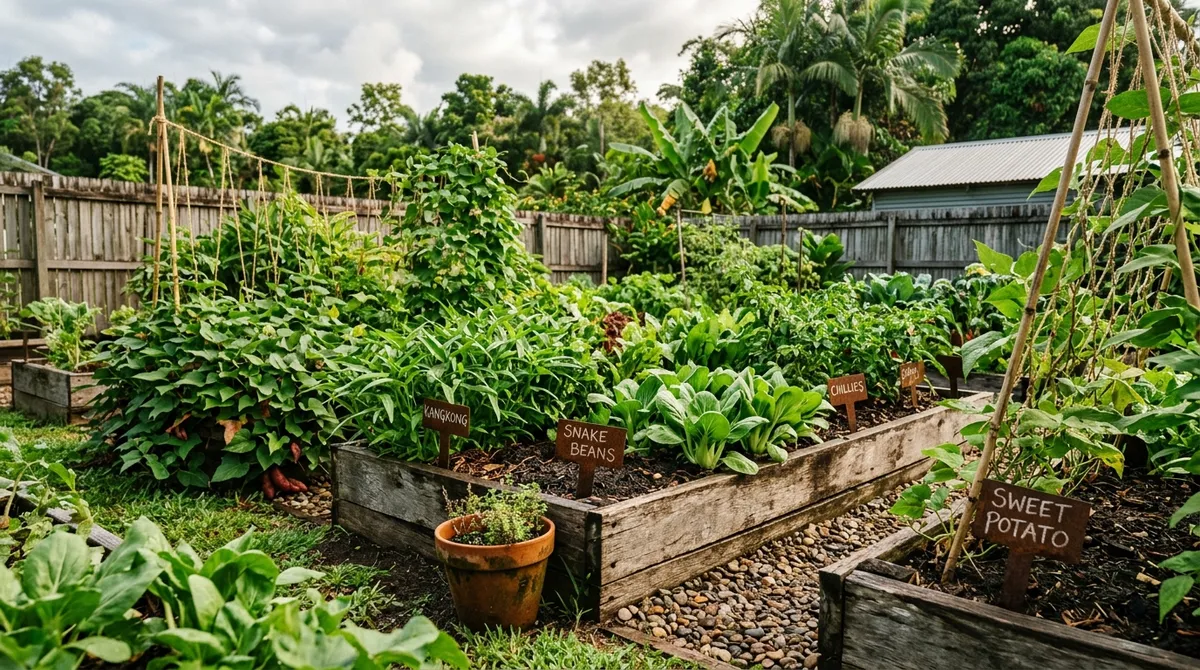
What to Plant in Wet Season in North Queensland
Tropical crops that thrive in monsoon conditions from December to March
The wet season empties many North Queensland gardens. Tomatoes rot, lettuce melts, and herbs bolt within days. Townsville receives around 1,100mm of rain between December and March. Cairns gets closer to 1,400mm. Humidity sits above 80% for weeks at a time, and overnight temperatures rarely drop below 24 degrees.
Plenty of crops thrive in these conditions. The key is choosing plants that evolved in tropical monsoon climates. Sweet potato, cassava, kangkong, snake beans, okra, and tropical greens grow fast and strong through the wet, producing food when standard vegetables fail.
🌱 Plants in this guide: Sweet Potato, Cassava, Kang Kong (Water Spinach), Malabar Spinach, Spinach, Beans (bush), Snake Beans, Okra and 8 more, all listed under Plant profiles at the end of this guide. Each plant profile has sowing times for your region, companion plants and common pests.
Root Crops and Tubers
Sweet Potato
Sweet potato is the ultimate wet season crop for North Queensland. Plant cuttings (slips) in November or early December as the rains begin. The vines spread rapidly in warm, wet conditions, covering bare soil and suppressing weeds. Harvest tubers 4-5 months later in April or May as the dry season begins.
Varieties available from Townsville and Cairns nurseries include Beauregard (orange flesh, fast maturing), Northern Star (white flesh, very productive in tropical soils), and Purple Sunset (purple flesh, high in antioxidants). Plant slips 30 centimetres apart in mounded rows to improve drainage around the developing tubers.
Bonus: sweet potato leaf tips are edible and highly nutritious. Harvest young growing tips regularly for stir-fries and salads throughout the wet season.
Cassava
Cassava is a staple food crop across the tropics and grows effortlessly in North Queensland's wet season. Plant stem cuttings (20-30 centimetres long) horizontally in mounded soil from October to December. The plants grow 2-3 metres tall and tolerate poor soils, heavy rain, and full sun. Harvest tubers 9-12 months later.
Cassava must be peeled and cooked thoroughly before eating. Sweet varieties (available from tropical garden suppliers in Cairns and the Atherton Tablelands) have lower cyanide levels and are suitable for home gardens.
Leafy Greens for the Wet Season
Kangkong (Water Spinach)
Kangkong is the leafy green that replaces lettuce and spinach during the wet season. It grows in waterlogged conditions that would kill any temperate green. Sow seeds or plant cuttings in November. Harvest young stems and leaves from 6 weeks onwards. Regular harvesting encourages bushy growth and continuous production.
Grow kangkong in a large pot sitting in a tray of water, or in a garden bed that stays consistently moist. It spreads vigorously, so container growing is a good choice if you want to keep it contained. The stems and leaves are excellent in stir-fries, soups, and salads.
Ceylon Spinach (Malabar Spinach)
A vigorous climbing vine that produces thick, glossy leaves through the hottest months. Plant from seed or cuttings in October or November. Provide a trellis or fence for the vines to climb. Pick individual leaves as needed. The slightly mucilaginous texture works well in curries and soups.
Okinawan Spinach
A low-growing groundcover with attractive purple-backed leaves. Extremely heat tolerant and productive through the entire wet season. Propagate from cuttings. The leaves are mild-flavoured and can be used raw in salads or lightly cooked.
Beans, Cucurbits, and Fruiting Crops
Snake Beans
Snake beans (yard-long beans) produce prolifically through the wet season. Sow seeds directly in December or January. Provide a sturdy trellis, as the vines grow 3 metres or more. Harvest beans at 30-40 centimetres for the best texture. Pick every 2-3 days to keep plants producing. The variety Green Noodle is widely available and reliable in North Queensland.
Okra
Okra loves heat and humidity. Sow seeds directly in November or December. Soak seeds for 12-24 hours before planting to improve germination. Plants grow 1-2 metres tall and produce pods from 8 weeks after sowing. Harvest pods every 2 days when they are 8-10 centimetres long. Clemson Spineless is the standard variety. Red Burgundy adds visual interest.
Luffa and Bitter Melon
Both crops grow vigorously on trellises during the wet season. Luffa can be eaten young (harvest at 15-20 centimetres) or left to mature for use as a natural sponge. Bitter melon is a staple in Asian cooking. Sow seeds directly in November or December. Both need a strong trellis and full sun.
Eggplant
Eggplant handles wet season conditions better than most fruiting vegetables. Thai varieties (round, green-striped) are particularly well-adapted. Start seeds in September or October and transplant in November. Plants produce through the wet season if fruit fly is managed with exclusion netting.
Herbs That Handle the Wet
- Lemongrass: Plant divisions in November. Grows into large clumps through the wet season. Essential for Thai and Vietnamese cooking. Virtually indestructible in tropical conditions.
- Turmeric: Plant rhizome pieces in October or November. The plants grow 1 metre tall through the wet season and are harvested when foliage dies back in the dry season (May to June).
- Ginger: Plant rhizomes in September or October. Needs rich, well-drained soil and partial shade. Harvest fresh ginger from March onwards.
- Thai Basil: More heat and humidity tolerant than sweet basil. Sow seeds or plant cuttings year-round. Harvest regularly to prevent flowering.
- Vietnamese Mint: Grows like a weed in wet conditions. Plant cuttings in a pot to contain it. Produces continuously with no care required.
Managing the Wet Season Garden
Drainage is the biggest challenge. Raised beds (at least 20 centimetres high) keep roots above waterlogged soil. In Townsville's heavy clay soils, mounding rows 30 centimetres high gives crops a fighting chance during sustained downpours.
Mulch heavily with sugar cane mulch to prevent soil erosion during monsoon rain events. A 10 centimetre layer protects soil structure and feeds beneficial organisms. Replace mulch as it breaks down, typically every 4-6 weeks during the wet.
Fungal diseases spread fast in humid conditions. Space plants generously for airflow. Remove any diseased foliage immediately. Avoid working in the garden when plants are wet, as this spreads pathogens between plants.
Mosquitoes breed in standing water. Empty saucers under pots after rain. Keep water features moving with a small pump. Wear long sleeves when gardening at dawn and dusk.
Frequently Asked Questions
What vegetables grow in North Queensland's wet season?
Sweet potato, cassava, kangkong (water spinach), snake beans, okra, eggplant, rosella, luffa, and bitter melon all thrive in wet season conditions. These crops handle high humidity, heavy rain, and warm overnight temperatures that kill temperate vegetables.
Can I grow lettuce in North Queensland during the wet season?
Standard lettuce bolts and rots within days during the wet season. Kangkong (water spinach) is the best leafy green replacement. Ceylon spinach (Malabar spinach) and sweet potato leaf tips also provide greens that handle the heat and humidity.
When does the wet season start in North Queensland?
The wet season typically runs from December to March, with the heaviest rainfall in January and February. The build-up (October to November) brings increasing humidity and storms before the monsoon establishes. Cairns averages 1,400mm of rain between December and March.
Plant profiles
Each profile has sowing times for your region, companion plants and common pests.
Free Monthly Planting Calendar
Get a personalised email each month with what to plant, seasonal tips, and harvest reminders for your region.
We send one email per month. Unsubscribe any time.