
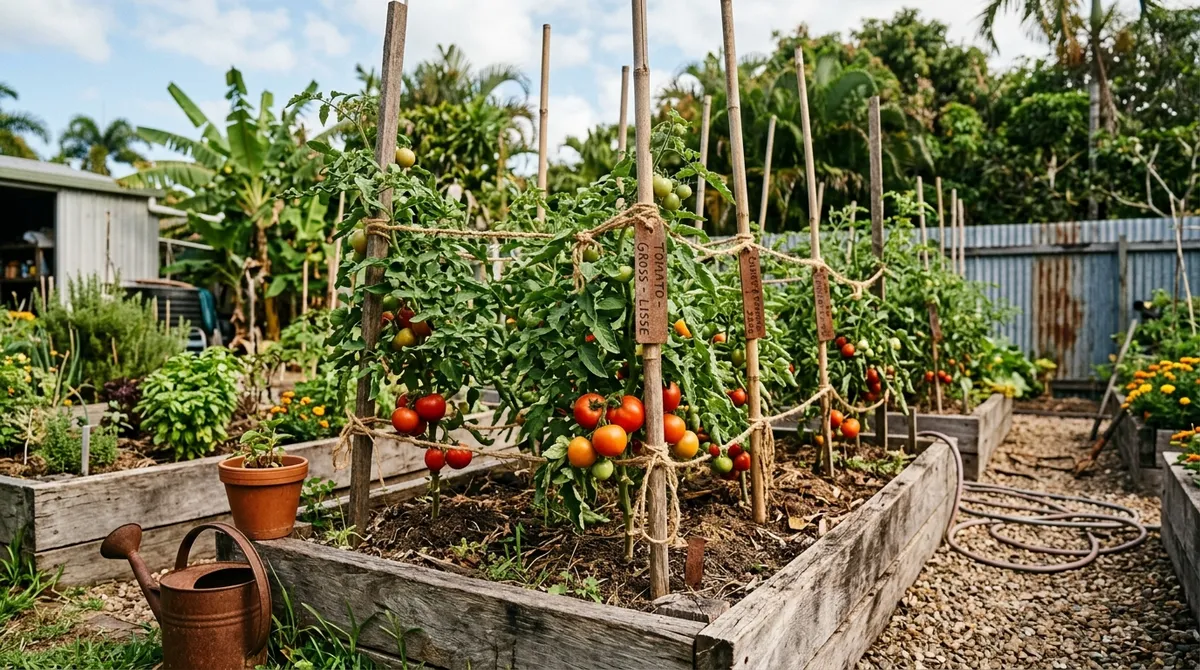
When to Plant Tomatoes in North Queensland
Dry season timing, heat-tolerant varieties, and pest management for Townsville, Cairns, and the tropics
Tomatoes in North Queensland follow completely different rules to southern Australia. The growing window is the dry season, roughly April to September, when humidity drops, rainfall eases, and overnight temperatures fall below 24 degrees. Trying to grow tomatoes during the wet season is a losing battle against bacterial wilt, fungal disease, and relentless fruit fly pressure.
The good news: dry season conditions in Townsville and Cairns are close to ideal. Warm days around 25-28 degrees, cool nights around 14-18 degrees, and minimal rain create perfect fruiting weather for heat-tolerant varieties.
🌱 Plant profile: Tomato, with sowing times for your region, companion plants and common pests.
The Dry Season Tomato Calendar
Sow Seeds: March to Early April
Start seeds in trays or small pots from mid-March. Soil temperatures are still warm enough (above 20 degrees) for fast germination, typically 5-7 days. Use a quality seed-raising mix and keep trays in a spot with morning sun and afternoon shade. The Townsville dry season usually begins in April, so seedlings will be ready to transplant as conditions improve.
Transplant Seedlings: April to May
Move seedlings into the garden once they have 4-6 true leaves and the worst of the wet season humidity has passed. In the Cairns region, this is usually mid to late April. Around Townsville, conditions often settle a week or two earlier. Space plants 60 centimetres apart with 80 centimetres between rows. Stake or cage every plant at planting time.
Peak Harvest: June to August
The core of the dry season delivers the best fruit. June and July nights around Townsville drop to 14-16 degrees, which is ideal for tomato flavour development. Harvest regularly to encourage continued production. Cherry varieties will produce continuously; larger types set fruit in flushes.
Season End: September to October
As the build-up begins in September, humidity climbs and overnight temperatures rise above 24 degrees. Fruit set slows dramatically. Most gardeners pull out tomato plants by late September and switch to wet season crops. In the Atherton Tablelands (elevation 700-800 metres), the season extends 3-4 weeks longer thanks to cooler temperatures.
Best Tomato Varieties for North Queensland
Standard supermarket varieties bred for southern climates often fail in the tropics. Choose varieties with proven heat tolerance and disease resistance.
- Tropic: Bred specifically for tropical conditions. Strong resistance to fusarium wilt and good fruit set in warm nights. Medium-sized red fruit with solid flavour.
- Roma VF: The paste tomato for the tropics. VF indicates fusarium and verticillium resistance. Heavy producer during June and July. Excellent for sauce making.
- Cherry Grande: Large cherry tomato with outstanding heat tolerance. Produces masses of fruit from May right through to September.
- Tommy Toe: The reliable heirloom cherry. Extremely productive and handles variable conditions. Smaller fruit means faster ripening, which helps beat fruit fly.
- Sweet Bite: Cocktail-sized cherry with disease resistance bred in. Good truss production through the dry season.
- Grosse Lisse: The classic Aussie slicer works in North Queensland during the cooler months of June and July only. Plant early for best results.
For the Atherton Tablelands, the cooler elevation allows a wider variety range. Brandywine, Mortgage Lifter, and other heirloom types that struggle on the coast perform well at altitude.
Pest and Disease Management
Fruit Fly
Queensland fruit fly is active year-round in North Queensland, making it the single biggest threat to tomato crops. Exclusion netting is essential. Cover plants with fine mesh netting from the moment the first flowers appear. Apply protein bait sprays (Naturalure or similar) weekly to foliage. Pick fruit at the breaker stage, when it just starts showing colour, and ripen indoors on a bench. Remove every fallen fruit from the ground daily.
Bacterial Wilt
Ralstonia solanacearum thrives in warm, wet soils. Plants wilt suddenly and die within days. There is no chemical cure. Prevention is the only strategy: rotate tomato planting positions every year, improve drainage, and avoid planting into waterlogged soil. Grafted tomatoes on resistant rootstock (available from specialist nurseries in Cairns and Townsville) offer the best protection.
Whitefly and Aphids
Both pests build populations rapidly in the warm tropics. Yellow sticky traps help monitor numbers. Spray with horticultural soap or neem oil at the first sign of infestation. Encourage natural predators by planting flowering herbs nearby. Lacewings and ladybirds are your best allies.
Soil and Watering Tips
North Queensland soils vary enormously. Coastal Townsville has heavy clay-based soils that need organic matter and drainage improvement. The Atherton Tablelands have rich volcanic red soils that are naturally fertile. Cairns coastal areas often have sandy loam that drains freely but needs frequent feeding.
Build raised beds 20-30 centimetres high for improved drainage, especially in Townsville and coastal Cairns. Fill with a mix of compost, aged cow manure, and coarse sand. Top-dress with cane mulch to retain moisture and suppress weeds.
Water deeply every 2-3 days during the dry season. Drip irrigation is the most efficient method and keeps foliage dry, reducing fungal disease risk. Avoid overhead watering entirely. Mulch 8-10 centimetres deep with sugar cane mulch, which is widely available and affordable across North Queensland.
Feed with a balanced organic fertiliser every 3 weeks once flowering starts. Liquid potash applied fortnightly from fruit set improves flavour and firmness. Liquid seaweed every two weeks supports root health and stress tolerance during the build-up.
Summary: Your North Queensland Tomato Calendar
March to early April: Start seeds in trays. Germination takes 5-7 days in warm conditions.
April to May: Transplant seedlings into prepared beds. Stake and mulch immediately.
June to August: Peak harvest. Pick fruit regularly and manage fruit fly with netting and baits.
September: Season winds down as the build-up begins. Pull out plants and prepare for wet season crops.
Frequently Asked Questions
When should I plant tomatoes in North Queensland?
Plant tomatoes during the dry season only, from April to September. Sow seeds in March or early April and transplant seedlings in April or May. The wet season (December to March) brings too much humidity, rain, and disease pressure for successful tomato growing.
What tomato varieties grow best in North Queensland?
Heat-tolerant varieties are essential. Tropic, Roma VF, and Cherry Grande handle the warmth well. Grosse Lisse can work in the cooler months of June and July. Cherry types like Tommy Toe and Sweet Bite produce reliably through the dry season.
Can I grow tomatoes in North Queensland during the wet season?
The wet season is extremely difficult for tomatoes. Constant humidity above 80%, overnight temperatures above 24 degrees, and heavy rainfall promote bacterial wilt, fusarium, and fruit splitting. Most gardeners avoid tomatoes entirely from November to March.
How do I manage fruit fly on tomatoes in North Queensland?
Queensland fruit fly is active year-round in tropical North Queensland. Use fine exclusion netting from the moment fruit sets. Apply protein bait sprays weekly. Pick fruit at the breaker stage (just showing colour) and ripen indoors. Remove all fallen fruit from the ground daily.
Plant profile
The tomato profile has sowing times for your region, companion plants and common pests.
Free Monthly Planting Calendar
Get a personalised email each month with what to plant, seasonal tips, and harvest reminders for your region.
We send one email per month. Unsubscribe any time.