
Why Adelaide Needs Its Own Gardening Book
Adelaide sits in a climate no other book quite describes. It is the driest capital in the driest state, with a Mediterranean pattern of hot bone-dry summers and cool wet winters, but unlike Perth the winter brings real frost, light and patchy on the plains and genuinely cold in the hills. The east-coast books schedule planting for a humid summer Adelaide does not have, and even the Perth advice gets the frost wrong, because Perth's plain barely frosts and Adelaide's does.
Then there is the soil. Much of the plains gardens on alkaline, often calcareous clay-loam at pH 7.5 to 8.5, the opposite problem to Sydney's acid sand. Iron and manganese lock up, citrus and other plants go yellow with chlorosis, and blueberries are impossible in the ground. The hills flip to acidic loam an hour away. And the quiet superpower the rest of the mainland envies: metro Adelaide is free of both Queensland and Mediterranean fruit fly, protected by strict quarantine, so stone fruit and tomatoes grow open without the netting siege.
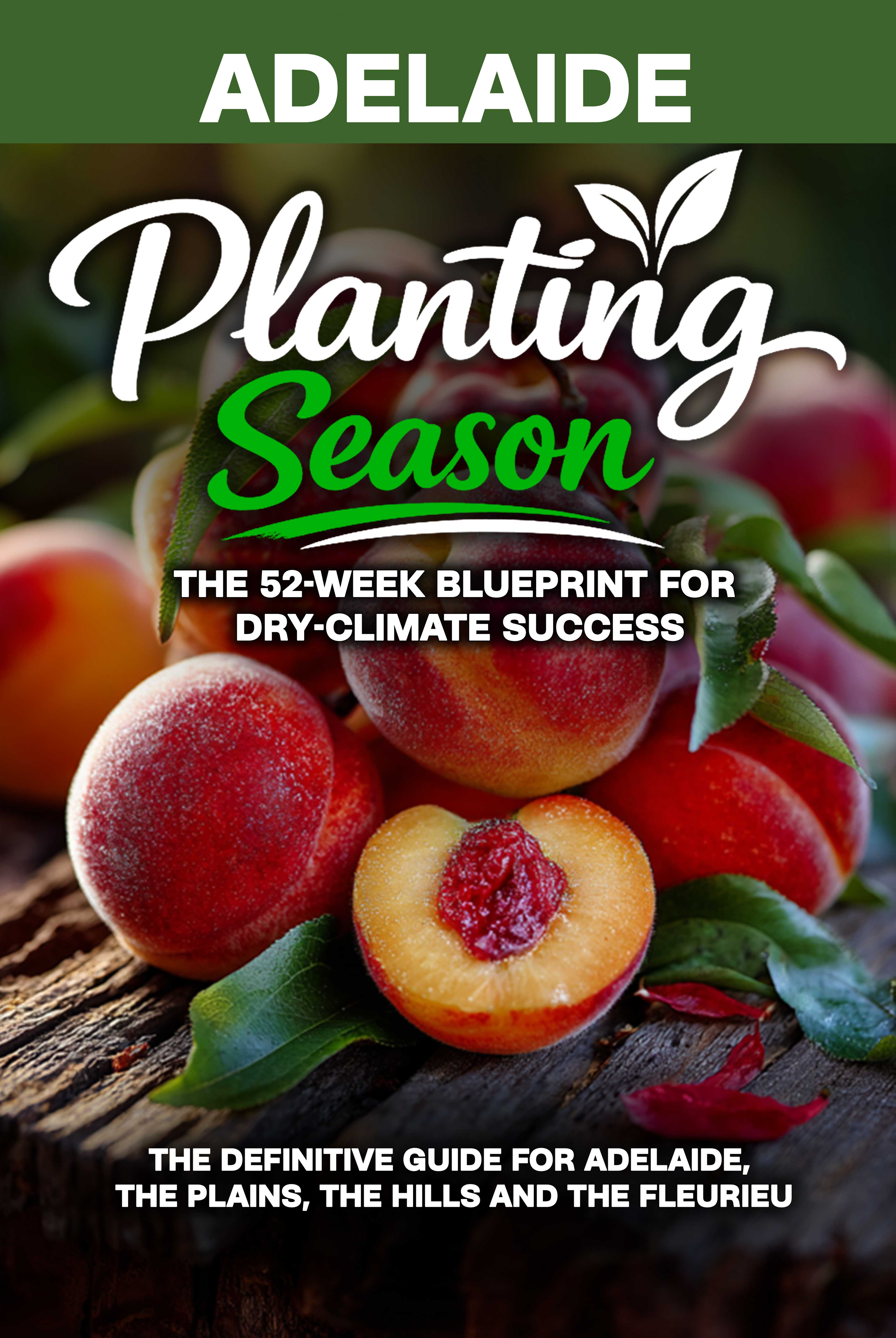
Planting Season Adelaide fixes that. It calibrates to the plains baseline, gives the hills and foothills shift throughout, negotiates with the alkaline soil instead of fighting it, and protects the fruit fly freedom worth defending.
What You Get Inside
The Full Chapter List
Seventeen main chapters plus a nine-part plant library. Every chapter is written for Adelaide and South Australia. Every chapter assumes you want to eat what you grow.
The Plant Library (parts 1 through 9)
- Part 1: Leafy greens and brassicas (the winter plains empire plus the hills brussels sprout crown, lettuce, kale, cabbage and more)
- Part 2: Fruiting vegetables (tomato as the hero crop, grown open without fruit fly netting, with the October rule and the heatwave shade caveat)
- Part 3: Root vegetables (carrots, beetroot, onion, garlic, parsnip and swede sweetened by hills frost, with alkaline-soil notes)
- Part 4: Summer survivors and heat-lovers (warrigal greens, amaranth, snake beans, okra, and melons pride-of-place)
- Part 5: Legumes (broad beans all winter, plus peas and the bean windows through the warm months)
- Part 6: Herbs (the Mediterranean herbs growing like weeds, with coriander as a winter herb)
- Part 7: Fruits, citrus, Mediterranean, stone fruit and the hills orchard
- Part 8: Native and indigenous edibles (SA species lead: quandong on home ground, muntries, saltbush, native apricot, karkalla, wattleseed)
- Part 9: Companion plants and flowers
Each plant entry includes Adelaide sowing windows by season, spacing, sun, water needs, companions to plant with, common pests, common diseases, a kitchen use note, and a realistic Adelaide tip with the plains-versus-hills axis and local seed sources.
A Sample from the Book
Drive from a backyard in Prospect up to a block in Stirling and you cross more climate in 20 minutes than most people cross in a state. The plains are dry, hot and alkaline, with light patchy frost on clear winter nights. The Adelaide Hills are cool and wetter, with acidic loam, regular frosts, the occasional snow flurry on the tops, and summers mild enough to grow the bulk of the nation's brussels sprouts. Plains or hills is the first question every planting decision in this book has to answer.
And then there is the thing the rest of the mainland would trade a lot for. Adelaide grows its stone fruit and its tomatoes out in the open, unnetted, because South Australia is free of fruit fly and intends to stay that way. It is a freedom worth understanding, and worth protecting, and this book treats it as both.
Who It's For
You've just moved in. The backyard is bare. You want food growing by next season and you don't know where to start. The book walks you through your first year.
You followed east-coast advice, lost beans to a June frost, and watched citrus go yellow. This book tells you why, and gives you plains or hills timing and the alkaline-soil fix.
You gardened somewhere wetter. Adelaide is drier, the soil is limey, and the frost is real. The book recalibrates your timing to dry Mediterranean reality.
You rent, or you live in a unit. The small spaces chapter, wicking beds and shade strategies are built for you and for the dry heat.
You want real food, lower bills, and a backyard that feeds the household year-round. The book is the 12-month plan for that.
You know your way around a garden already. The plant library, the alkaline-soil playbook, and the Adelaide-tuned calendar are the book you keep open on the bench.
Pair the book with the free Planting Season app
The book is the full reference; the free app is the day-to-day. Adelaide is covered month by month, with watering reminders tuned to your region and a mobile plant library you can search from the garden.
Open the Planting Season app →Why This Book, Not Another
Planting Season Adelaide is written for the Adelaide Plains and Hills, and nothing else. A Henley Beach reader on alkaline plains soil and a Stirling reader on acidic hills loam get different advice for the same month, because their frost, their soil and their season are different in the same month. If a paragraph could apply unchanged to Perth or Melbourne, it does not belong in this book.
The voice is plain and direct, the neighbour over the fence, not a textbook. The book celebrates what South Australia grows that the rest of the country envies, the open unnetted stone fruit, the olives gone feral in the hills, the quandong on its home ground, and it negotiates honestly with the lime rather than pretending you can sulphur it away. It tells you when to skip a crop and when a glossy catalogue is selling you something that will not thrive on your block.
It is built to last. A genuine reference you come back to every season for years, paired with the free app for the day-to-day.
Frequently Asked Questions
Where can I buy the Adelaide book?
It is out now on Amazon Australia, in paperback and Kindle ebook, as Book 5 in the Planting Season series. The free monthly Adelaide planting calendar is still yours in the app between reads.
Does it cover the Hills as well as the plains?
Yes. The footprint is metro Adelaide from the coast to the Hills, the Adelaide Hills, the Fleurieu, and the northern plains and Barossa fringe, with nearby-region notes for McLaren Vale, the Riverland, Murray Bridge, the Mid North and the Yorke Peninsula. The plains-versus-hills timing split runs through every chapter.
I'm a total beginner. Is this book for me?
Yes. The book starts with the Adelaide climate, the seven biggest mistakes new gardeners make here, the alkaline-soil basics, water, and planning. It builds from first garden bed through to seed saving and crop rotation. No prior experience needed.
Why does it make such a point of fruit fly?
Because the absence is a real advantage. Metro Adelaide and most of SA are free of both Queensland and Mediterranean fruit fly, kept out by strict quarantine. That means open, unnetted stone fruit and tomatoes. The book explains the rules, the do-not-bring-fruit-in quarantine, and what a suspect find means for a suburb, so the freedom is protected.
My citrus keeps going yellow. Does the book cover that?
Yes. Chlorosis from iron and manganese lock-up is a classic alkaline-soil problem on the Adelaide Plains. The soil chapter and the citrus entries cover chelated iron, the right amendments, and why sulphur is a slow-to-futile fight against free lime.
Does it work with the Planting Season app?
Yes. The app already covers Adelaide, with month-by-month alerts, watering reminders and a mobile plant library. The book is the full reference, the app is the day-to-day companion. Visit plantingseason.com.au/app to try it.
Grow food every month of the year in Adelaide.
Planting Season Adelaide is out now on Amazon Australia, in paperback and Kindle ebook.
On Amazon Australia. See your reader bonuses →
Already growing in another climate? Browse the whole series →