
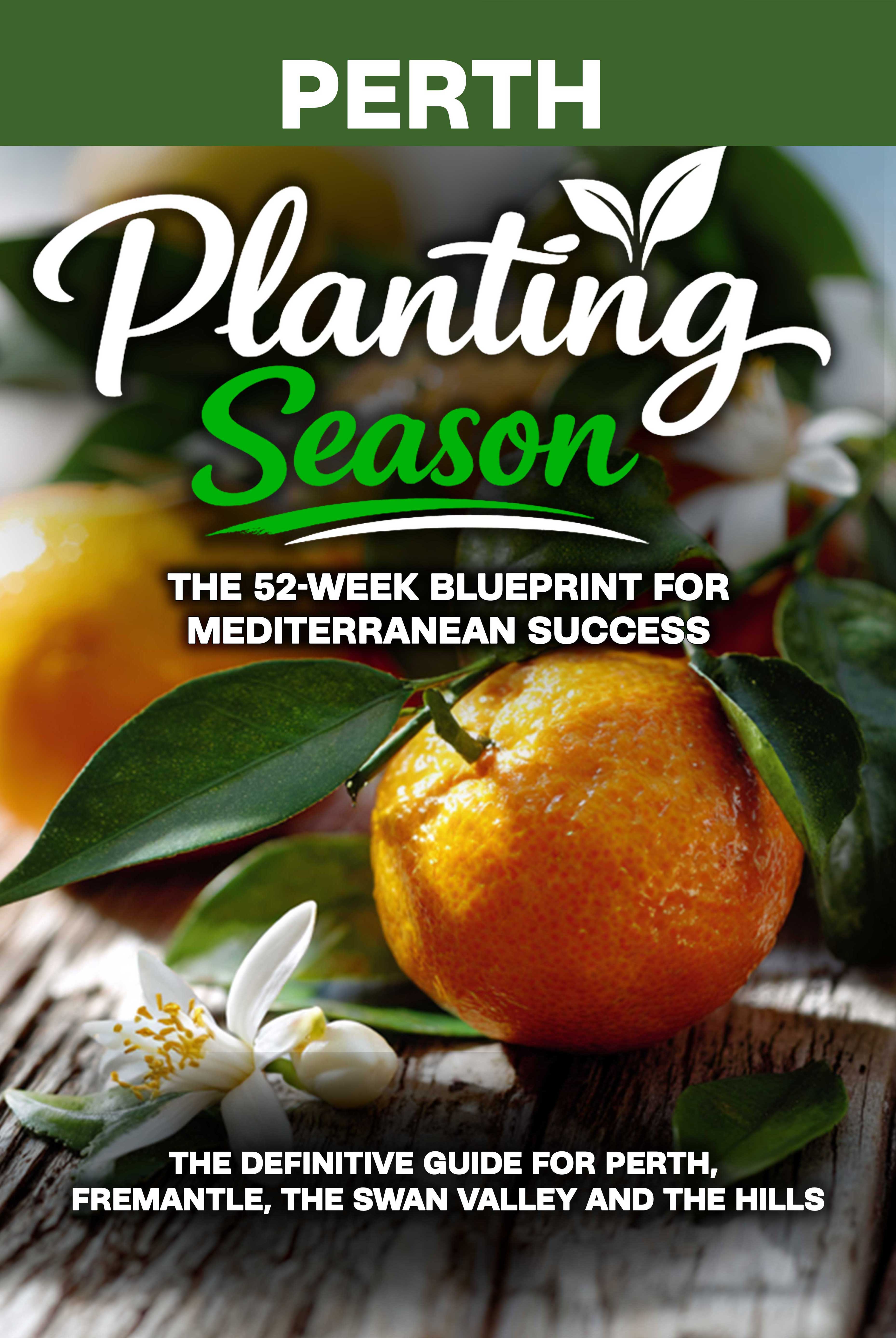
Why Perth Needs Its Own Gardening Book
Perth breaks the east-coast rulebook before page ten. The imported books assume your soil holds water and that summer is when you grow. Both are wrong here. Most of metro Perth gardens on ancient leached coastal sand, grey Bassendean sand that is gutless, acidic and so water-repellent the irrigation beads up and runs off. Plant tomato seedlings in November "after the last frost" like the east-coast books say, and they spend summer on life support while the water drains straight past their roots.
The Perth year runs on a different logic. Summer from December to February is hot and effectively rainless, and crops survive it rather than grow through it. Winter is the secret: the rain falls from May to September, frost barely exists on the plain, and the cool season is long, mild and productive. Brassicas, peas, broad beans, roots and greens grow straight through a Perth winter with the sky doing the watering. The winter garden out-produces the summer garden, the exact opposite of what the imported books assume.
Planting Season Perth fixes that. It treats the sand as the first and biggest job, builds the calendar around the March and September pulses, and works with the watering roster instead of against it.
What You Get Inside
The Full Chapter List
Seventeen main chapters plus a nine-part plant library. Every chapter is written for Perth and the south west of WA. Every chapter assumes you want to eat what you grow.
The Plant Library (parts 1 through 9)
- Part 1: Leafy greens and brassicas (the winter empire, lettuce, kale, cabbage, broccoli, cauliflower and more)
- Part 2: Fruiting vegetables (tomato as the hero crop, with the September rule, the February second window, and Medfly management)
- Part 3: Root vegetables (sand-grown carrots are a Perth gift, plus beetroot, onion, garlic, with nematode honesty)
- Part 4: Summer survivors and heat-lovers (sweet potato, warrigal greens, amaranth, snake beans, okra, rosella)
- Part 5: Legumes (broad beans and peas all winter, with the spring and autumn bean split)
- Part 6: Herbs (the Mediterranean herbs at home, with coriander as a winter herb)
- Part 7: Fruits, citrus, Mediterranean and stone fruit (citrus as the headline, plus grapes, figs, olives, Hills orchard fruit, avocado, strawberries)
- Part 8: Native and indigenous edibles (WA species, warrigal greens, karkalla, saltbush, bush tomato, quandong, with quarantine notes)
- Part 9: Companion plants and flowers
Each plant entry includes Perth sowing windows by season, spacing, sun, water needs, companions to plant with, common pests, common diseases, a kitchen use note, and a realistic Perth tip with varieties and WA-shippable seed sources.
A Sample from the Book
Pour a watering can over a patch of dry Bassendean sand and watch what happens. The water beads, sits, and then runs sideways off the surface like rain off a waxed jacket. This is water repellence, and it is the first thing an east-coast gardener has to unlearn in Perth. The soil is not holding your water. It is rejecting it.
This is why the Perth year is built backwards from the rest of the country. We do the big planting in autumn and spring, around the March rains and the September warm-up, and we treat summer as the season to survive rather than the season to grow. Fix the sand first, plant on the pulses, and a Perth winter garden will out-produce anything the east coast manages in its summer.
Who It's For
You've just moved in. The backyard is bare sand. You want food growing by next season and you don't know where to start. The book walks you through your first year.
You've poured water on the sand and watched it drain away, and lost summer seedlings to the heat. This book tells you why, and how to fix the soil and the timing.
You gardened on the east coast. Everything here is inverted, the soil, the seasons, the watering. The book recalibrates your timing to Mediterranean reality.
You rent, or you live in a unit. The small spaces chapter and wicking-bed answer are built for you and for Perth sand.
You want real food, lower bills, and a backyard that feeds the household year-round. The book is the 12-month plan for that.
You know your way around a garden already. The sand playbook, Medfly strategy, and Perth-tuned calendar are the book you keep open on the bench.
Pair the book with the free Planting Season app
The book is the full reference; the free app is the day-to-day. Perth is covered month by month, with watering reminders tuned to your region and a mobile plant library you can search from the garden.
Open the Planting Season app →Why This Book, Not Another
Planting Season Perth is written for the Swan Coastal Plain and the Hills, and nothing else. A Scarborough reader on coastal sand and a Kalamunda reader on Hills gravel-loam get different advice for the same month, because their soil, their frost and their season are different in the same month. If a paragraph could apply unchanged to Melbourne or Sydney, it does not belong in this book.
The voice is plain and direct, the neighbour over the fence, not a textbook. The book celebrates what Perth grows better than anywhere, the citrus, the grapes, the olives, the autumn strawberries, and it kills the tropical dreams cleanly so you do not waste a season on a papaya that will sulk in the open plain. It works with WA's strict quarantine and the watering roster instead of pretending they are not there.
It is built to last. A genuine reference you come back to every season for years, paired with the free app for the day-to-day.
Frequently Asked Questions
Where can I buy the Perth book?
It is out now on Amazon Australia, in paperback and Kindle ebook, as Book 4 in the Planting Season series. The free monthly Perth planting calendar is still yours in the app between reads.
Does it cover the Hills as well as the plain?
Yes. The footprint is metro Perth from the coast to the Darling Scarp, the Swan Valley, the Perth Hills, and the Peel and Mandurah corridor, with nearby-region notes for Bunbury, the South West, Margaret River, Geraldton and Albany. The Hills get their own treatment as the one zone where east-coast cool-climate advice half-applies.
I'm a total beginner. Is this book for me?
Yes. The book starts with the Perth climate, the seven biggest mistakes new gardeners make here, fixing the sand, water, and planning. It builds from first garden bed through to seed saving and crop rotation. No prior experience needed.
How does it handle the watering restrictions?
It embraces them. The water chapter covers the two-day sprinkler roster, the winter sprinkler switch-off, the garden-bore culture, drip irrigation as the smart default, and wicking beds. The book asks you to verify current Water Corporation rules, since they change, and shows you how to garden well within them.
What about fruit fly?
Perth's fruit fly is Mediterranean fruit fly, established here for over a century. Queensland fruit fly is absent from WA and kept out by strict quarantine. The book gives a full Medfly strategy and explains why WA's quarantine matters, including for sourcing plants and seed.
Does it work with the Planting Season app?
Yes. The app already covers Perth, with month-by-month alerts, watering reminders and a mobile plant library. The book is the full reference, the app is the day-to-day companion. Visit plantingseason.com.au/app to try it.
Grow food every month of the year in Perth.
Planting Season Perth is out now on Amazon Australia, in paperback and Kindle ebook.
On Amazon Australia. See your reader bonuses →
Already growing in another climate? Browse the whole series →