Updated October 2026
Freezing the Harvest: Blanching Times and What Freezes Well
For beans, corn, peas and pumpkin, the freezer is the safe and simple alternative to a pressure canner. The step that decides quality is a properly timed blanch.
Blanch most vegetables in boiling water for the tested time (3 minutes for beans, 1½ for peas, 7 to 11 for corn cobs), chill them in iced water for the same time, drain, and freeze at -18°C. They keep their best quality for 8 to 12 months. Fruit, chillies, capsicum and tomatoes for cooking go in raw. In Australia, where bottling low-acid vegetables safely needs a pressure canner few people own, this is the method we would choose for a vegetable glut.
🌱 Plants in this guide: Beans (bush), Peas, Broad Beans, Sweet Corn, Broccoli, Cauliflower, Brussels Sprouts, Capsicum and 7 more, all listed under Plant profiles at the end of this guide. Each plant profile has sowing times for your region, companion plants and common pests.
Blanching time lookup
Choose a vegetable for its National Center for Home Food Preservation blanching time, or whether it freezes raw or cooked.
How to blanch
- Bring about 4 litres of water per 500 g of vegetables to a rolling boil, so it returns to the boil within a minute.
- Lower the vegetables in a basket, put the lid on and start timing when the water boils again.
- Move them straight into iced water (16°C or colder) for the same time as the blanch.
- Drain well, pack and freeze at -18°C.
Under-blanching is worse than not blanching at all, because it stirs the enzymes up rather than stopping them. Steam blanching takes about 1½ times as long and suits broccoli, pumpkin and sweet potato. Microwave blanching may not stop the enzymes, so it is not recommended.
What freezes well, and what does not
Beans, peas, corn, broccoli, cauliflower, carrots, silverbeet and berries all freeze well. Lettuce, cucumber, radish, celery and raw cabbage turn limp and watery, and boiled potatoes go mealy. Frozen cabbage is fine in cooking. Tomatoes freeze well for sauces and stews but will not slice once thawed.
Packing
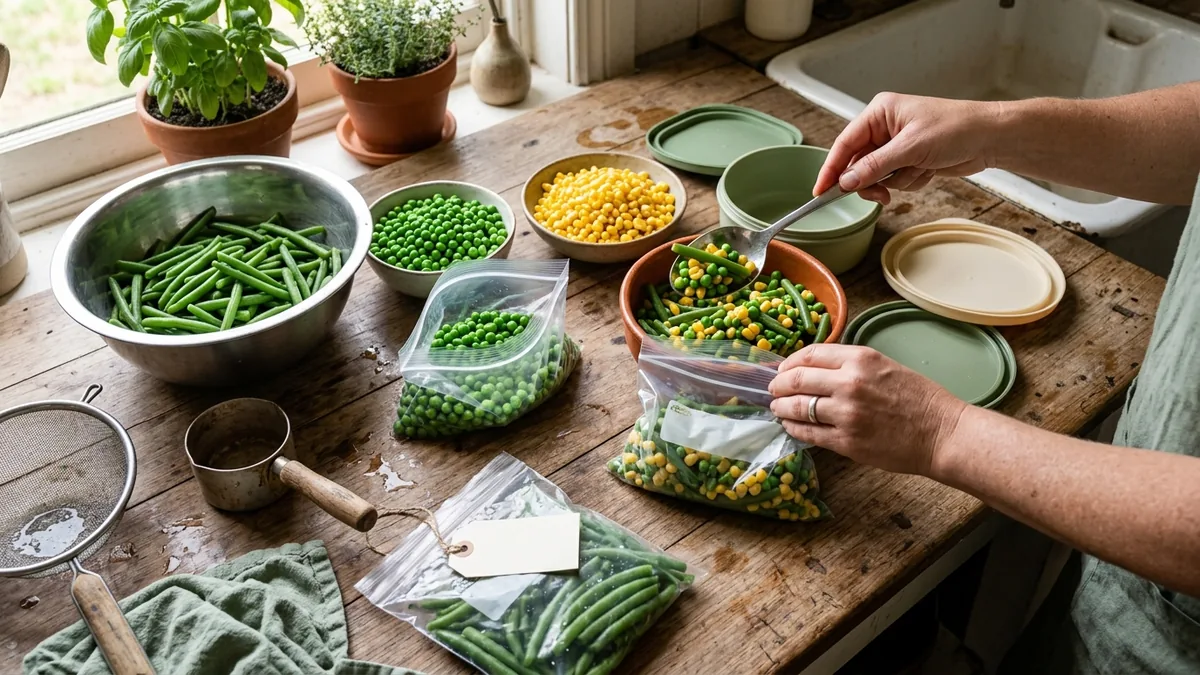
- Spread berries, beans, peas and florets on a tray to freeze, then bag them, so they pour loose.
- Press the air out of bags; air is what causes freezer burn.
- Leave 1.25 cm of headspace in rigid containers of puree or anything with liquid.
- Label everything with the date and use the oldest first.
How long it keeps
At -18°C, fruit and vegetables keep their best quality for 8 to 12 months, and remain safe after that, just lower in quality. Diced onions are best within a few months. Garlic or herbs in oil must go into the freezer or be eaten within 4 days from the fridge: oil makes the airless conditions botulism needs.
When the glut comes
Southern gardens fill the freezer with beans, corn and zucchini through summer and broad beans and brassicas in spring. In South East Queensland the beans and peas come through the cooler months, and in Darwin the dry season is the harvest. Cook most frozen vegetables straight from frozen rather than thawing them.
See also: Preserving the Harvest, Freezing and why we freeze rather than bottle beans and corn.
Sources we checked (October 2026): National Center for Home Food Preservation: Blanching Times, Blanching Vegetables, Foods That Do Not Freeze Well, Freezer Management, How Long Can I Store Frozen Foods, Freezing Asparagus, Summer Squash, Cabbage, Greens, Onions, Mushrooms, Bell Peppers, Hot Peppers, Tomatoes, Fresh Herbs, Garlic-in-Oil; Food Safety Information Council, Home bottling and canning.
Common questions
Do I have to blanch vegetables before freezing?
Almost all, yes, for the tested time. Capsicum, chillies, diced onions, tomatoes for cooking, herbs and berries go in raw.
How long do I blanch zucchini for freezing?
3 minutes for 1 cm slices. Grated zucchini for baking is steamed 1 to 2 minutes until translucent.
Can I freeze tomatoes whole?
Yes, for cooking. Dip them in boiling water for 30 seconds, peel, and freeze whole or in pieces.
How long do frozen vegetables last?
8 to 12 months at -18°C for best quality. They stay safe longer but lose flavour and texture.
Is freezing safer than bottling beans?
Yes. Beans are low acid and can only be bottled safely in a pressure canner; freezing needs nothing but a 3 minute blanch.
Plant profiles
Each profile has sowing times for your region, companion plants and common pests.