
Updated October 2026
How to Make a Sourdough Starter
Flour, water, a warm bench and about a week. The two safety rules: never taste it raw, and throw it out if it grows mould.
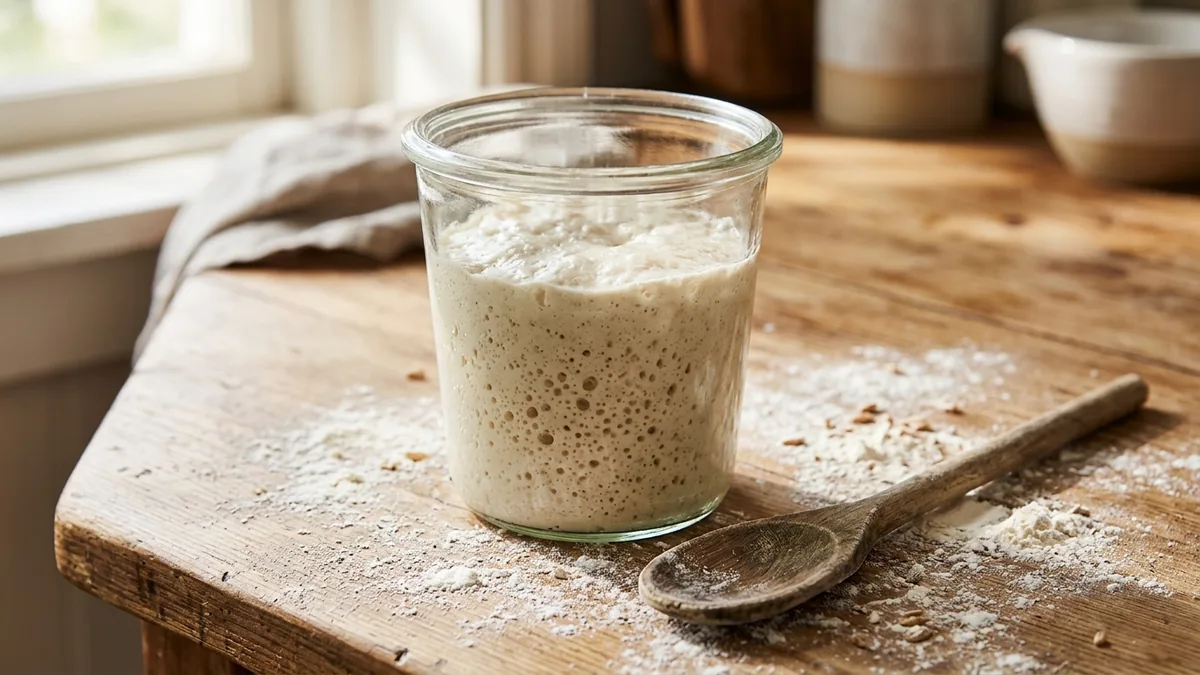
Mix equal weights of wholemeal or rye flour and water, keep the jar loosely covered somewhere around 21 to 27°C, and every day discard all but 50 g before feeding it 50 g of flour and 50 g of water. Most starters are bubbling within a week and ready when they double within 4 to 8 hours of a feed. Flour is a raw farm product that can carry E. coli and Salmonella, so judge the starter by look and smell, not by tasting it; baking is what makes it safe.
Day by day
| Day | What to do | What you should see |
|---|---|---|
| Day 1 | Mix 50 g wholemeal or rye flour with 50 g lukewarm water to a thick paste. Cover loosely and keep it somewhere 21 to 27°C. | Nothing yet. |
| Day 2 | Stir. If nothing is happening, leave it another day. | Perhaps an early burst of bubbles, which often fades on day 3. |
| Days 3 to 7 | Once a day, discard all but 50 g, then add 50 g flour and 50 g water. Stir and cover loosely. | Bubbles, a rise after feeding, and a tangy smell. |
| Day 7 on | Keep feeding daily until it is predictable. | Doubles within 4 to 8 hours of a feed, then slowly falls. |
Feeding helper
Enter how much starter you keep. The helper gives the flour and water for a 1:1:1 daily feed, or for a 1:2:2 or 1:5:5 feed if you want a slower rise.
Work out your feed
Each card shows how much flour and water to add to the starter you keep, and the total weight you will end up with. Discard or use any extra starter before you feed.
Temperature in an Australian kitchen
Colorado State University Extension describes the right temperature as one that feels comfortable to you, around 21°C; the University of Illinois gives 21 to 28°C. A Brisbane or Darwin summer kitchen often runs warmer than that, and a starter there can rise, collapse and turn sharply sour within hours. Feed it more often or keep it in the fridge between bakes. In a Hobart or Canberra winter it may barely move; a spot near the oven or on top of the fridge helps.
Keeping it going
- On the bench: feed once or twice a day if you bake often.
- In the fridge: feed about once a week, then give it one or two room temperature feeds before baking.
- Liquid on top: the grey or clear layer that smells of alcohol is a by-product of hungry yeast. Pour it off or stir it in.
- Nail polish smell: it needs feeding.
Using the discard
The starter you pour off before feeding makes good pancakes, crackers and flatbreads. Like any raw dough, cook it before eating, and wash your hands and bench after handling flour.
See also: Preserving the Harvest and sauerkraut and fermenting.
Sources we checked (October 2026): Colorado State University Extension, Sourdough Starter Best Practices; University of Illinois Extension, Sourdough Bread 101; US Food and Drug Administration, Handling Flour Safely; Food Safety Information Council, Fermenting food and drink at home.
Common questions
How long does a sourdough starter take?
Usually about a week of daily feeds. It is ready when it doubles within 4 to 8 hours of feeding.
Is it safe to taste my starter?
No. Flour is a raw ingredient that can carry E. coli and Salmonella. Judge it by bubbles, rise and smell, and bake it before eating.
My starter has liquid on top. Is it ruined?
No. The liquid smells of alcohol and means the yeast is hungry. Pour it off or stir it in, and feed it.
When should I throw a starter out?
If it grows fuzzy or coloured mould, or pink or orange streaks. Discard it, clean the jar thoroughly and start again.