Fruit fly: identify, prevent, control
Updated June 2026
Most active in warm weather, peaking spring through autumn, September to May, on the east coast.
Queensland fruit fly is the major fruit fly across the east coast and is one of the most destructive pests for home growers of tomatoes, capsicum, stone fruit and citrus. Females sting fruit and lay eggs inside, so the maggots ruin fruit from the centre out, often before you see any damage.
How to identify it
- Small sting marks or dimples on fruit skin, sometimes weeping a little
- Soft, rotting patches and premature fruit drop
- White maggots tunnelling inside cut fruit
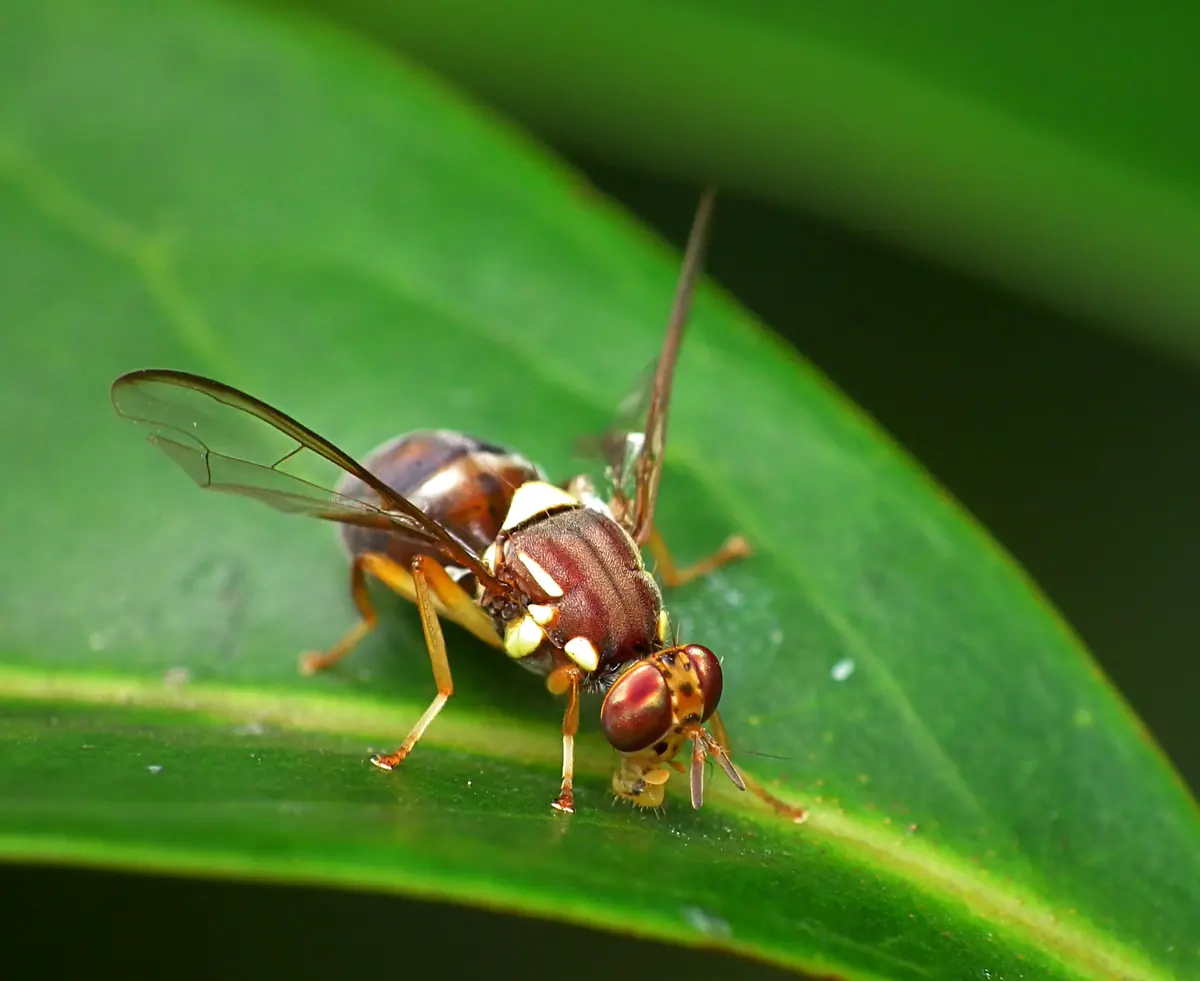
- Wasp-sized brown flies with clear wings and yellow markings on the body
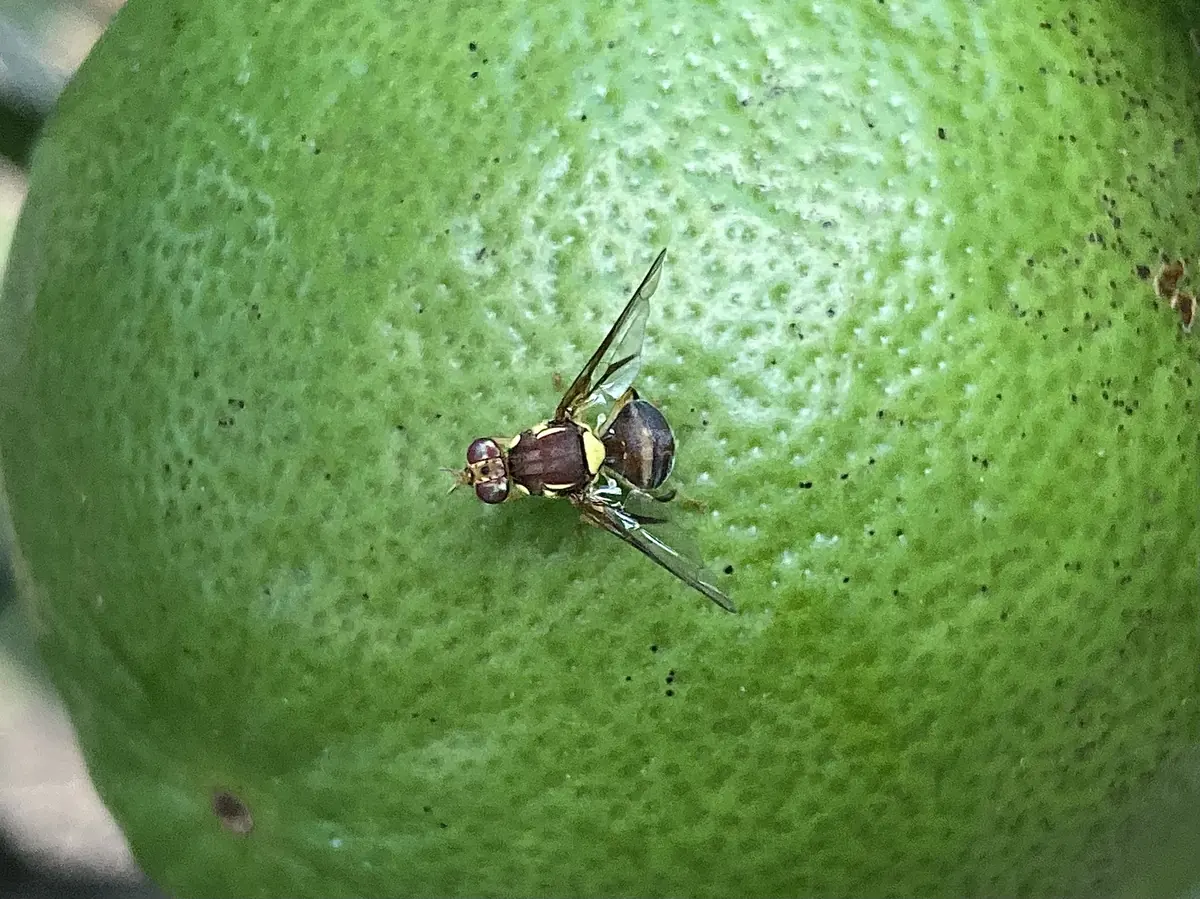
Hoverflies and wasps are easy to mistake for fruit fly. Compare them side by side in our Good Bugs vs Bad Bugs photo guide.
How to prevent it
- Bag developing fruit with exclusion sleeves or net whole plants with fine insect mesh
- Pick fruit as it ripens and never leave fallen or overripe fruit on the ground
- Solarise fallen fruit by sealing it in a black plastic bag in the sun for a week before binning
- Grow early varieties that crop before fruit fly numbers build
- Coordinate with neighbours, since untreated trees nearby keep reinfesting your garden
Organic control, step by step
- Hang monitoring traps with male lure from early spring to track when flies arrive
- Set up protein bait stations (such as Naturalure) spotted onto foliage, which females feed on before laying
- Apply baits weekly and reapply after rain through the whole fruiting season
- Net or bag fruit as the surest organic protection, since traps alone rarely give full control
- Dispose of all stung fruit promptly to break the breeding cycle
- Keep a tidy garden through winter to lower the carry-over population
Plants it attacks
TomatoCapsicumEggplantSquashPassionfruitPawpawBlueberryPeachPomegranateOliveApplePlumApricotNectarineCherryBlackberryChilliFigMulberryAvocadoGuavaWatermelonRockmelonBitter MelonMangoLycheeMandarinTamarilloStar FruitCustard AppleDavidson PlumLonganRambutanJackfruitKakadu PlumFeijoaLoquatPersimmonCape GooseberryPepinoBlack SapoteRiberryBoysenberry
Track it in the app. The free Planting Season planner lists the pests and diseases to watch for on every plant in your garden, tuned to your region.