
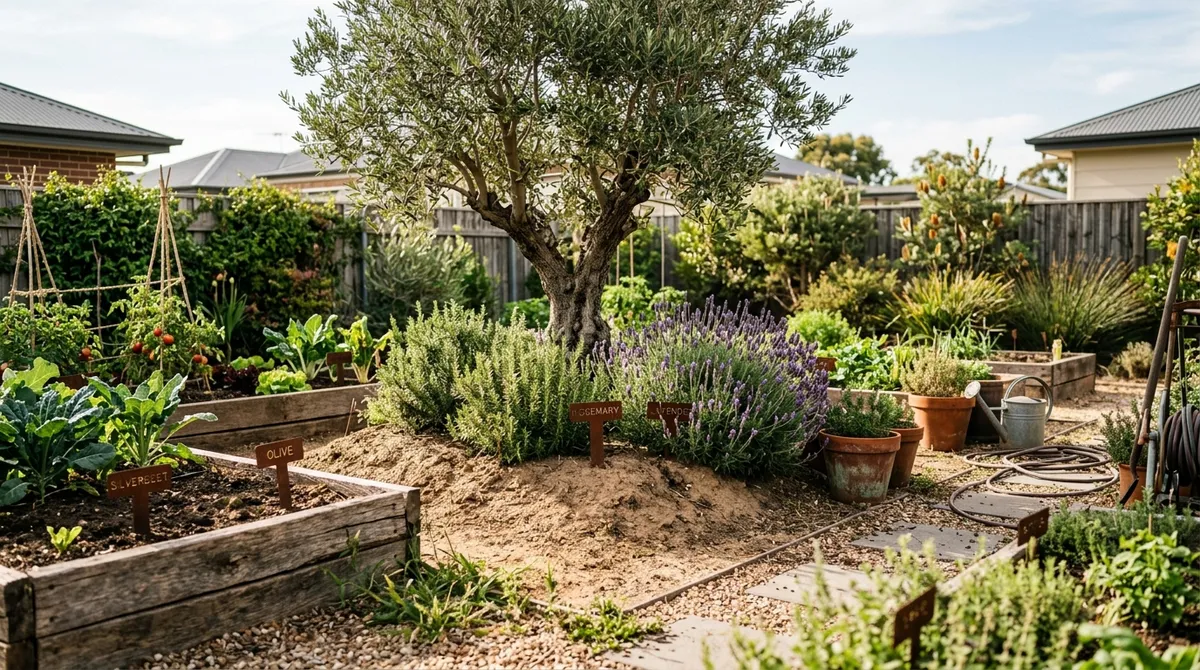
Growing Mediterranean Crops in Adelaide
Olives, figs, grapes, pomegranates, artichokes, and herbs for Adelaide's ideal climate
Adelaide has one of the closest matches to a true Mediterranean climate of any Australian city. Hot, dry summers and cool, wet winters create perfect conditions for crops that have been cultivated around the Mediterranean basin for thousands of years. South Australia's olive oil industry, wine regions, and fig orchards prove how well these crops perform here.
Growing Mediterranean crops in your backyard connects you to Adelaide's rich food heritage. Italian, Greek, and Lebanese communities have grown olives, figs, and grapes in Adelaide's suburbs for generations. Many of these plants are long-lived, drought-tolerant once established, and produce heavily with minimal fuss. They also suit dry-adapted gardening techniques that reduce water use and maintenance.
🌱 Plants in this guide: Olive, Fig, Grape, Pomegranate, Rosemary, Lavender, Oregano, Thyme and 5 more, all listed under Plant profiles at the end of this guide. Each plant profile has sowing times for your region, companion plants and common pests.
Olives
Olive trees are one of the most rewarding long-term investments for an Adelaide garden. They thrive in the hot, dry conditions of the Adelaide Plains and handle frost in the Hills. Commercial olive groves operate across the Adelaide Hills, McLaren Vale, the Barossa Valley, and the Riverland. Your backyard tree benefits from the same conditions.
Varieties for Backyard Growing
- Kalamata: Large, dark fruit for table olives. The classic Greek olive. Needs a pollinator variety nearby (Frantoio or Manzanilla work well). Kalamata olives are best harvested when fully black and processed in brine or salt.
- Frantoio: Italian oil olive producing high-quality, peppery oil. Medium-sized fruit. Self-fertile but crops better with a pollinator. This is the backbone variety of many Adelaide Hills olive groves.
- Manzanilla: Spanish dual-purpose olive, good for both table and oil. Large green fruit. Self-fertile and reliable. Excellent for beginners because it produces well as a single tree.
- Koroneiki: Greek oil olive with small fruit and very high oil content. Compact tree suited to smaller gardens. The oil has intense flavour.
- Verdale: Popular SA variety for both table and oil. Hardy and productive. Well-adapted to Adelaide's conditions.
Planting and Care
Plant olive trees in full sun with well-drained soil. They tolerate Adelaide's clay soils if drainage is adequate. Dig a hole twice the width of the root ball but no deeper. Do not add compost to the backfill for olives, as they prefer lean soil. Water deeply once a week during the first two summers, then reduce to occasional deep watering during extended dry periods. Mature trees are very drought-tolerant and survive Adelaide's dry summers with minimal supplemental water.
Prune annually in late winter (July to August) to maintain an open vase shape that allows airflow and light penetration. Remove suckers from the base and any crossing or inward-growing branches. Olives fruit on the previous year's growth, so avoid removing too much young wood.
Harvest table olives in April and May (green) or June and July (black). Oil olives are harvested in May and June when the fruit changes colour. A single mature tree produces 20 to 40 kilograms of fruit per year. Process table olives in brine, salt, or lye. Take oil olives to a community pressing facility (several operate in the Adelaide Hills and Barossa during harvest season).
Figs
Figs love Adelaide's hot summers and tolerate the cold winters. They are one of the easiest fruit trees for Adelaide gardens, producing heavily with minimal care once established. Adelaide's Italian community has grown figs here for generations, and old fig trees are common in inner-suburban backyards across Prospect, Norwood, Campbelltown, and the western suburbs.
- Black Genoa: The most popular variety in Adelaide. Dark purple skin, red flesh. Rich, sweet flavour. Produces two crops: a small breba crop on last year's wood in November, and the main crop from January to March. Excellent fresh, dried, or in preserves.
- Brown Turkey: Reliable and productive. Lighter-coloured skin and flesh. Good fresh or dried. Slightly more cold-hardy than Black Genoa, which makes it a better choice for Hills gardens.
- White Adriatic: Green skin with pink flesh. Very sweet. The traditional variety for dried figs. Produces one main crop from February to March.
- White Genoa: Large fruit with yellow-green skin and amber flesh. Good fresh eating. Vigorous grower. Less common than the others but worth seeking out.
Plant bare-root fig trees in winter (June to August). Position in full sun against a north-facing wall if possible, as the reflected heat helps fruit ripen fully and concentrates sweetness. Figs grow in most soil types including Adelaide's clay, provided drainage is reasonable. Water regularly during the first two summers, then reduce. Over-watering mature trees causes fruit to split.
Prune in winter while dormant. Figs grow on both old and new wood, so avoid heavy pruning that removes all the previous year's branches. Remove dead wood, crossing branches, and low growth that drags on the ground. Net trees from December to protect fruit from birds, starlings, and possums, which compete aggressively for ripe figs.
Grapes
Adelaide is surrounded by some of Australia's best wine regions: the Barossa Valley, McLaren Vale, Clare Valley, and Adelaide Hills. Table grapes grow just as well in backyards across the city. A grapevine over a pergola provides shade in summer and lets light through in winter after the leaves drop.
- Sultana (Thompson Seedless): Classic seedless grape for fresh eating and drying. Vigorous vine. Produces heavy crops of sweet, green grapes from February to March. The standard drying grape if you want to make your own sultanas.
- Muscat Hamburg: Dark-skinned table grape with intense musky sweetness. One of the best-flavoured table grapes available. Ripens in March.
- Flame Seedless: Red, seedless grape. Crisp texture and sweet flavour. Good for fresh eating. Early ripening (February). Popular with children.
- Crimson Seedless: Late-ripening red grape (March to April). Firm, crunchy texture. Excellent storage life. Holds on the vine longer than most varieties.
Plant bare-root vines in winter. Provide a sturdy trellis, pergola, or fence for support. Grapes need full sun and good airflow to prevent fungal disease. Adelaide's dry summers reduce disease pressure compared to humid climates like Sydney or Brisbane. Prune heavily in winter (June to July) while dormant, cutting back to 2-bud spurs on established cordons. Feed with potassium-rich fertiliser in spring. Net fruit from January to protect from birds.
Pomegranates
Pomegranate trees are perfectly suited to Adelaide's climate. They need hot, dry summers to ripen fruit, and they tolerate cold winters (down to minus 10 degrees once established). The fruit ripens from March to May in Adelaide. Pomegranates are deciduous, so they drop their leaves in winter and produce a burst of brilliant orange flowers in late spring.
- Wonderful: The standard commercial variety. Large fruit with deep red arils. Tart-sweet flavour. Available at most Adelaide nurseries. Widely grown in the Riverland and northern Adelaide Plains.
- Elche: Spanish variety with softer seeds and sweeter flavour than Wonderful. Smaller fruit but excellent eating quality. Seeds are softer and less woody.
- Dwarf pomegranate (Punica granatum 'Nana'): Compact ornamental with small edible fruit. Suits pots and small gardens. Grows to about 1 metre. Attractive flowers and fruit even if you do not eat them.
Plant in full sun with well-drained soil. Pomegranates handle poor soil, drought, and heat with remarkable tolerance. They are among the toughest fruit trees you can grow in Adelaide. Minimal pruning needed. Remove suckers from the base and any dead wood in winter. Pomegranates can be trained as a single-trunk tree or left as a multi-stemmed shrub. Fruit is ready when the skin darkens and the fruit sounds hollow when tapped.
Artichokes
Globe artichokes are a striking addition to an Adelaide garden, producing large, silvery-green plants that grow to 1.5 metres tall. The dramatic flower buds are edible (the artichoke heart), and if left unharvested they open into spectacular purple thistle flowers that attract bees.
Plant root divisions or suckers in autumn (March to May). Space plants 1 metre apart, as they grow large and spread. Full sun and well-drained soil. Feed with compost and a complete fertiliser in early spring and again after harvest. Water deeply once a week through the growing season. Artichokes are perennial and return from the same rootstock each year.
Harvest buds from September to November, before the scales begin to open. Cut the central bud first, which is the largest. Side buds continue developing for several weeks. A mature plant produces 6 to 12 globes per season. After harvest, the plant dies back in summer's heat and re-sprouts in autumn as temperatures cool and rain returns.
Imperial Star and Green Globe are the most common varieties at Adelaide nurseries. Violetta di Chioggia has beautiful purple-tinged buds and good flavour. Divide established plants every 3 to 4 years to maintain vigour, replanting the healthiest divisions.
Mediterranean Herbs
Mediterranean herbs are among the most practical plants you can grow in Adelaide. They thrive in the climate, need minimal water once established, and provide fresh flavour year-round. Plant them in a sunny spot with good drainage and they will look after themselves.
Rosemary
Grows into a large shrub (1 to 2 metres) in Adelaide's conditions. Use as a hedge, a standalone specimen, or a ground cover (prostrate varieties like Prostratus trail over walls and edges). Rosemary flowers attract bees in late winter and spring. Prune after flowering to maintain shape. Takes cuttings easily from semi-hardwood in autumn. Use fresh or dried with roast lamb, chicken, potatoes, and bread.
Lavender
Grows superbly in Adelaide's dry conditions. English lavender (Lavandula angustifolia) is the most fragrant and the best for cooking. French lavender (L. dentata) flowers for longer and handles humidity better. Spanish lavender (L. stoechas) has distinctive rabbit-ear petals. Plant in full sun with excellent drainage. Prune hard after flowering (but never into old bare wood) to keep plants compact. Replace plants every 5 to 7 years when they become woody.
Oregano
Greek oregano (Origanum vulgare subsp. hirtum) is the variety with the strongest flavour. It spreads by underground runners and can be invasive if not contained. Grow in a pot or contained bed. Harvest regularly by cutting stems back by half. Dry excess harvest by hanging bunches upside down in a cool, dark place. The dried herb is more concentrated in flavour than fresh.
Thyme
Common thyme (Thymus vulgaris) and lemon thyme (T. citriodorus) both grow well. Compact plants that suit rockeries, borders, and pots. Thyme tolerates poor soil, drought, and frost. Cut back by one-third after flowering to keep plants tight. Replace every 3 to 4 years when they become woody. Lemon thyme works well with fish and chicken.
Sage
Common sage (Salvia officinalis) produces soft, grey-green leaves with a warm, savoury flavour. Grows to 60 centimetres tall. Purple sage and variegated sage are ornamental alternatives with similar flavour. Sage handles Adelaide's heat and frost. Prune back by one-third in late winter to prevent the plant becoming woody and leggy. Pairs with pork, poultry, and pasta dishes.
Bay Laurel
Bay laurel (Laurus nobilis) grows into a small tree (3 to 5 metres) in Adelaide's conditions. It can be kept smaller with regular pruning or grown as a potted topiary. The leaves are used fresh or dried in soups, stews, and sauces. Bay laurel is slow-growing and long-lived. Protect young plants from frost for the first two winters. Once established, they handle everything Adelaide's climate throws at them.
Dry-Adapted Growing Techniques
Mediterranean crops evolved in climates with hot, dry summers. They perform best when you work with that natural pattern rather than against it.
- Deep, infrequent watering: Water deeply once a week or less for established trees. Deep watering encourages roots to grow downward, making plants more drought-resilient. Frequent shallow watering keeps roots near the surface where they are vulnerable to heat.
- Gravel and stone mulch: Mediterranean herbs, olives, and pomegranates do well with gravel or stone mulch rather than organic mulch. Gravel reflects light and heat (which these plants enjoy), suppresses weeds, and does not hold moisture against the stem (which can cause collar rot). Use 20 to 50 millimetre gravel, 5 to 10 centimetres deep.
- Lean soil: Many Mediterranean crops produce better flavour in lean (low-nutrient) soil. Olives, rosemary, thyme, and lavender grown in rich, composted soil produce lush leaf growth but weaker flavour. Save the compost for your vegetable beds and let Mediterranean plants grow in your garden's natural soil.
- Full sun, no shade: Mediterranean crops need at least 6 hours of direct sun per day. Most perform best with 8 or more hours. Position them on the northern or western side of the garden where they get maximum light and heat.
- Winter rainfall only: Established olives, pomegranates, figs, rosemary, and lavender can survive Adelaide's summer on winter-stored soil moisture alone, especially if mulched. Water young trees for their first two summers, then gradually reduce. Overwatering is a more common cause of Mediterranean plant failure than underwatering.
Other Mediterranean Crops for Adelaide
- Almonds: Adelaide was once Australia's almond capital before production moved to the Riverland. Trees still grow well in backyards. Self-fertile varieties like All-in-One are best for single-tree plantings. Harvest in March. Almonds need well-drained soil and full sun. They flower very early (July to August) and late frosts can damage blossoms.
- Quince: Hardy, drought-tolerant tree producing aromatic fruit for cooking (paste, jelly, poached desserts). Smyrna and Pineapple are good varieties. Harvest in April and May. Quince paste (membrillo) is a traditional pairing with cheese. Plant bare-root trees in winter.
- Prickly pear (Opuntia ficus-indica): Produces edible pads (nopales) and sweet fruit (tunas). Grows well in Adelaide's driest, hottest spots. Plant in well-drained soil against a north-facing wall. Handle with thick gloves due to fine spines (glochids). Check local regulations, as some Opuntia species are declared weeds in SA.
Frequently Asked Questions
What Mediterranean crops grow well in Adelaide?
Olives, figs, grapes, pomegranates, artichokes, almonds, rosemary, lavender, oregano, thyme, and sage all thrive in Adelaide's climate. The hot dry summers and cool wet winters match Mediterranean conditions closely.
Can I grow olive trees in my Adelaide backyard?
Yes. Olive trees grow exceptionally well in Adelaide. Choose varieties like Kalamata (table olives), Frantoio (oil), or Manzanilla (dual purpose). Trees are drought-tolerant once established, handle frost, and produce for decades.
When do I plant fig trees in Adelaide?
Plant bare-root fig trees in winter (June to August) when they are dormant. Potted figs can be planted any time, but winter planting gives the best establishment before summer heat. Black Genoa, Brown Turkey, and White Adriatic are reliable varieties.
How do I grow artichokes in Adelaide?
Plant root divisions or suckers in autumn (March to May). Full sun, well-drained soil. Plants produce flower buds from September to November in their second year. A single plant produces 6 to 12 globes per season.
What Mediterranean herbs grow well in Adelaide?
Rosemary, lavender, oregano, thyme, sage, and bay laurel all grow as hardy perennials in Adelaide. They thrive in the hot, dry summers and tolerate the cool, wet winters. Plant in well-drained soil in full sun. Once established, they need minimal watering.
Plant profiles
Each profile has sowing times for your region, companion plants and common pests.
Free Monthly Planting Calendar
Get a personalised email each month with what to plant, seasonal tips, and harvest reminders for your region.
We send one email per month. Unsubscribe any time.