
Dragon Fruit Growing in Australia: Plants, Cuttings and Seed
Updated October 2026
More fruit growing help: Backyard Fruit Trees in Australia, with the best fruit for each region and when to plant it.
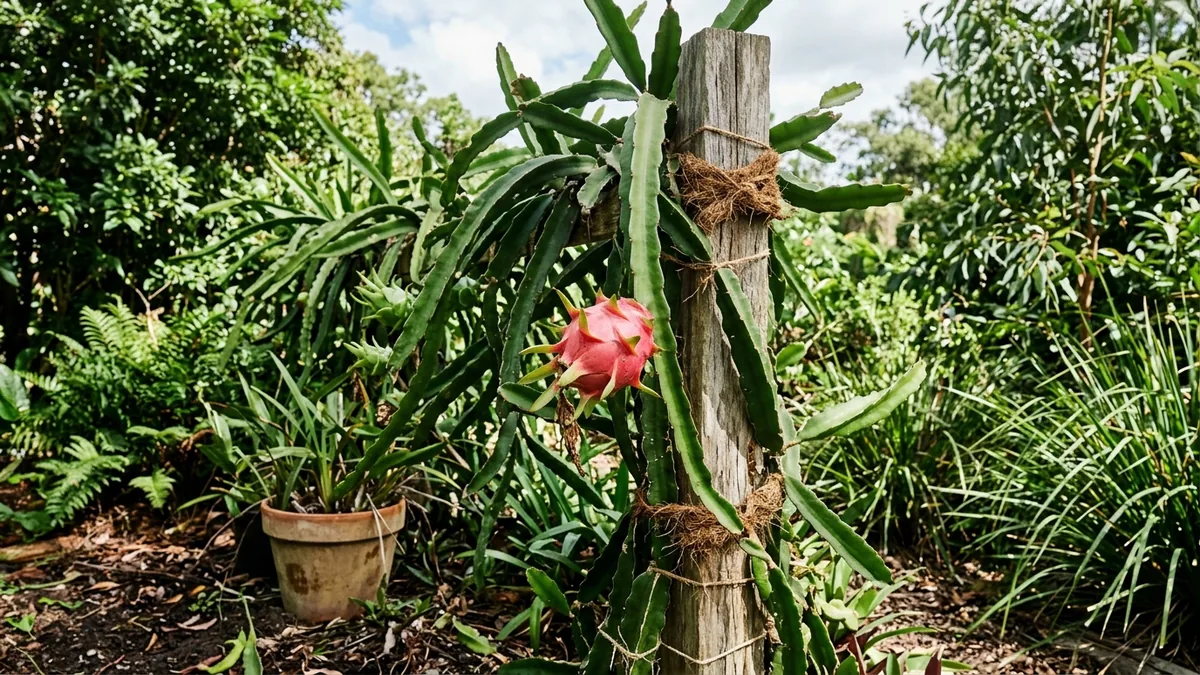
A climbing cactus that needs warmth, a strong post and a little night-time match-making, not winter chill
Dragon fruit, also called pitaya, is a climbing epiphytic cactus from the genus Hylocereus and Selenicereus. It is frost-tender and loves heat, which makes it a star fruit for tropical and subtropical Australia, and a rewarding pot plant further south if you can give it a hot, sheltered spot.
The two things that catch people out are the support and the pollination. The fleshy stems pile up into a heavy crown that can weigh 10 kg or more, so the post must be genuinely strong. The flowers open for one night only, some varieties need pollen from a second, different variety, and a hand with a paintbrush at night improves fruit set. Get those right and you have a striking, productive plant.
🌱 Plant profile: Dragon Fruit, with sowing times for your region, companion plants and common pests.
Will dragon fruit grow in your climate?
Dragon fruit is a cactus, so the usual chill-hours question does not apply. What matters is warmth, sun and keeping frost off it. Pick your Australian climate below for a clear verdict on growing in the ground, in a pot, or under cover.
Climate and position
Give dragon fruit the hottest, sunniest, most sheltered position you have, ideally with at least 6 hours of direct sun. It thrives in the ground in tropical and subtropical regions, from Darwin and Cairns through to the warmer parts of South-East Queensland and coastal northern New South Wales. In warm temperate areas it grows well in a large pot in a sun-trap against a north-facing wall. In cool temperate and cold zones it must be a container plant that comes into a frost-free greenhouse or indoors over winter, because even a light frost damages the stems.
Soil must drain freely. This is a cactus, and wet feet rot it. Sandy loams, free-draining beds and good potting mix made grittier with coarse sand or perlite all suit it. A spot sheltered from strong wind helps, as the heavy stems can snap.
Planting
The quick and reliable way to start is from a stem cutting, not seed. Take or buy a cutting 30 to 50 cm long, let the cut end callus in the shade for a week or two, then plant it 3 to 5 cm deep in free-draining mix at the base of its support. Plant cuttings in the warmth of spring and summer so they root fast. Seed-grown plants take four to five years to fruit and may not come true, so cuttings are the better path to a harvest.
Set the support before you plant. Most growers use a single sturdy post, a treated hardwood post or a concrete-set steel pipe standing about 1.5 to 2 metres above the ground, topped with a frame, an old tyre or a square of mesh for the stems to cascade over. Plant the cutting right beside the post and tie the stem to it as it climbs.
Growing Dragon Fruit From Seed
Dragon fruit is easy to raise from seed, and it makes a good project with children, but it is the slow road to fruit. Seed-grown plants take four to five years to flower and may not come true to the fruit you saved the seed from, so if you want a harvest, start from a cutting. If you want to try seed anyway, here is how.
- Scoop the seeds from a ripe fruit and wash the pulp off in a fine sieve, because leftover flesh grows mould.
- Spread the seed on the surface of damp seed-raising mix and barely cover it. The seed is tiny and needs very little covering.
- Keep the tray warm and evenly moist. Our plant data gives a germination temperature of 22 to 32°C, and seedlings usually appear in about three weeks.
- Grow the seedlings on in a bright, warm spot, watering only when the mix starts to dry, and pot them up individually once they are big enough to handle.
- Give each young plant its own stake from the start, and plant it out in spring or summer in a frost-free spot once it is growing strongly.
Some dragon fruit varieties need a second, different variety for cross-pollination, so a seedling may need a partner before it crops well.
Watering and feeding
Water young plants regularly to establish them, then water deeply but allow the mix to dry out between waterings. Cut back hard in cool weather, when the plant is barely growing and rot is the main risk. In a hot dry summer a mature plant in the ground appreciates a deep soak every week or two, while pots dry faster and need more frequent attention.
Feed lightly through the warm growing season with a balanced fertiliser or a cactus and succulent feed, plus a little extra potassium as flowering approaches to support fruit. Avoid heavy nitrogen, which pushes soft sappy growth at the expense of fruit. A mulch of compost around the base in spring keeps the surface roots happy.
Growing a Dragon Fruit Plant in a Pot
Outside the tropics and subtropics, a pot is the most reliable way to grow a dragon fruit plant. Choose a large, heavy pot so it does not tip over as the crown gets heavy, fill it with a gritty, free-draining mix, and set a sturdy stake or post in the pot at planting time. Stand it in the hottest, sunniest, most sheltered spot you have over summer.
In Melbourne, Adelaide, Tasmania and Canberra our data rates dragon fruit unsuitable outdoors, because frost and winter cold damage the stems. Move the pot into a frost-free greenhouse, sunroom or sheltered verandah before the first frost, water sparingly through winter, and bring it back out once the nights are mild. A potted plant grows more slowly and fruits less than one in the ground in the tropics, but it can still flower and fruit.
Pruning and support
The support is the single most important structure in growing dragon fruit. A mature plant carries a large, heavy crown of fleshy stems, often 10 kg or more, so the post must be set in concrete or buried deeply enough that it will not lean or topple in wind. Tie the main stems up the post until they reach the top, then let them branch and trail over the frame, which is where most of the flowers and fruit form.
Prune to keep the plant manageable and open. Remove weak, crowded or damaged stems, take off any growth heading down the post, and trim the trailing crown so light and air reach the fruiting wood. Stem pieces you cut off root easily, so pruning is also free new plants.
Pollination and flowering
Dragon fruit flowers are large, spectacular and open for a single night, usually in the warm months. They are pollinated naturally by moths and bats, which can be scarce in a suburban garden. Some varieties need a second, different variety for cross-pollination, so check the label when you buy, ask the nursery, or plant two varieties.
When to Pick Dragon Fruit
Fruit is usually ready about a month after the flower, ripening through the warm months. Pick when the skin has coloured fully, whether bright pink, red or yellow, and the little wings or fins on the skin start to dry and wither at the tips. Ripe fruit gives slightly to a gentle squeeze. Cut it from the stem with secateurs rather than pulling. Dragon fruit does not sweeten much after picking, so let the colour develop fully on the plant. It keeps a week or more in the fridge.
In our data the main picking season runs from December to May, and a mature plant carries many large fruit each season.
Pests and problems
- Stem rot: the main problem, caused by cold wet conditions or poor drainage. Plant in free-draining mix, ease off water in cool weather, and cut out any soft brown rot promptly.
- Sunburn: stems can scorch and turn yellow in extreme heat, especially young plants. A little afternoon shade in a heatwave helps in the hottest zones.
- Frost damage: even a light frost burns the stems. Protect or bring pots under cover before the first frost in cooler areas.
- Birds, possums and fruit fly: all enjoy ripe fruit. Bag developing fruit or net the plant where these are a problem.
- Mealybugs and scale: can settle in the stem grooves. Wipe off small outbreaks or treat with horticultural oil.
Varieties to grow in Australia
| Variety | Flesh / type | Best for |
|---|---|---|
| American Beauty | Red flesh | A reliable all-rounder |
| Halley's Comet | Red flesh | A popular red-fleshed choice for home gardens |
| Physical Graffiti | Purple-red flesh, sweet | Flavour |
| Vietnamese Jaina / Vietnamese White | White flesh, vigorous | Vigour and big crops |
| Yellow Dragon (Selenicereus megalanthus) | Yellow skin, white flesh, very sweet | The sweetest fruit, for patient growers (slower to crop) |
Some varieties need a second, different variety for cross-pollination, so check the label or ask the nursery before you buy. If you have room for two, plant two different varieties, and hand-pollinate at night when the flowers open to improve fruit set.
When to Plant Dragon Fruit in Your Region
Plant dragon fruit cuttings in the warmth of spring and summer so they root and establish quickly before the cooler months. Our data gives South East Queensland, the Northern Rivers, North Queensland and Darwin the full September to February window, Sydney October to January in warm microclimates, and Perth only October and November in its warmest coastal pockets. In warm temperate areas plant in late spring once nights are reliably mild. In cool temperate and cold zones, start cuttings in pots in late spring and keep them warm and under cover, treating the plant as a container specimen from the outset.
Dragon fruit is planted as cuttings in the warm months. These are the planting months for each of our regions from our planting data. Where a region shows no months, the plant is not suited to growing outdoors there and is best kept in a pot that comes under cover for winter. Each region links to its full vegetable planting calendar, and the Dragon Fruit plant page has spacing, companions and care notes for your region.
| Region | Plant cuttings | Local note |
|---|---|---|
| South East Queensland | September to February | |
| Northern Rivers NSW | September to February | |
| Sydney & Coastal NSW | October to January | Marginal tropical; adapts to Sydney but only in warm microclimates; challenging to flower. |
| Melbourne & Victoria | Not recommended outdoors | Tropical cactus; frost kills stems. Melbourne winter lethal. Unsuitable outdoors. |
| Adelaide & SA | Not recommended outdoors | Not reliable in Adelaide. Winter cold and frost damage the stems. Heated greenhouse only. |
| Perth & WA | October and November | Viable only in Perth's warmest coastal microclimates, such as around Fremantle and Mandurah. Plant Oct to Nov. |
| Tasmania | Not recommended outdoors | Unsuitable. Tropical cactus killed by frost. Not viable in Tasmania. |
| Canberra & ACT | Not recommended outdoors | Dragon Fruit unsuitable for Canberra: tropical; frost-intolerant; needs warmth and frost-free conditions. Not viable. |
| North Queensland | September to February | Spring/wet season. Dragon fruit (cactus) is tropical staple. Thrives in heat and monsoonal wet. |
| Darwin & Top End | September to February | Spring/wet season. Dragon fruit (cactus) is tropical staple. Thrives in heat and monsoonal wet. |
For timing tuned to your exact spot, use Find My Region or open the Planting Season app.
Frequently Asked Questions
Does dragon fruit need winter chill to fruit?
No. Dragon fruit is a climbing cactus, not a deciduous chill fruit, so it has no winter chill requirement at all. What it needs instead is warmth, full sun and protection from frost. It fruits in response to long warm days and night-time flowering in summer, not to a cold dormant period.
How do I build a support for dragon fruit?
Use a single very sturdy post, usually a treated hardwood post or a concrete-set steel pipe about 1.5 to 2 metres above ground, topped with a frame, old tyre or square of mesh for the stems to cascade over. A mature plant can carry 10 kg or more of fleshy stem, so the support must be set in concrete or deeply buried. Tie the young stems up the post until they reach the top, then let them trail.
Why is my dragon fruit flowering but not setting fruit?
Some dragon fruit varieties need pollen from a second, different variety to set fruit, so check the label or plant two varieties. The flowers also open for one night only and are pollinated by moths and bats, which may be scarce in a suburban garden. Hand-pollinate at night when the flowers open, or very early the next morning before they close, by brushing pollen from one flower onto the stigma of another.
Can I grow dragon fruit in a pot in a cool climate?
Yes. In cool temperate and cold areas dragon fruit must be grown in a large pot with its own sturdy stake, kept in the hottest, most sheltered spot over summer and moved into a frost-free greenhouse or indoors over winter. Treat it as a container plant that comes inside before the first frost. It will be slower and may fruit less than a plant grown in the ground in the tropics.
How long until dragon fruit fruits?
A plant grown from a good-sized cutting usually starts flowering in its second or third summer once the stems have reached the top of their support and begun to trail. Plants grown from seed take much longer, often four to five years, and may not come true to the parent. Cuttings are the reliable way to a quicker harvest.
What are the best dragon fruit varieties for Australia?
Popular choices include American Beauty and Halley's Comet (red flesh), Physical Graffiti (sweet purple-red flesh) and vigorous white-fleshed types such as Vietnamese Jaina. Yellow Dragon (Selenicereus megalanthus) is very sweet but slower to crop. Some varieties need a second, different variety for cross-pollination, so check the label or plant two varieties. Hand-pollinate at night when the flowers open to improve fruit set.
How do I know when dragon fruit is ripe?
Pick when the skin has coloured fully, whether bright pink, red or yellow, and the little wings or fins on the skin have started to dry and wither at the tips. Ripe fruit gives slightly to a gentle squeeze. Dragon fruit does not sweeten much after picking, so leave it on the plant until the colour is full, then cut it with secateurs.
Can you grow dragon fruit from seed?
Yes. Wash the seeds from a ripe fruit, sow them on the surface of damp seed-raising mix, barely cover them and keep them at 22 to 32°C. Seedlings appear in about three weeks. Seed-grown plants take four to five years to fruit and may not come true, so use a cutting if you want fruit sooner.
When should I plant dragon fruit?
Plant cuttings in the warm months. South East Queensland, the Northern Rivers, North Queensland and Darwin can plant from September to February, Sydney from October to January, and Perth in October and November in its warmest coastal spots. Melbourne, Adelaide, Tasmania and Canberra are too cold for planting outdoors, so grow it in a pot that comes under cover for winter.
How much sun does a dragon fruit plant need?
Full sun. Give it at least 6 hours of direct sun in the hottest, most sheltered spot you have. In the hottest zones a little afternoon shade during a heatwave stops young stems scorching.
See also: Unusual Fruit to Grow and Preserving the Harvest
See also: Dragon Fruit in the Plant Library
Plant profile
The dragon fruit profile has sowing times for your region, companion plants and common pests.